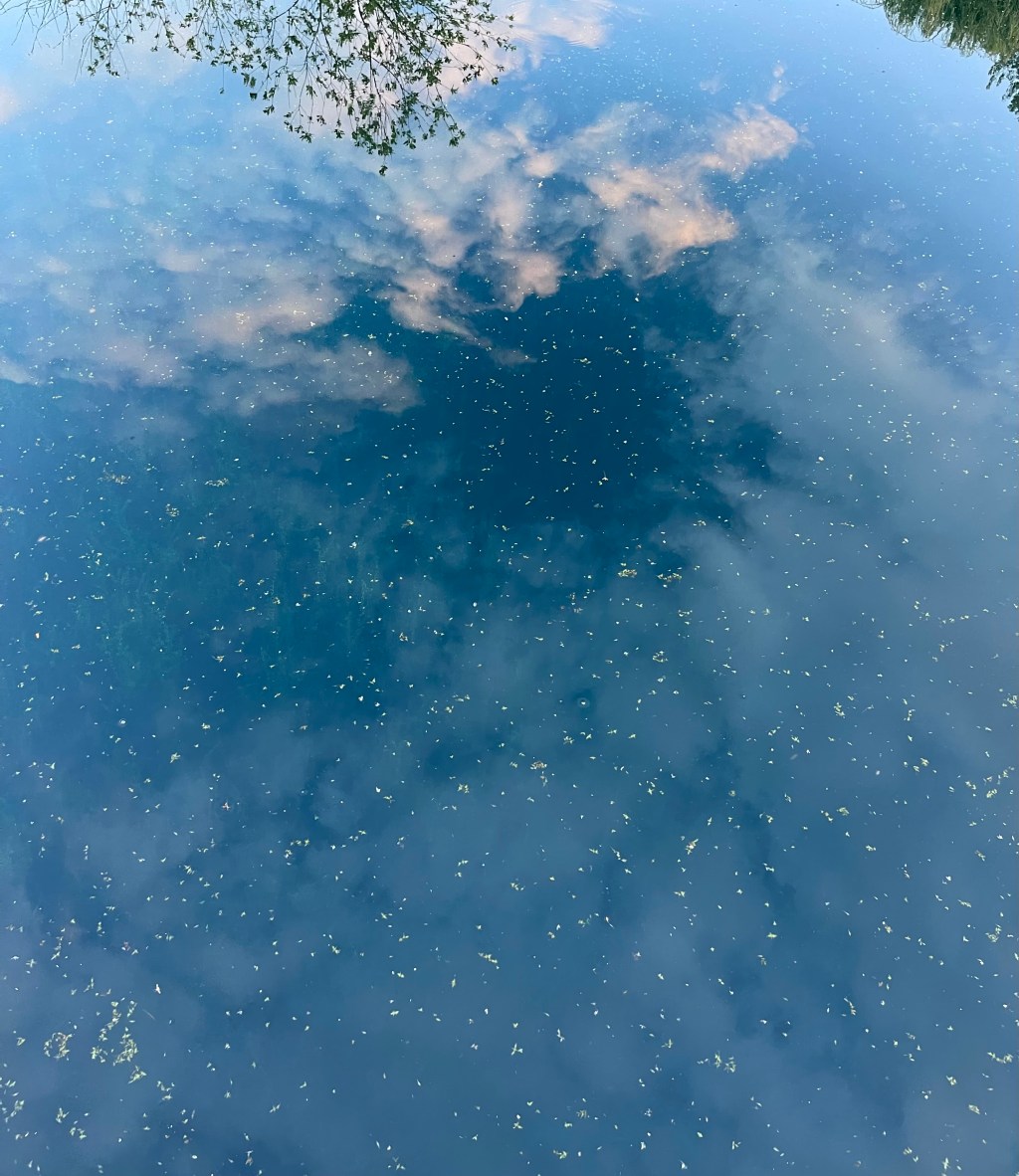
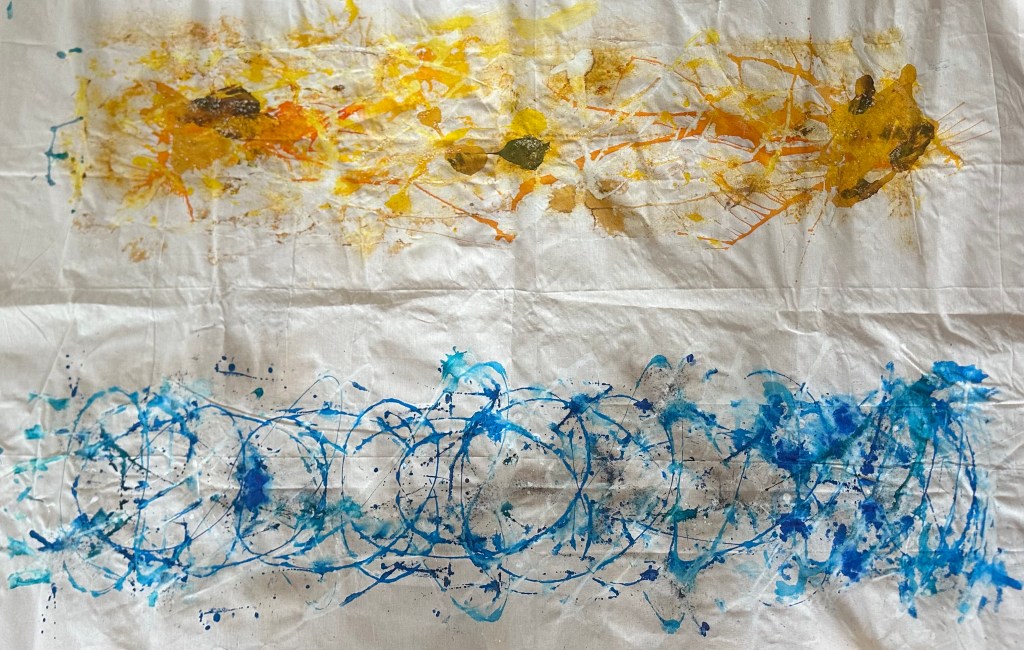
Above
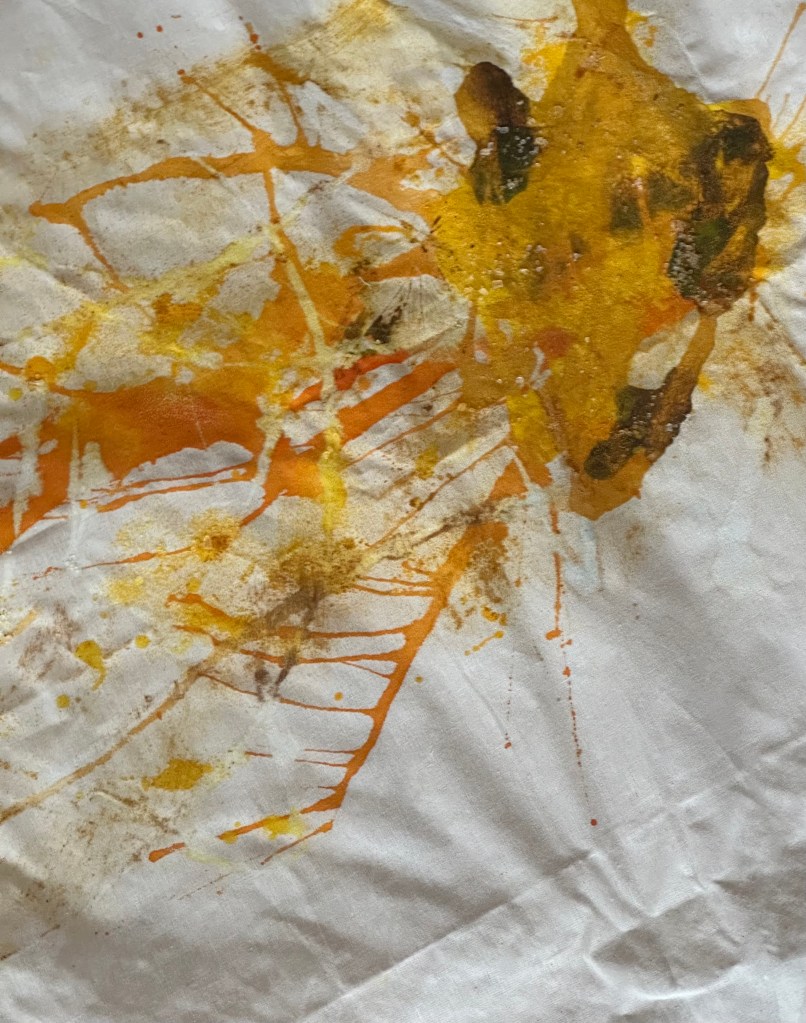
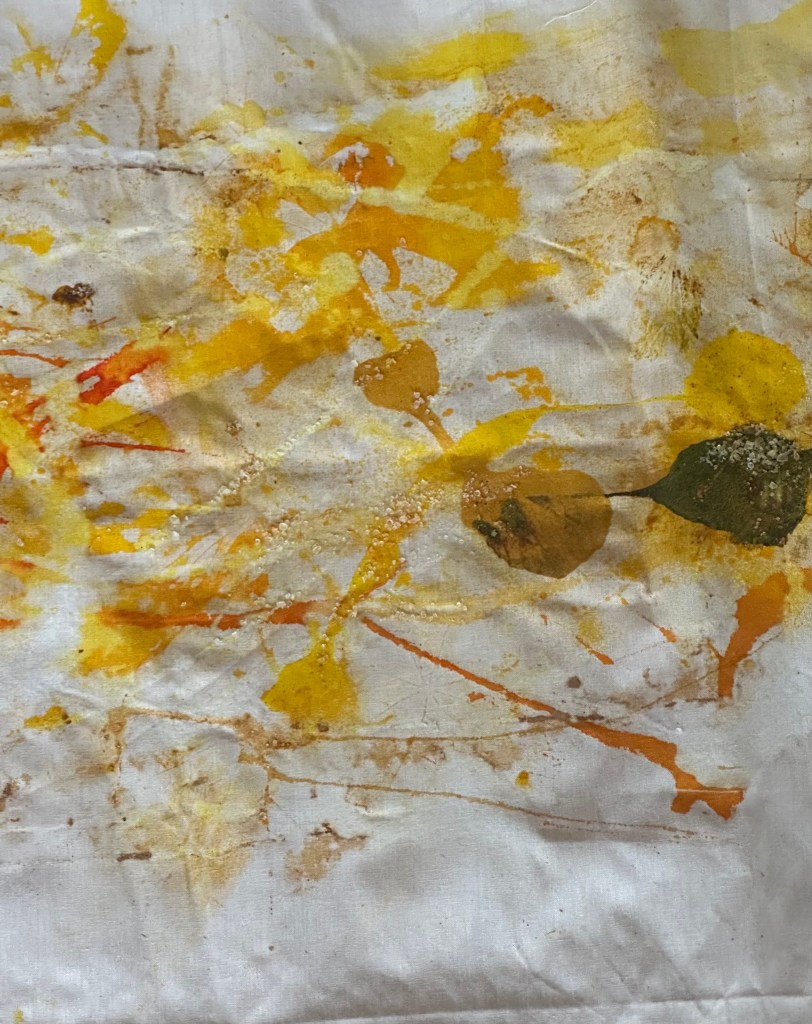
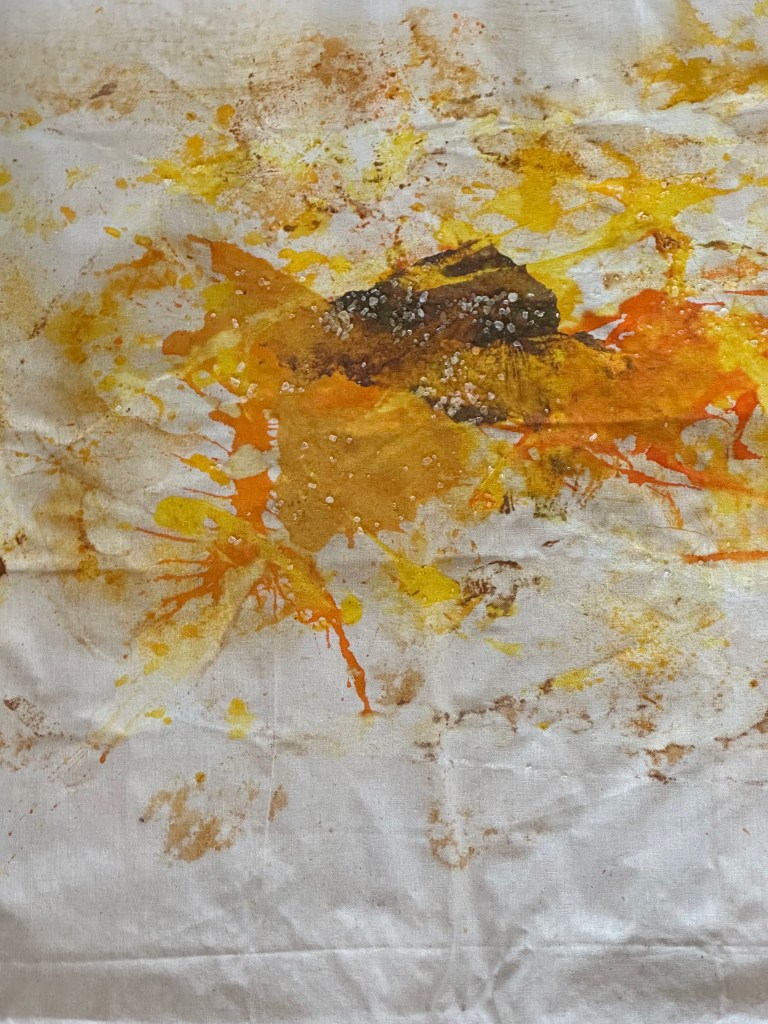
Below
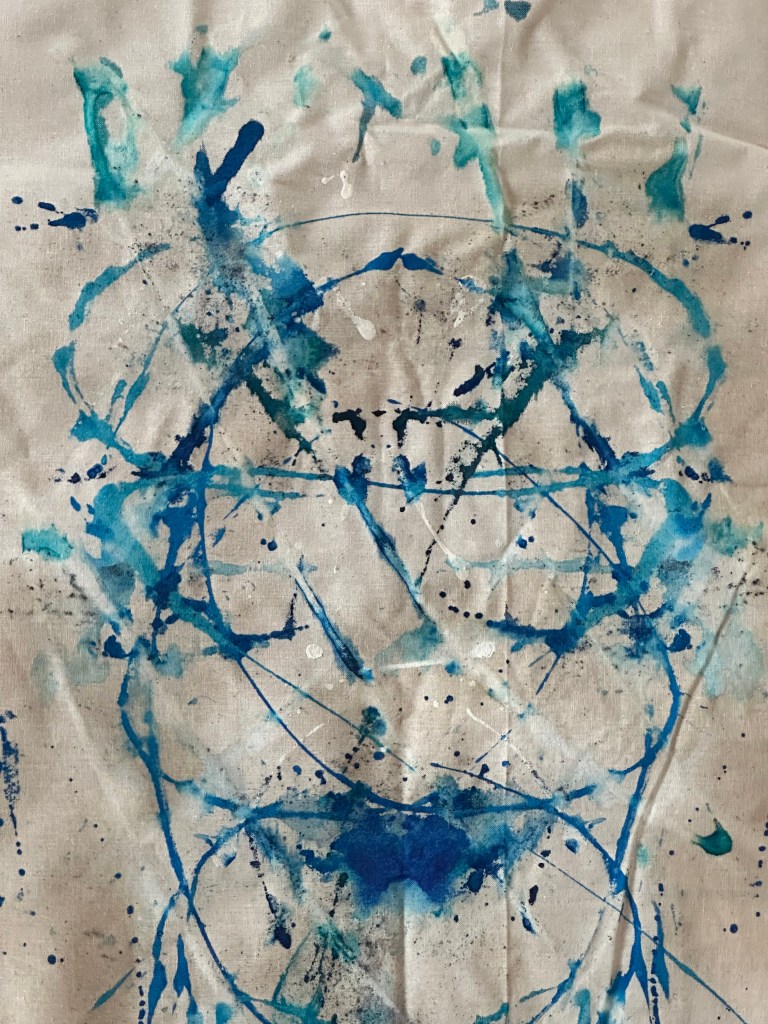
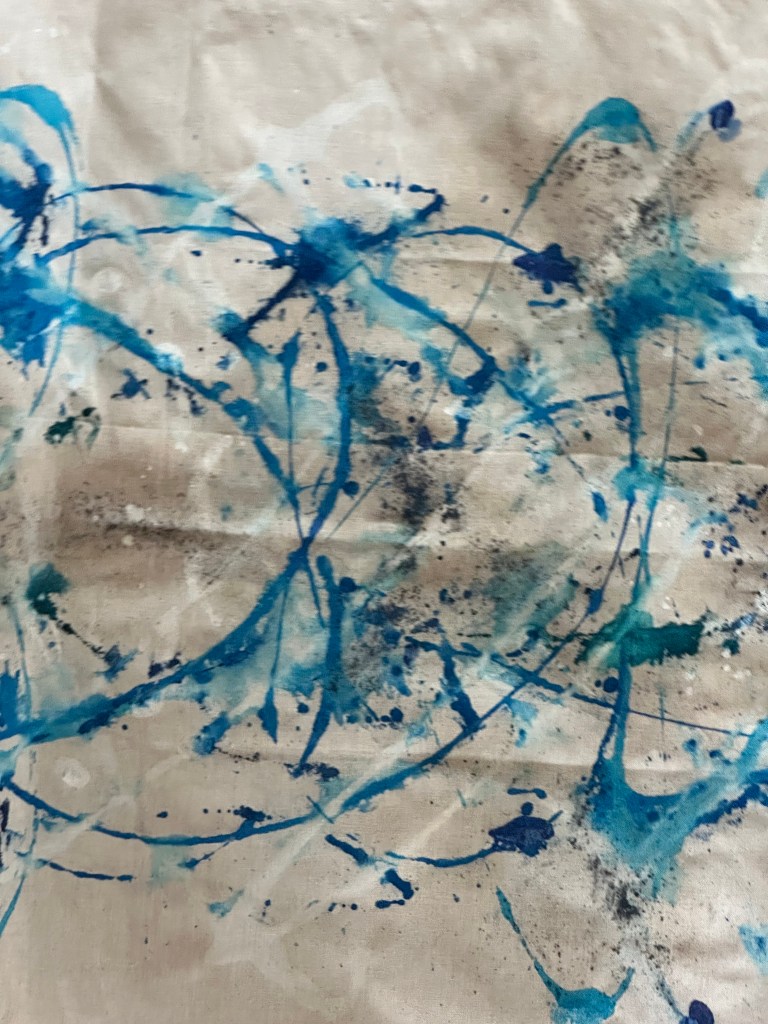
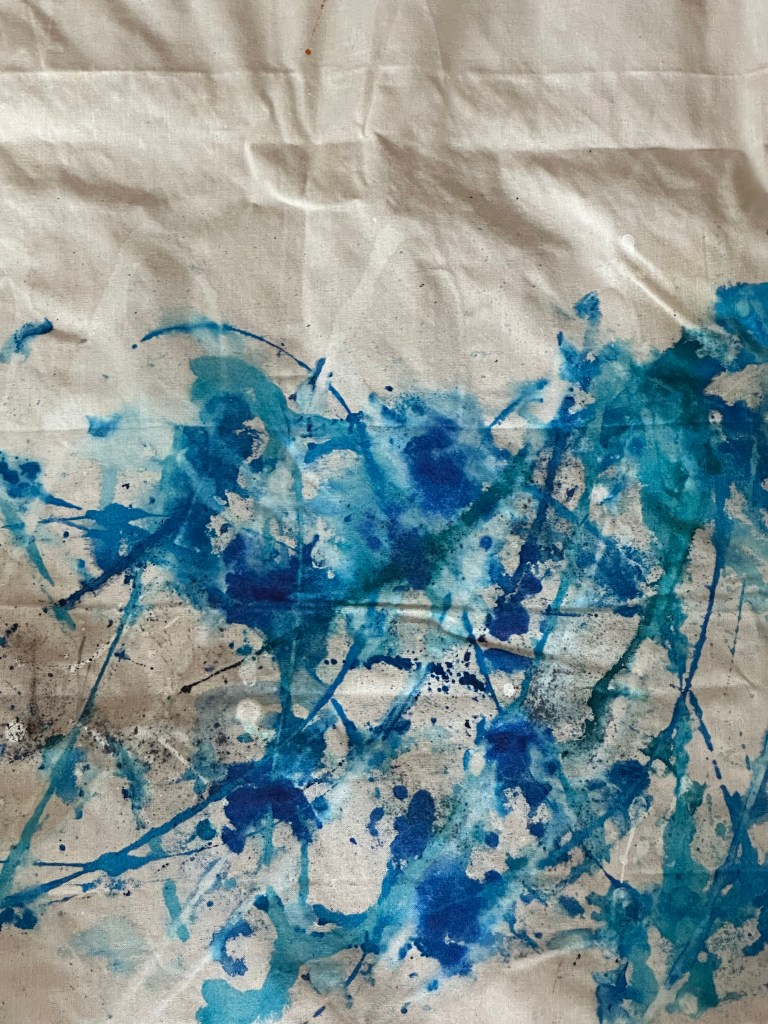
Above and Below combined. Raw unbleached cotton, mixed media, 3000 mm x 2000 mm
Before submerging this piece I spoke with a few local residents who were curious as to what I was doing. They were surprisingly interested, although unsurprisingly, as they have experience flooding too. I explained to them the process of my work, the materials I had used and why. The colours of the series and also that everything was non toxic, without trace. This was importantly as they swim in the lake too.
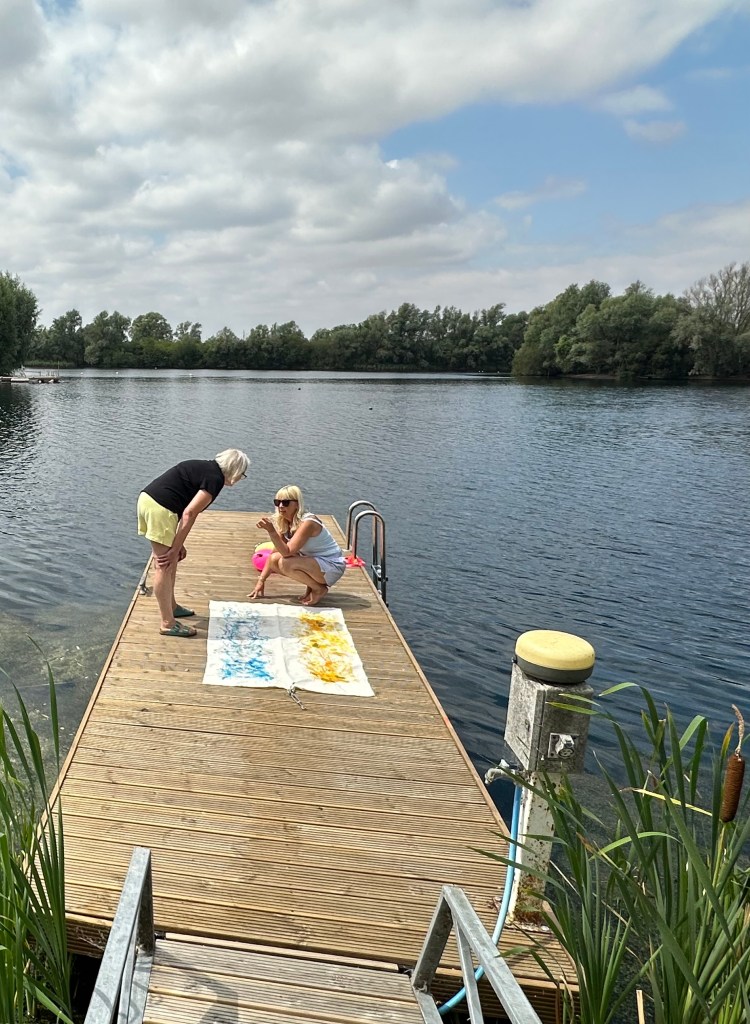
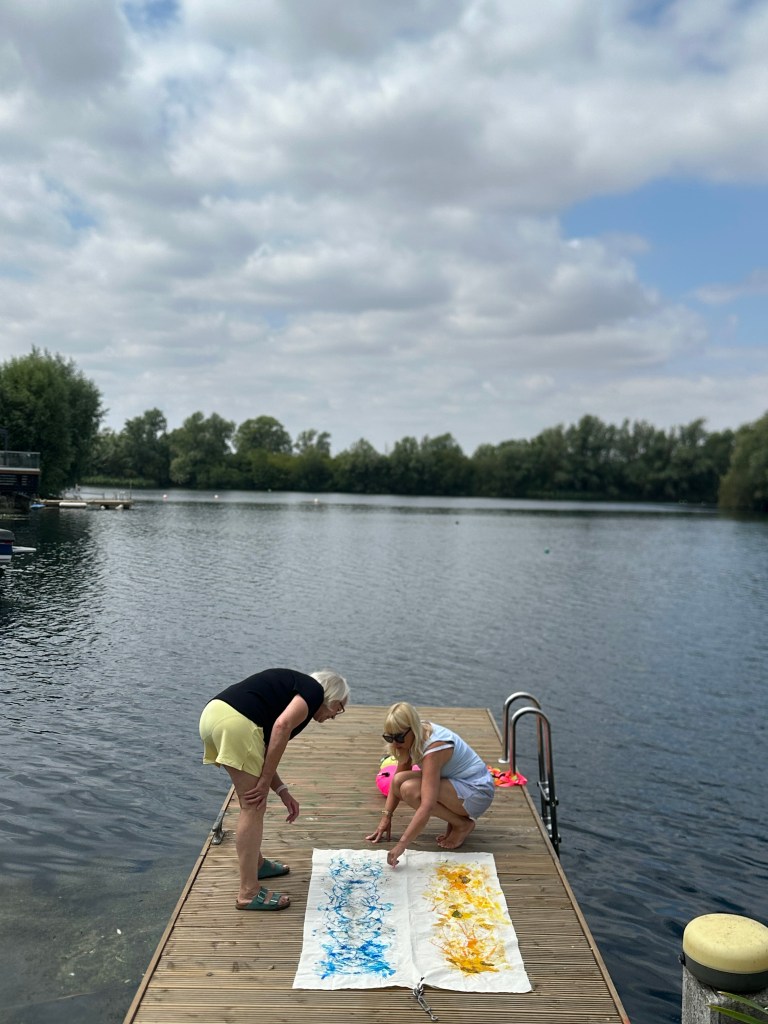
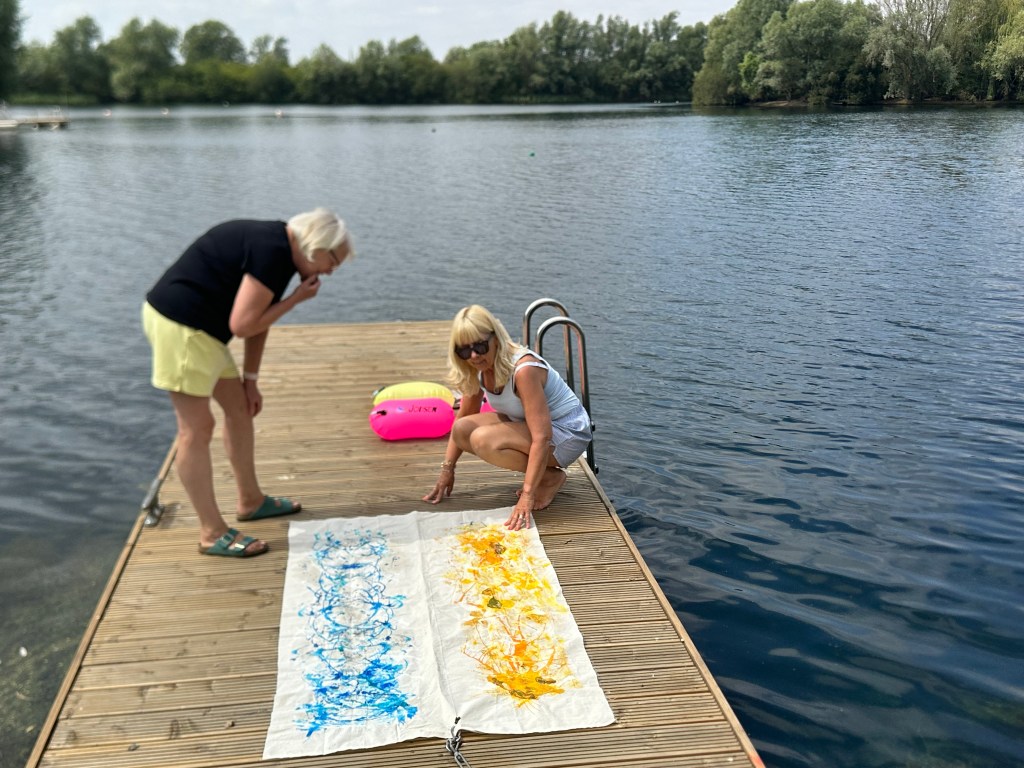
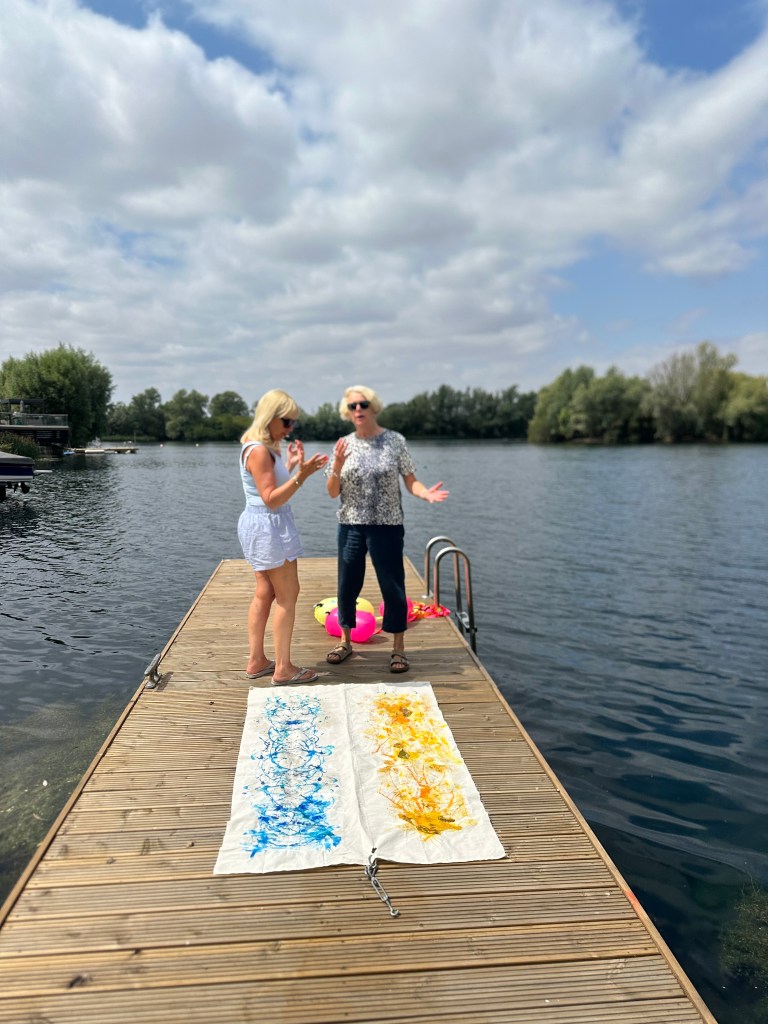
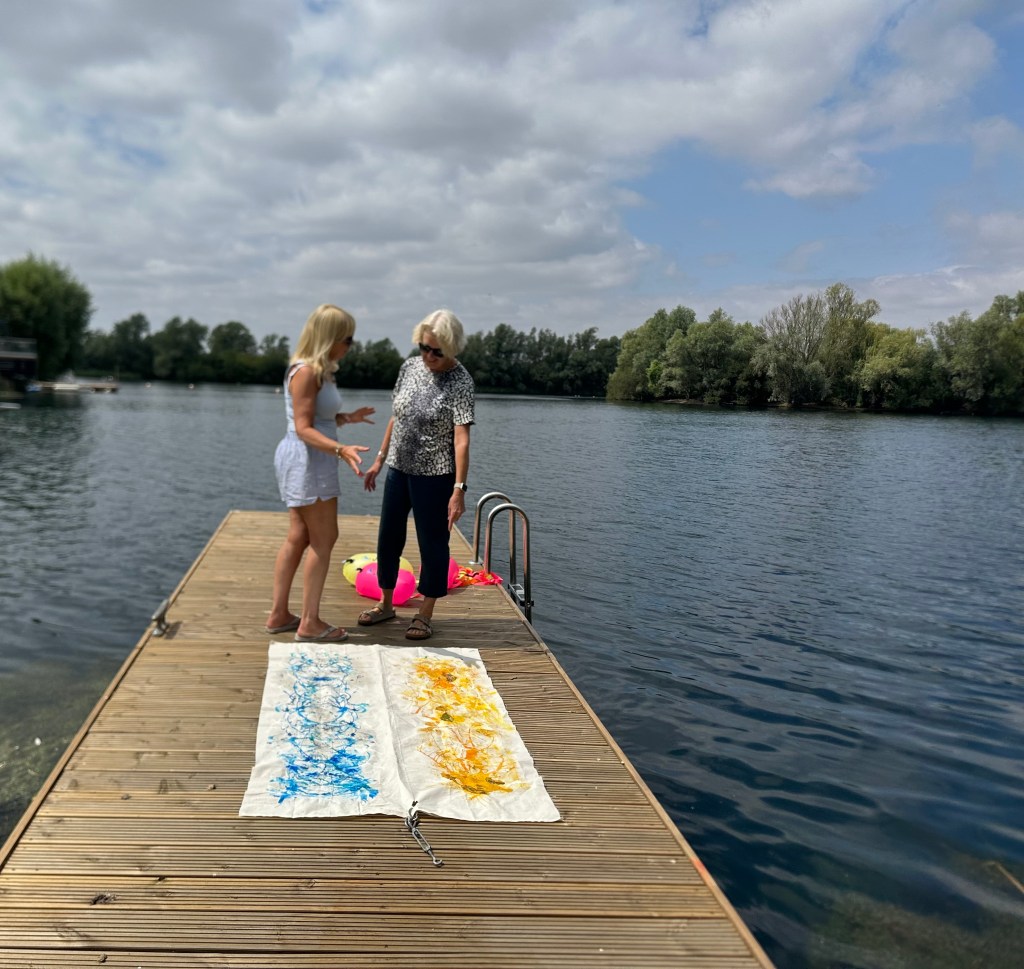
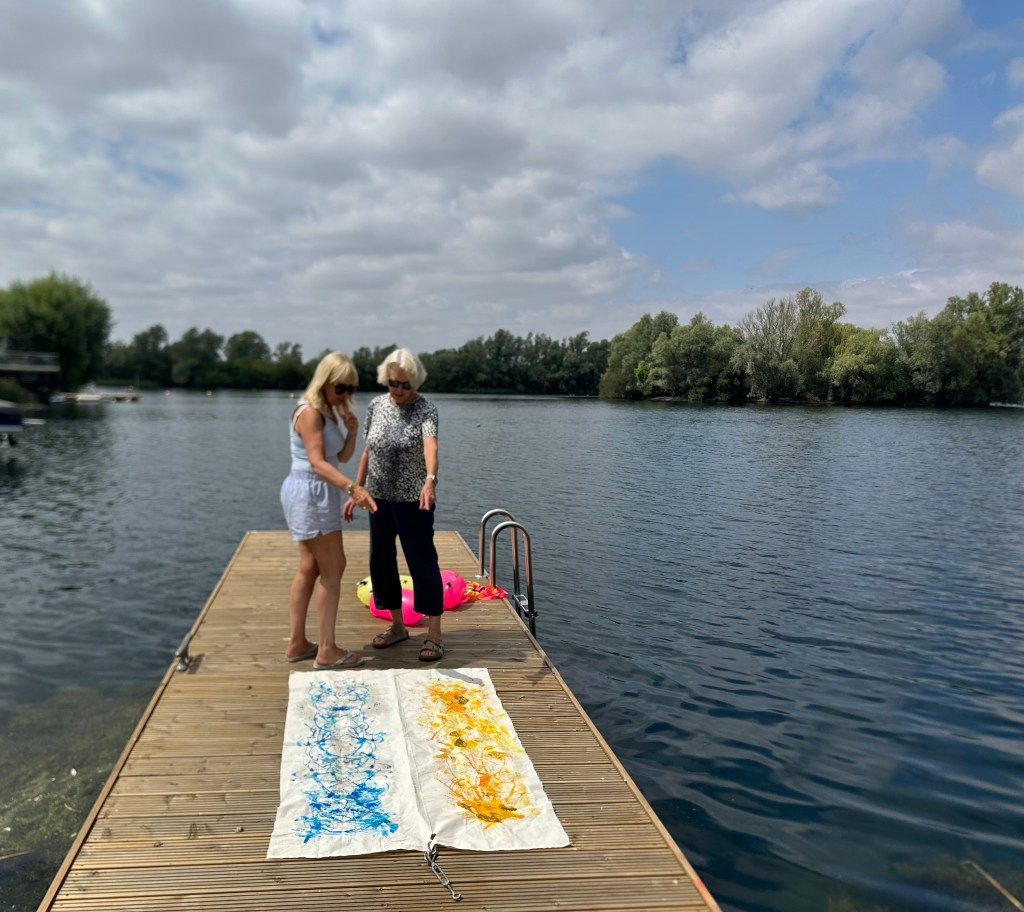
Their responses added another layer of connecting the work to the environment and also the community, being site specific as it is their lived experience’s as well as mine.
The fabric piece was submerged in the water and photographed every hour. The wind is particularly strong today, so I may not be able to capture the images I had hoped for, merging the boundaries of the water and sky. It is too windy to use the drone (again). The fabric is weighted and tied to the steps. There are other people around so I can’t let it float off. Everything I have used is non toxic and without trace.
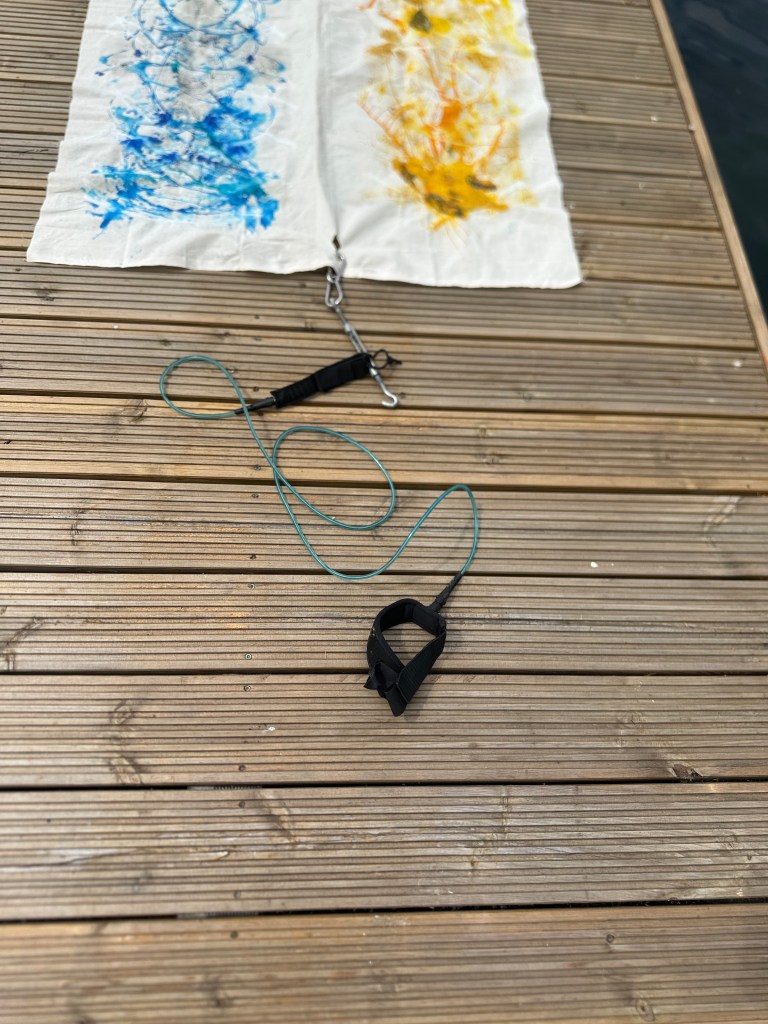
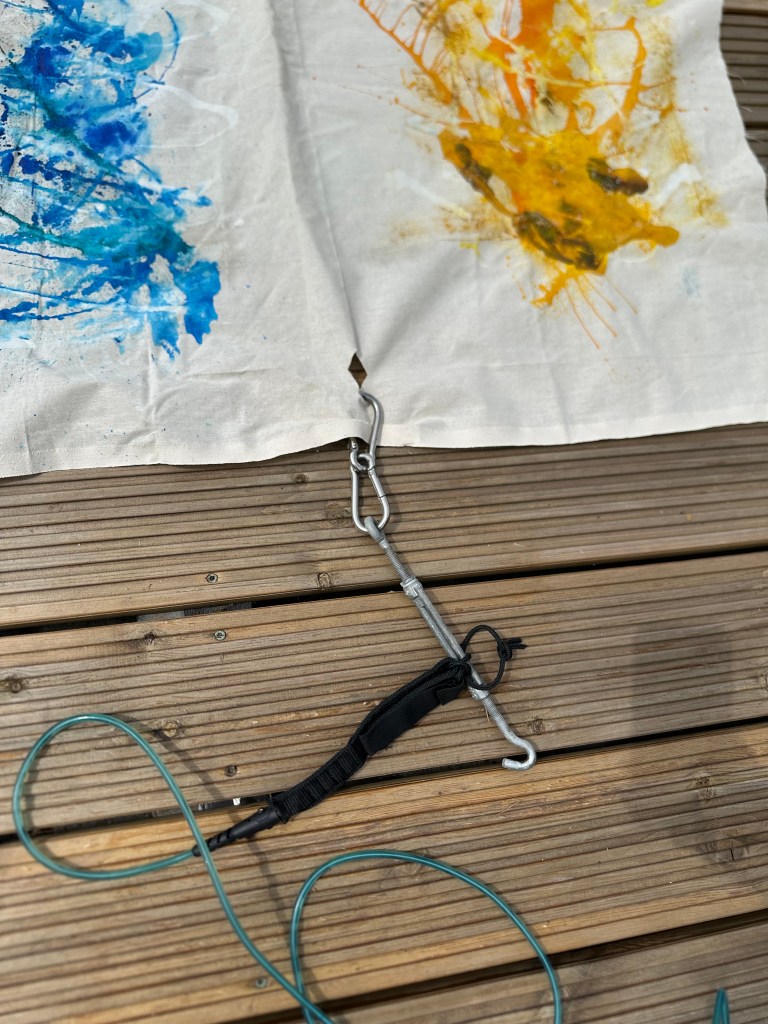
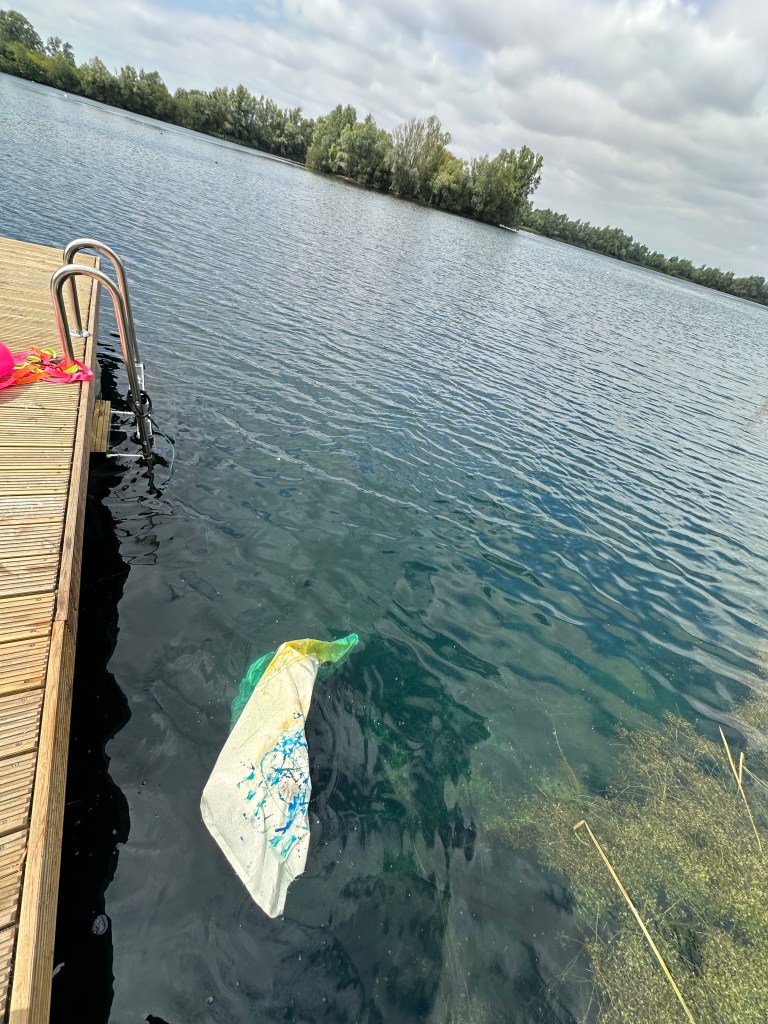
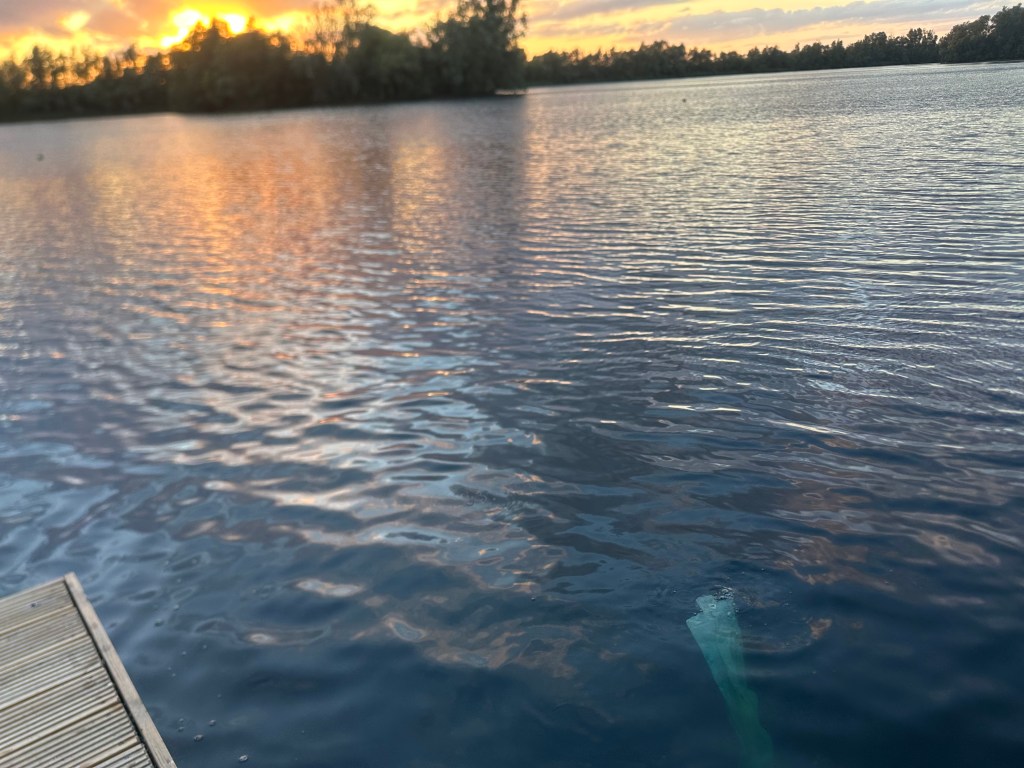
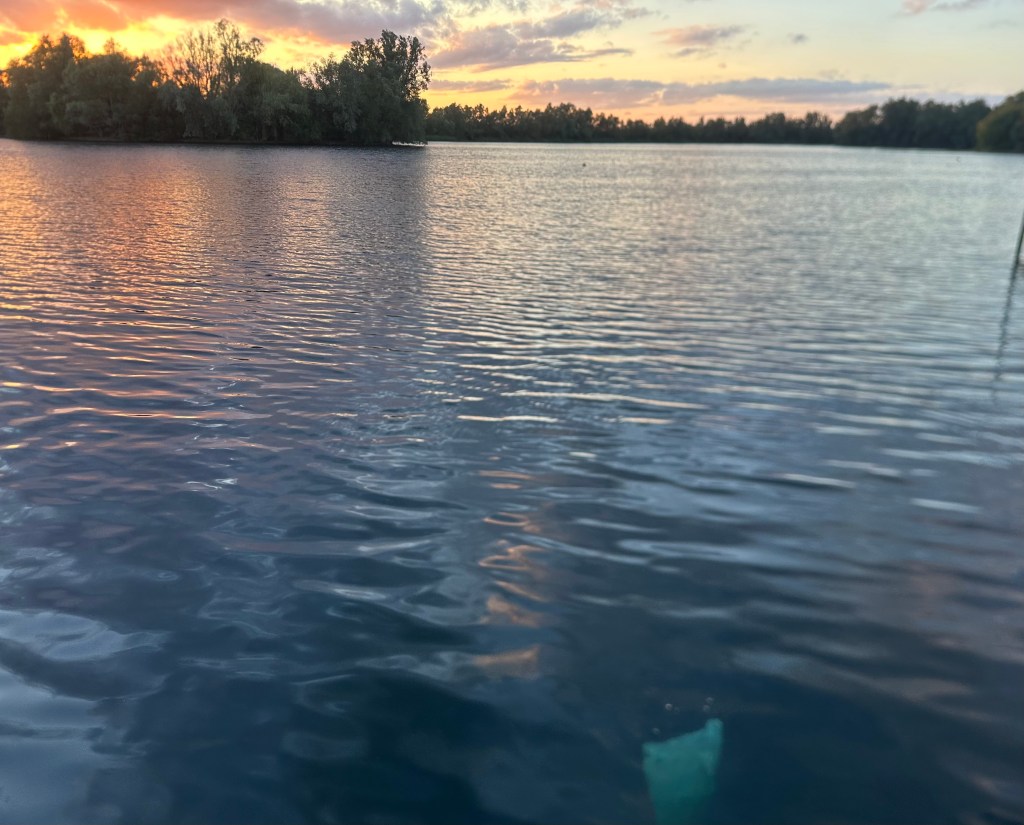
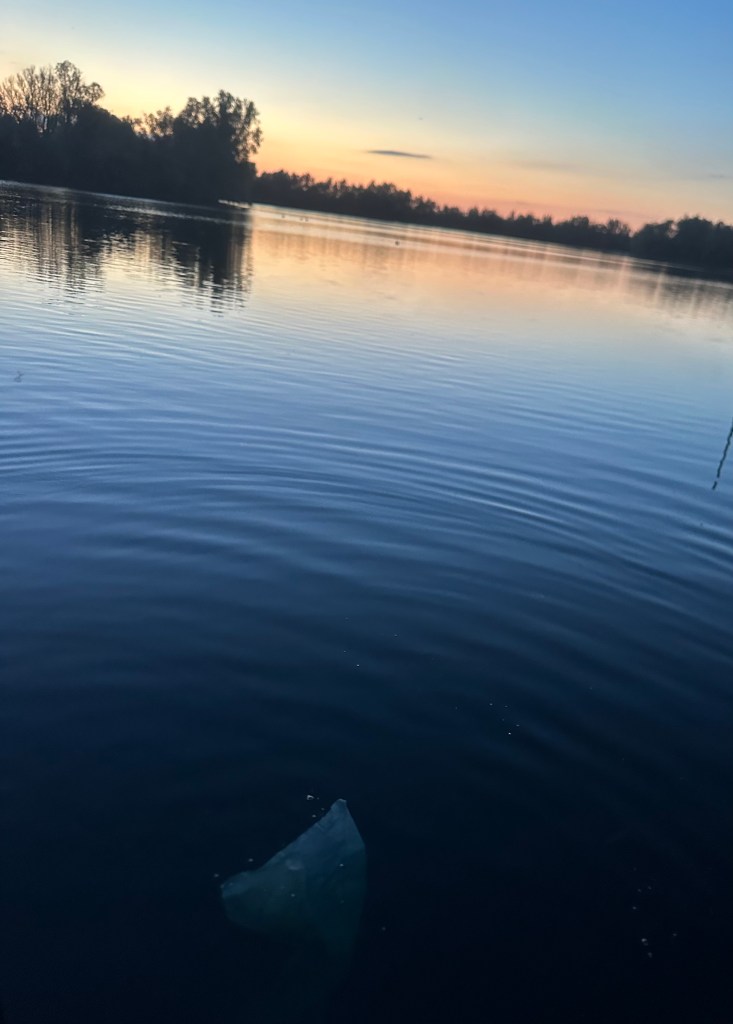
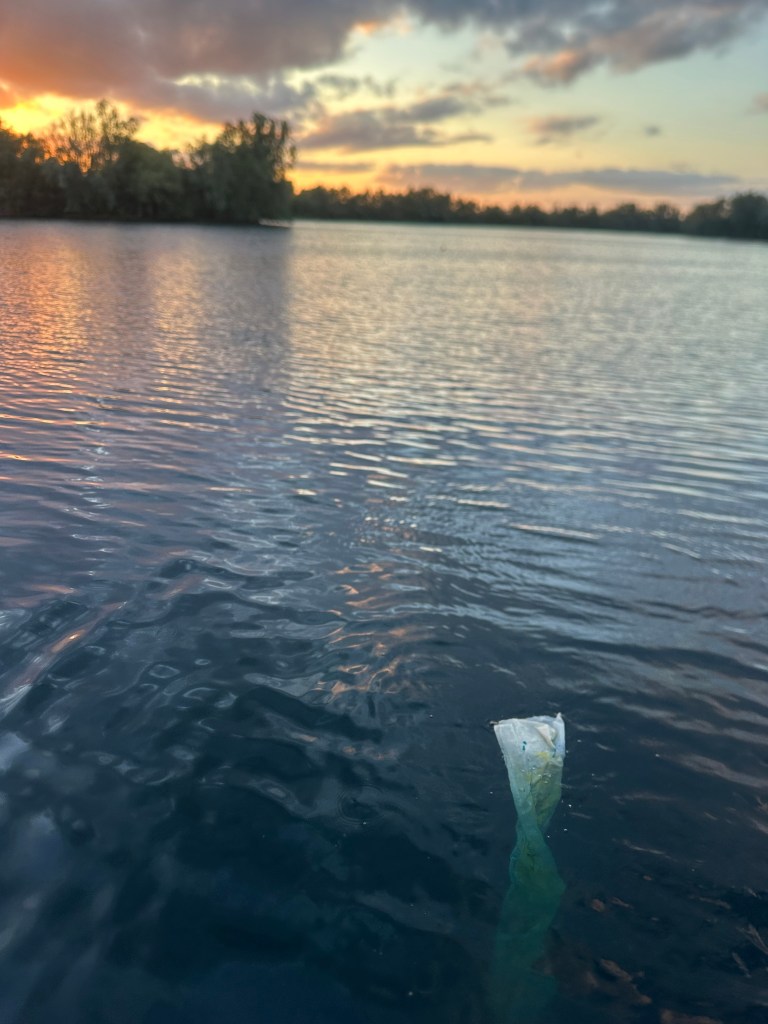
The reflections distort and duplicate the material, there are moments when the fabric appears to merge with the sky through reflection on the water.
Reflection, movement, still, fragmentation and distortion.
Remaining in the liminal place between the air and the water, suspended together beneath the surface, the colours seem to converge the worlds, not only producing an image but enacting the concept. The fabric not only represents a liminal space, it occupies one. For those 24 hours it exists between Above and Below, air and water, visibility and concealment. The environment acting as the collaborator, influencing the work rather than merely serving as its setting.
The earthy colours of Above evoke solidity, land, warmth and the tangible world. The blues from Below suggest depth, reflection, fluidity and the unknown. When viewed through the water the colours are altered by light and movement, so the boundary between the two is never fixed. That instability echos the notion of luminosity, a place of transition rather than certainty.
Materially the fabric absorbs, stains, moves and records its immersion. Temporarily the time becomes part of the artwork rather than simply preparation, spatially the waters surface acts as the liminal space, rather than a solid dividing line, inviting the viewer to consider the relationships between the land and the water, between Above and Below, seen and unseen, permanence and change.
Reflection
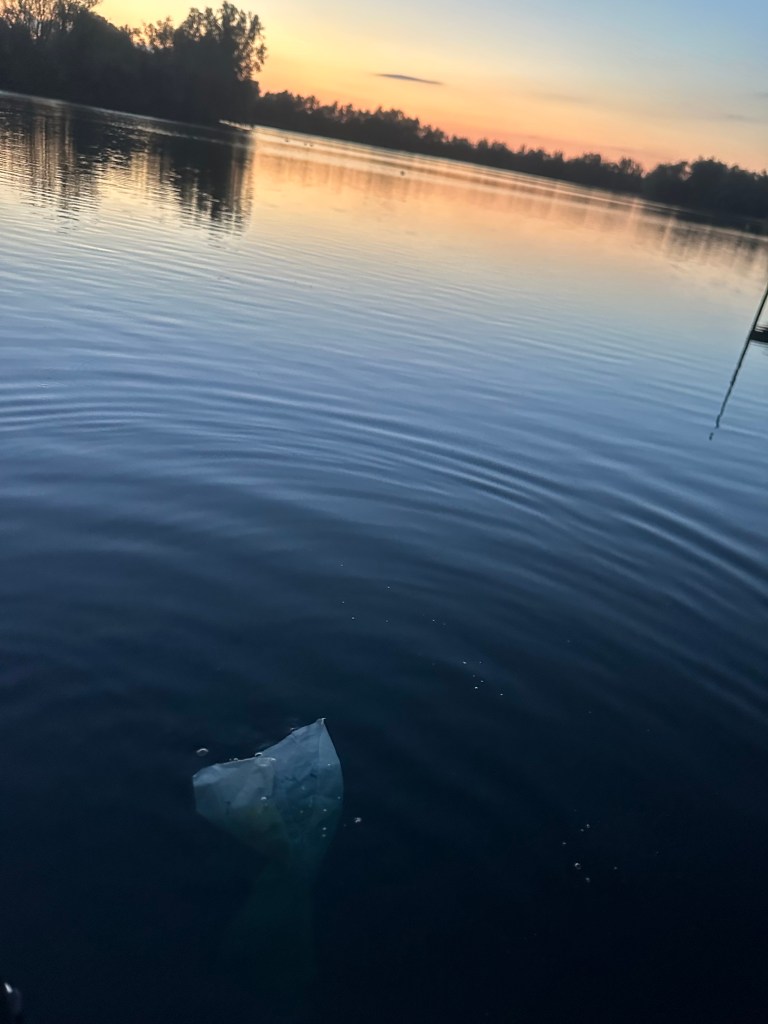
The fabric is positioned just below the waters surface, semi submerged within the surface of Above and Below. The materiality of the fabric is important, continuing to focus on its physical presence, its position beneath the surface, the tension between sinking, floating and suspension, and how the water alters its appearance.
The surface is not presented as a hard boundary, but a moving zone of exchange. Light passes through, reflections form as the fabric sits just beneath it, suggesting that Above and Below are interdependent rather than separate realms.
The movement makes the work visually unstable, what appears to be solid from one angle, dissolves to liquid from another. By allowing the natural process to occur the elements are the participants in making the meaning.
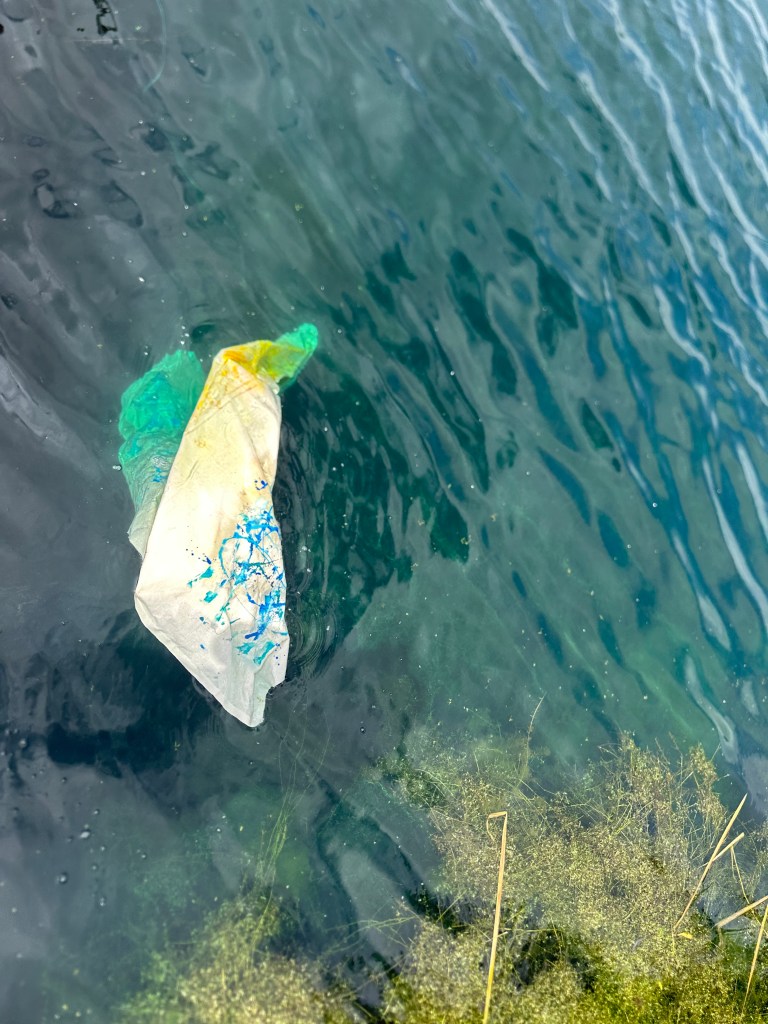
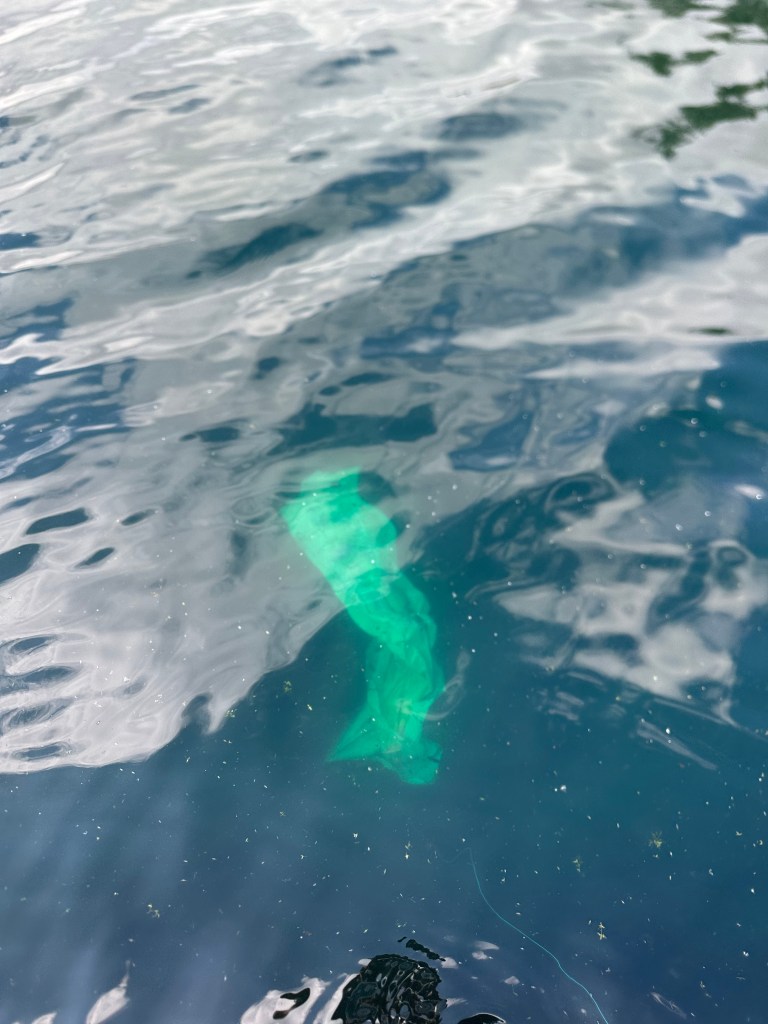
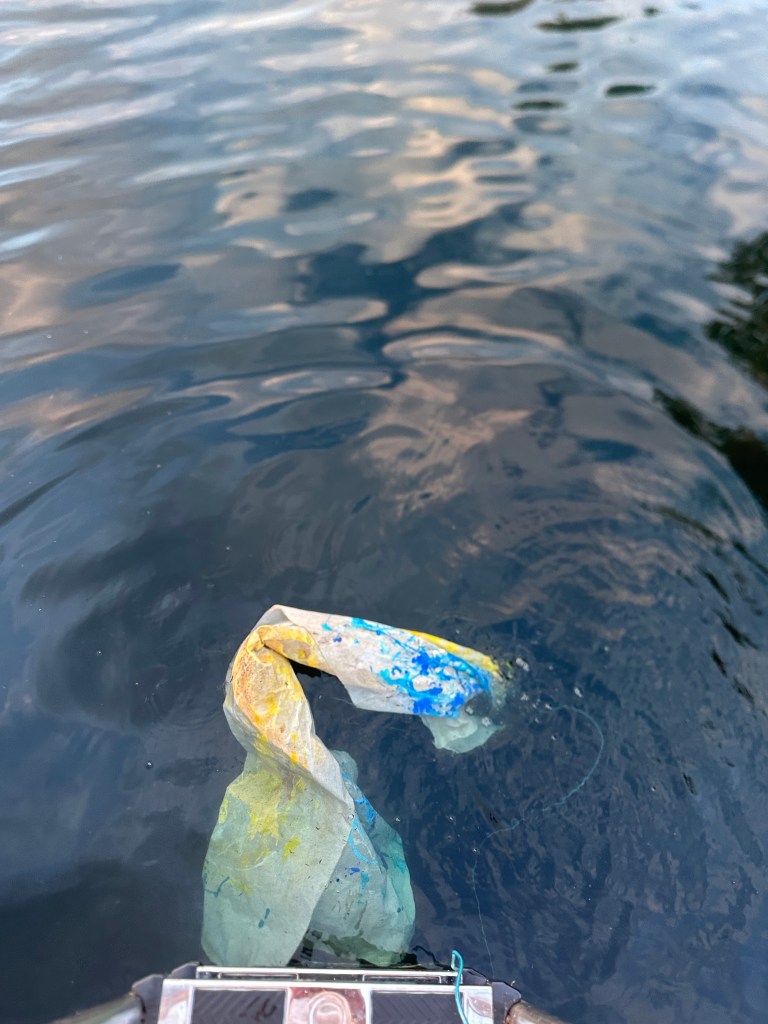
The next morning.
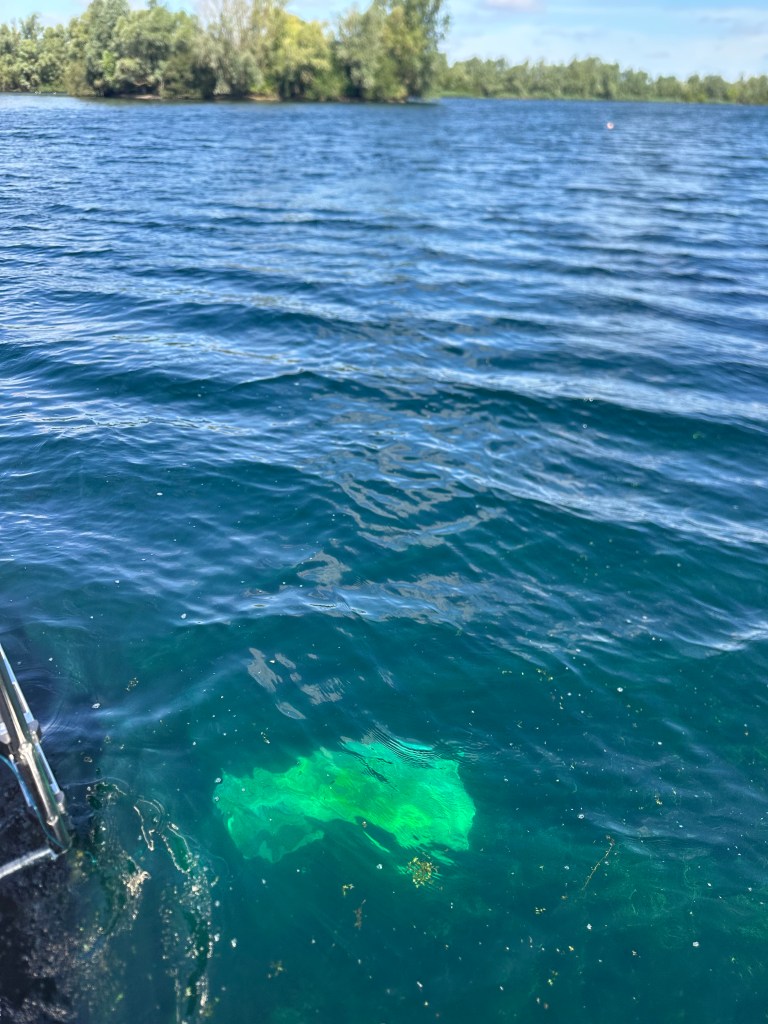
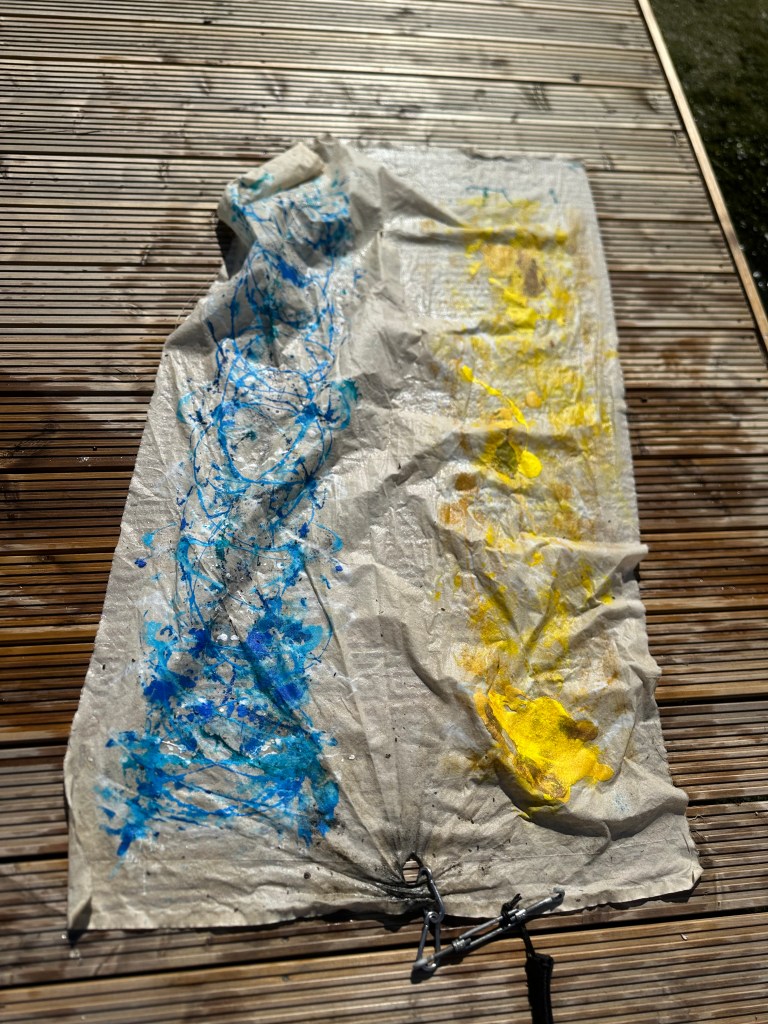
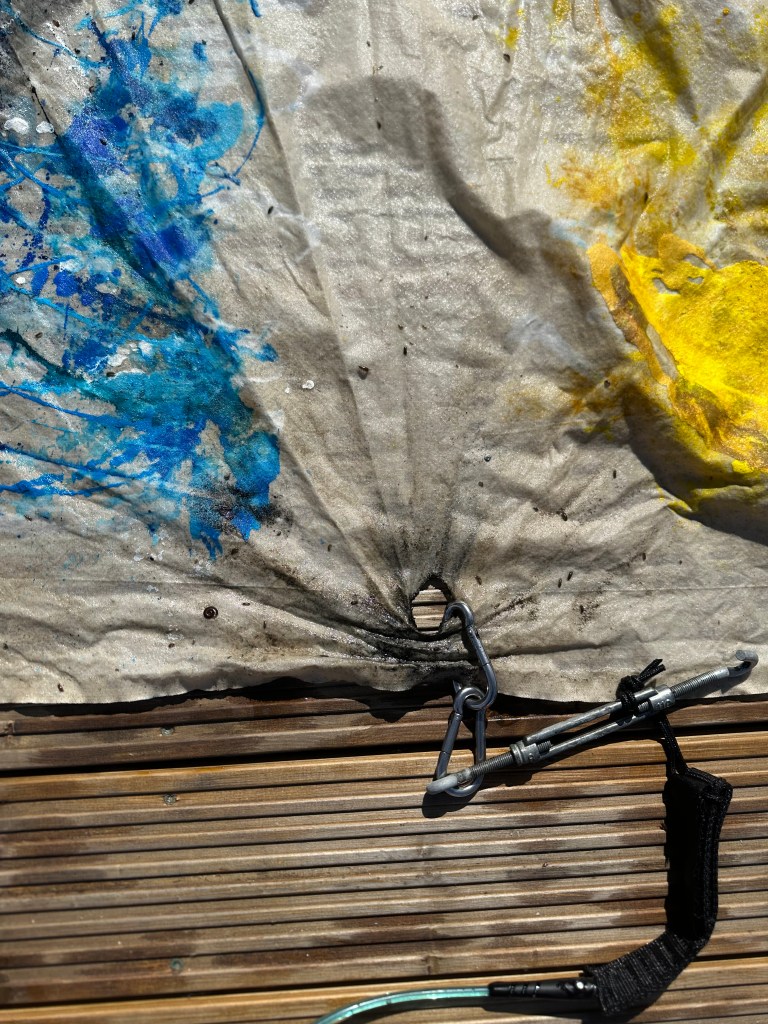
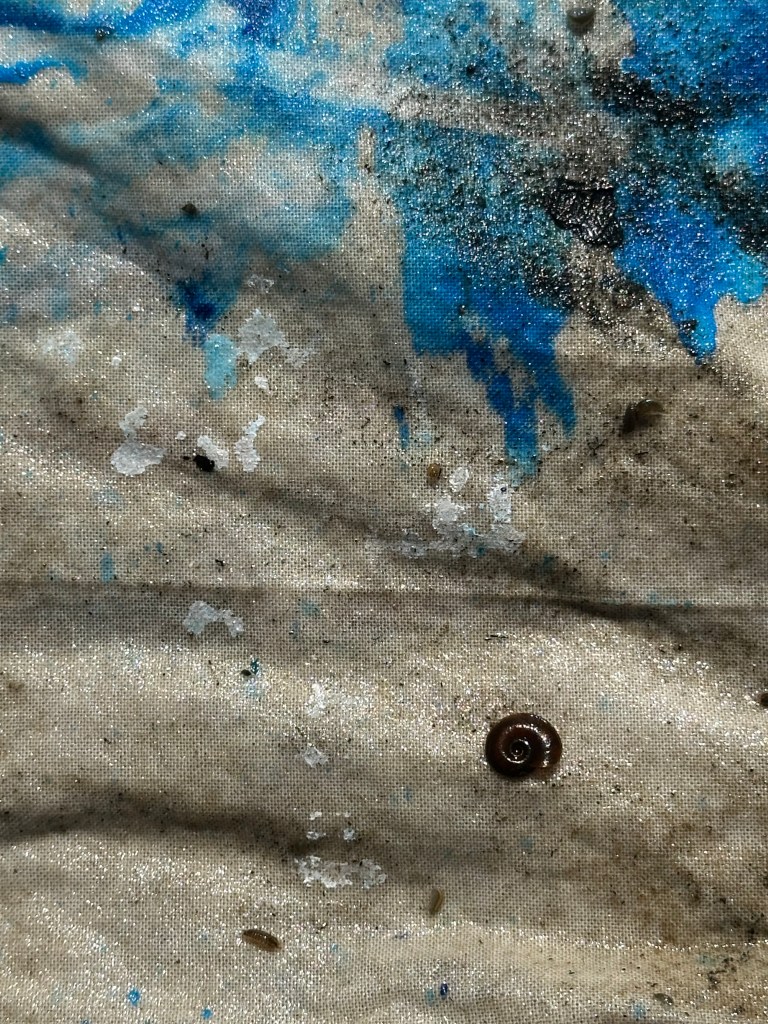
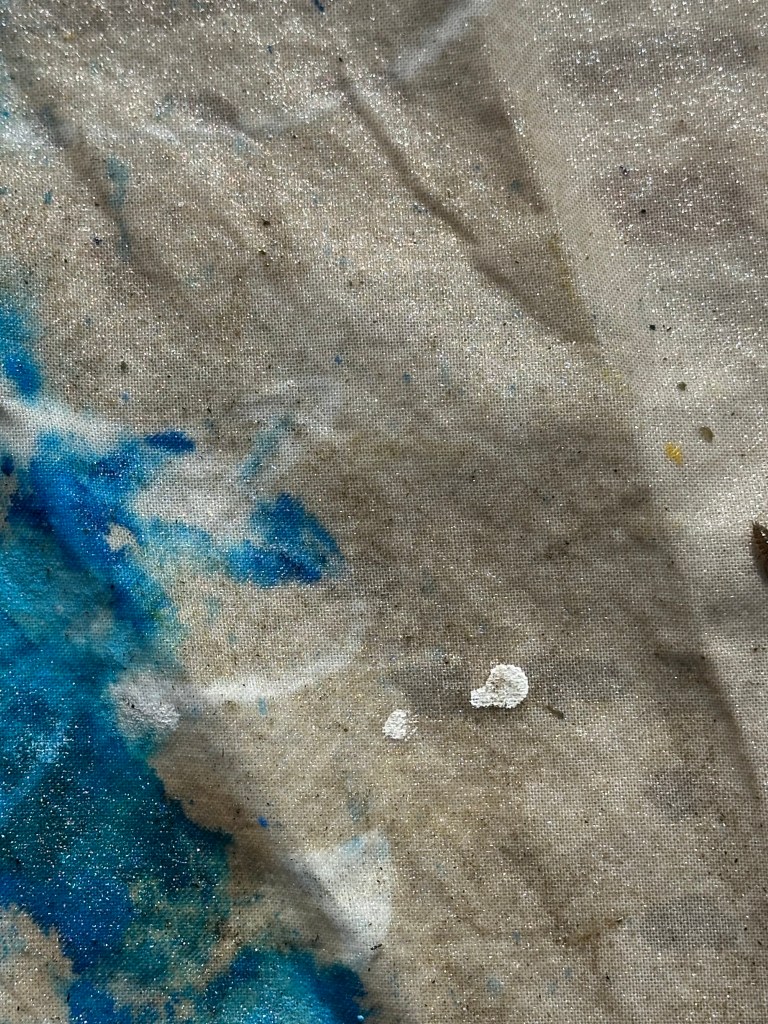
The Above and Below fabric was left for 24 hours. While there was little visible change from hour to hour, the duration of the process became significant in itself, drawing attention to the slow passage of time rather than the dramatic transformation.
The most successful images were taken at sunset from 20:45 – 22:00
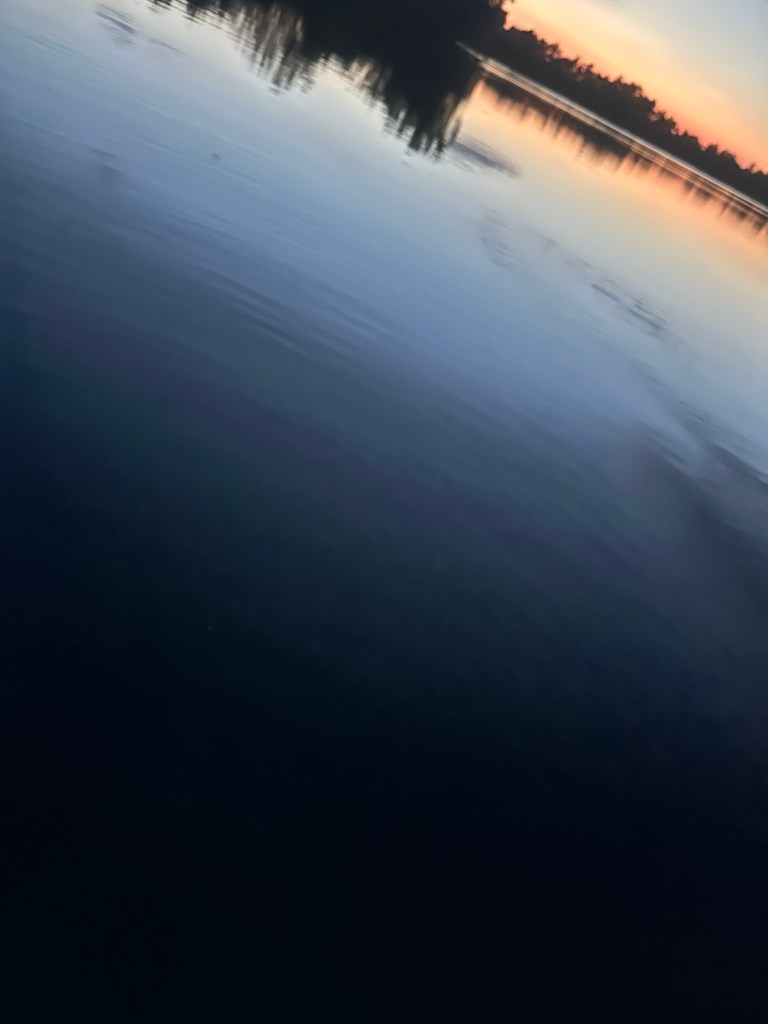
When the water became calmer and the sky started to reflect on the water. At that moment the waters surface became visually ambiguous blurring the distinction between what was Above and what was Below. The liminal space as a traditional boundary where reflection and reality coexist. The two environments become temporarily indistinct.


