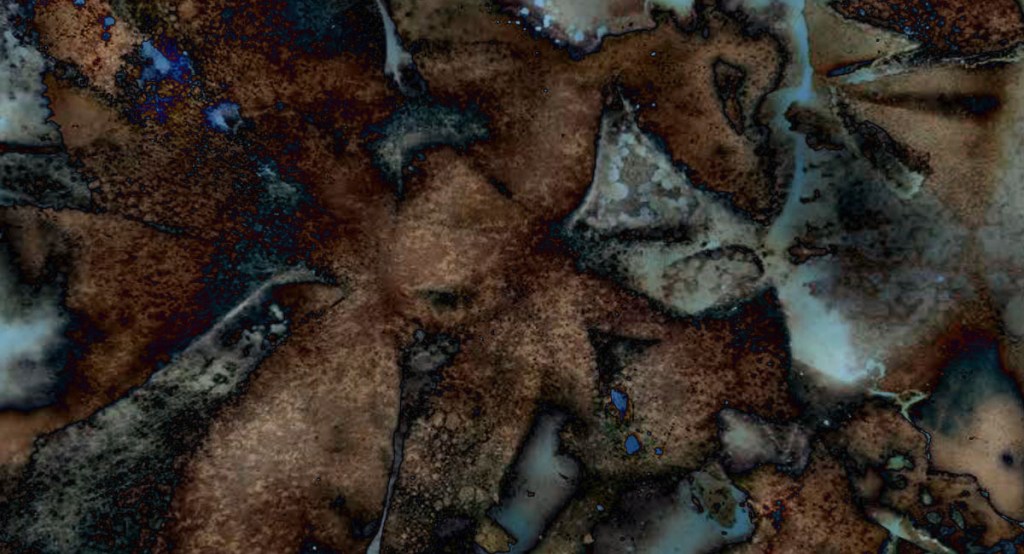
I wanted to continue working with the cyanotypes, both my tutor and myself thought they were successful and needed more exploration. To be true and authentic to what I am trying to achieve, I have used water from the river in two different ways.
The first actually within the mix of found objects, reeds and debris from the river bank and the second to wash the cyanotypes in. As I’m writing this, I have only completed the first set so am interested whether the second set will look very different.
Cyanotypes with their deep blue hues and organic textures, naturally evoke the ebb and flow of water. The marks and silhouettes of found objects tell a layered story, from something quite beautiful to something unsettling about what the river holds beneath. A visual story that explores the fragility of our ecosystems in the face of pollution, drought and climate change.
The cyanotypes made with vegetation, natural debris and pollution become a haunting portrait of what our rivers carry, lose and remember. Ephemerality through flow and fragmentation, layout and form, reflecting the meandering course of the river and the forced interruptions it endures through pollution.
Trying to blend the river within my practice and use it to tell my story, the physical disaster, the emotion, the water, a source of life and calm becomes a force of destruction and helplessness. Channelling my emotions through drawing and mark making becomes a form of processing and reclaiming.
The spread of the water through the flood, is echoed in the marks on the paper, where control becomes ambiguous and slightly chaotic. The found objects becoming part of the palette, as well as being symbols of nature, they speak of what once was, and what persists to survive, illustrating the environmental imbalance and neglect that surrounds us.
The river tells its story through me and my practice using what I have as translators, the textures of displacement, the layered emotion of loss, and regeneration resulting in a visual language of fear and adaptation.
The river represents life, flow, change as well as connections, by creating art using these elements, is an unharmful way to draw attention to the fragility of our water ecosystems.
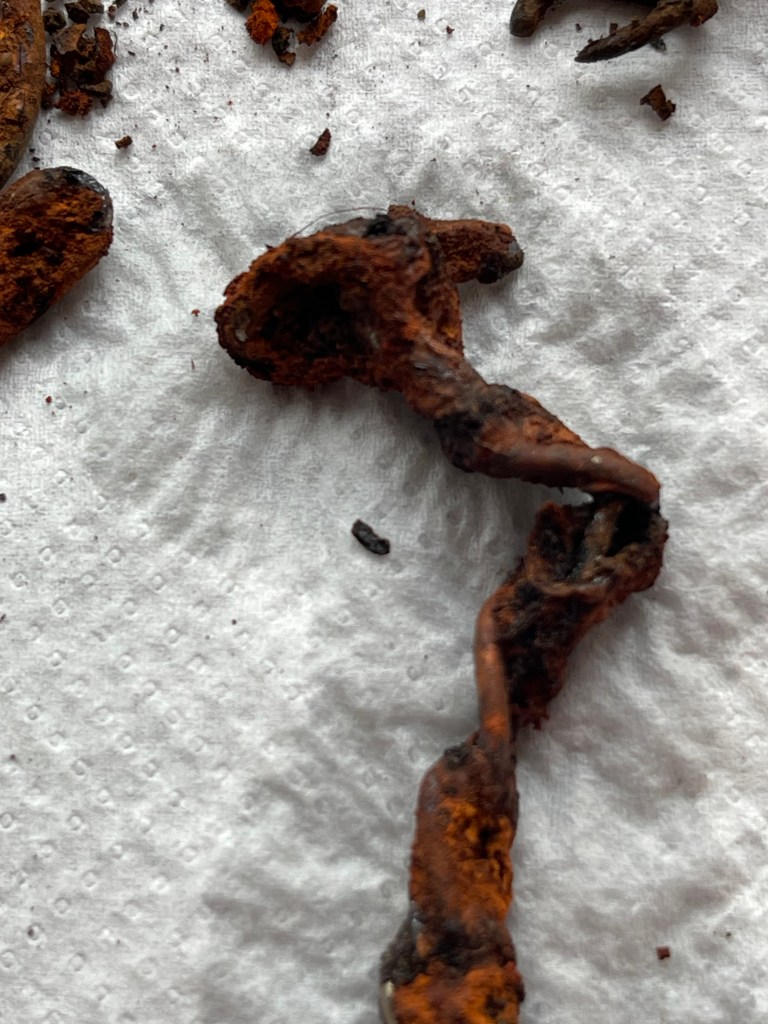
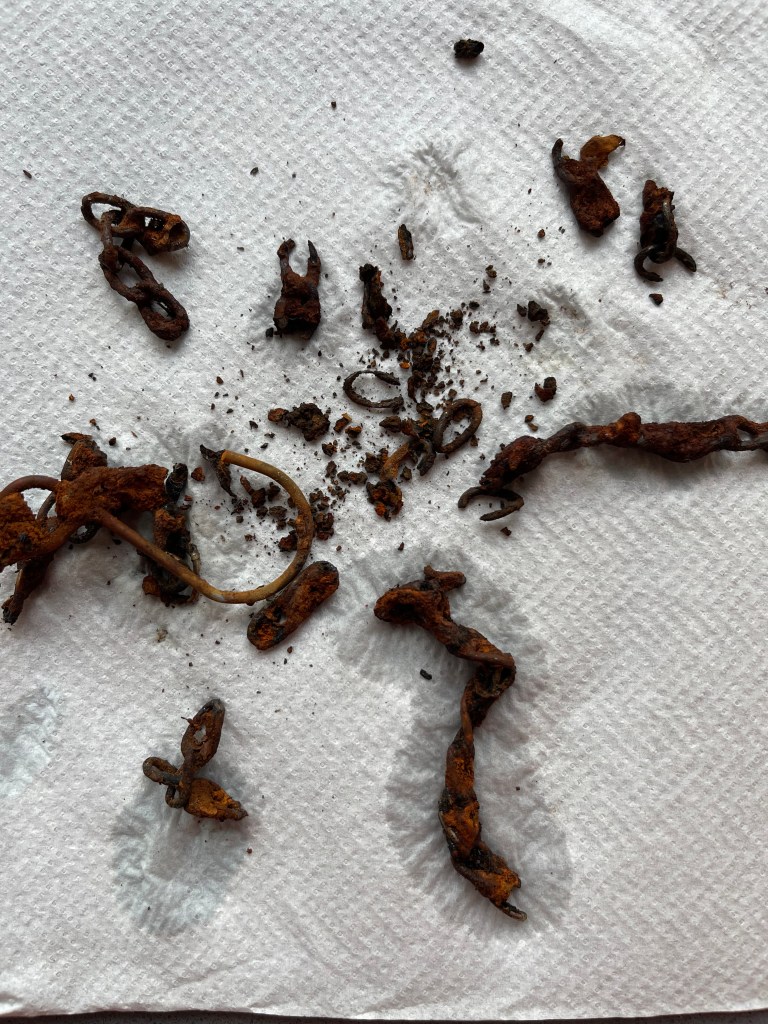
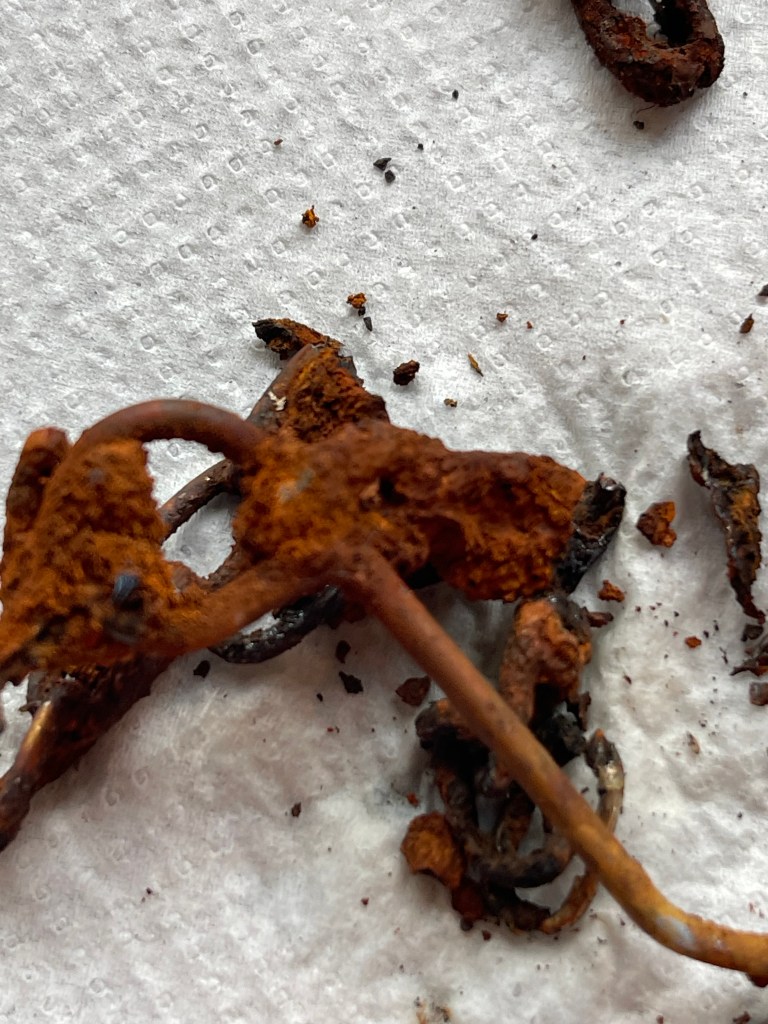
Found rusty objects.
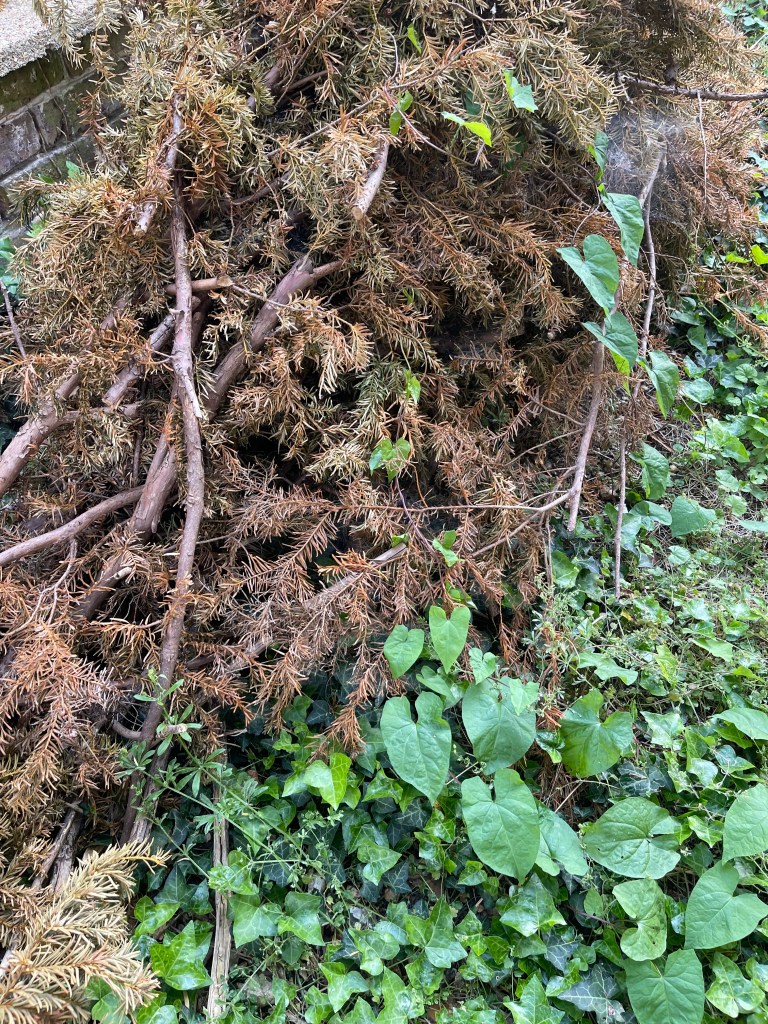
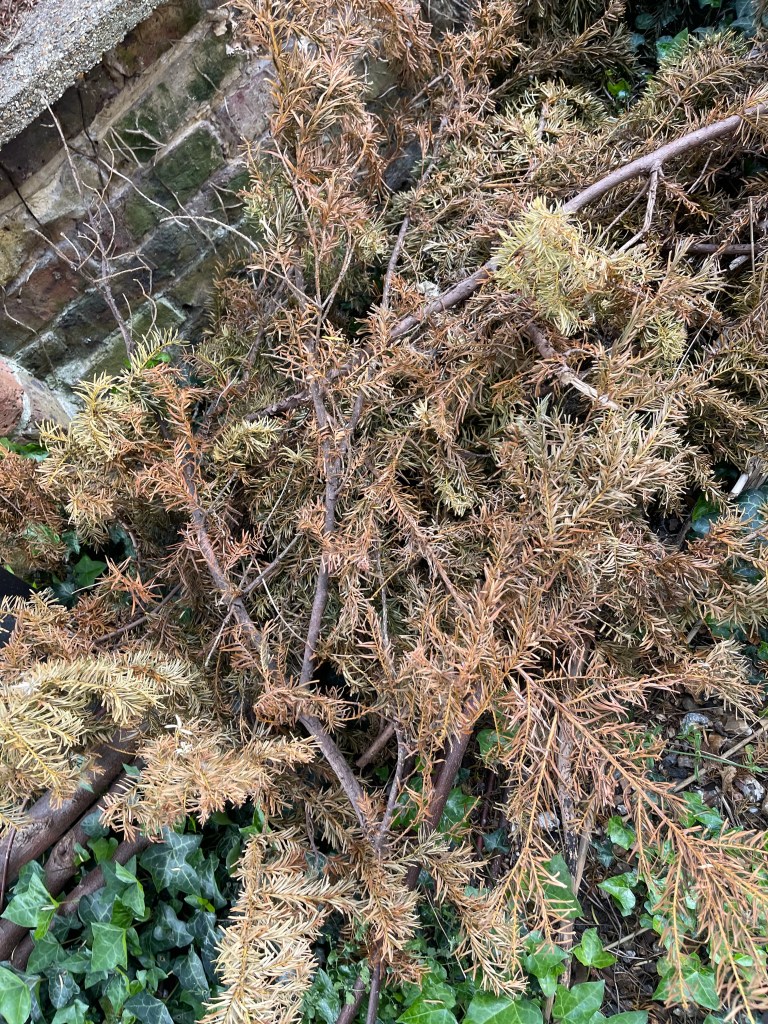
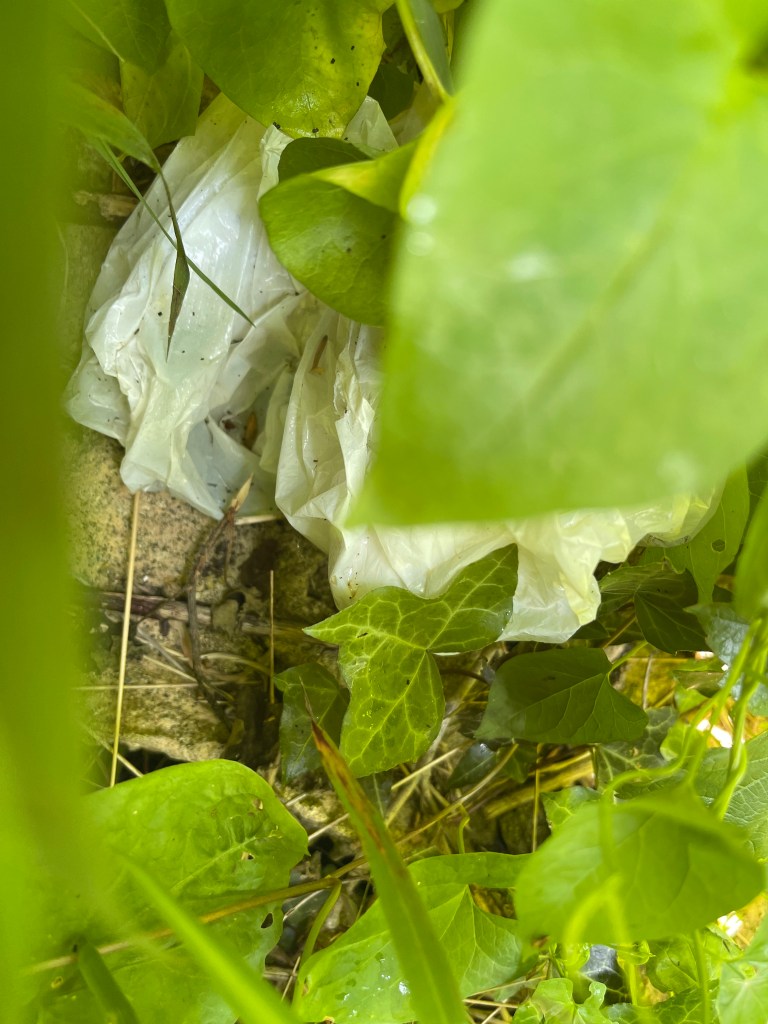
Dumped garden waste and litter.
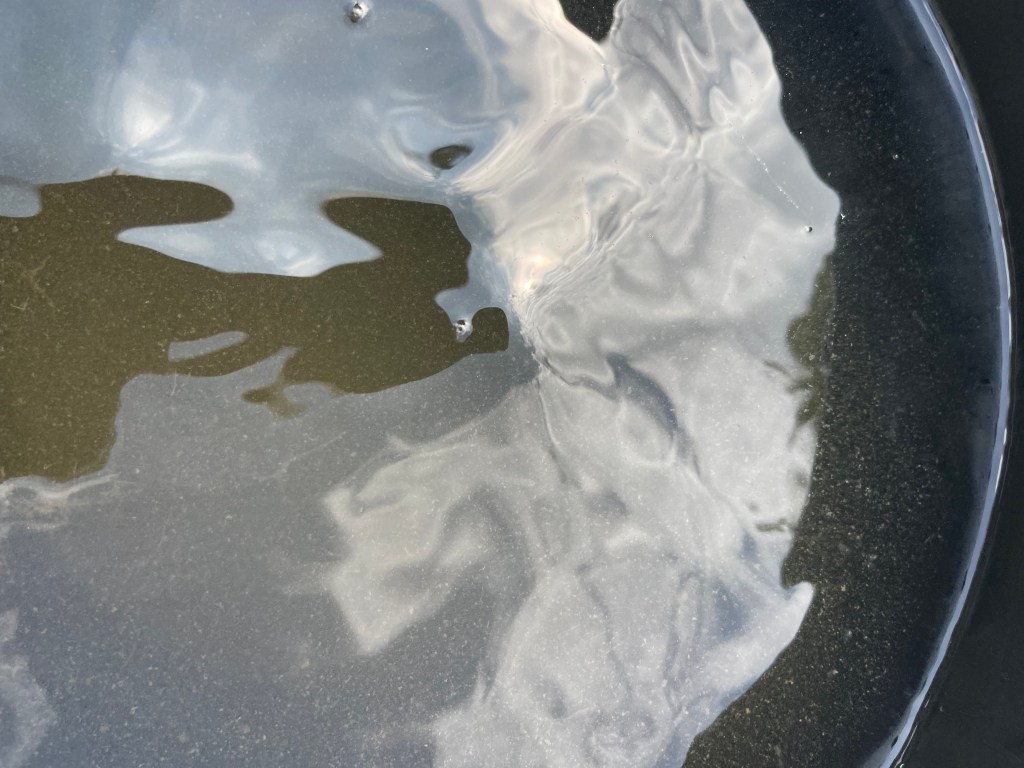
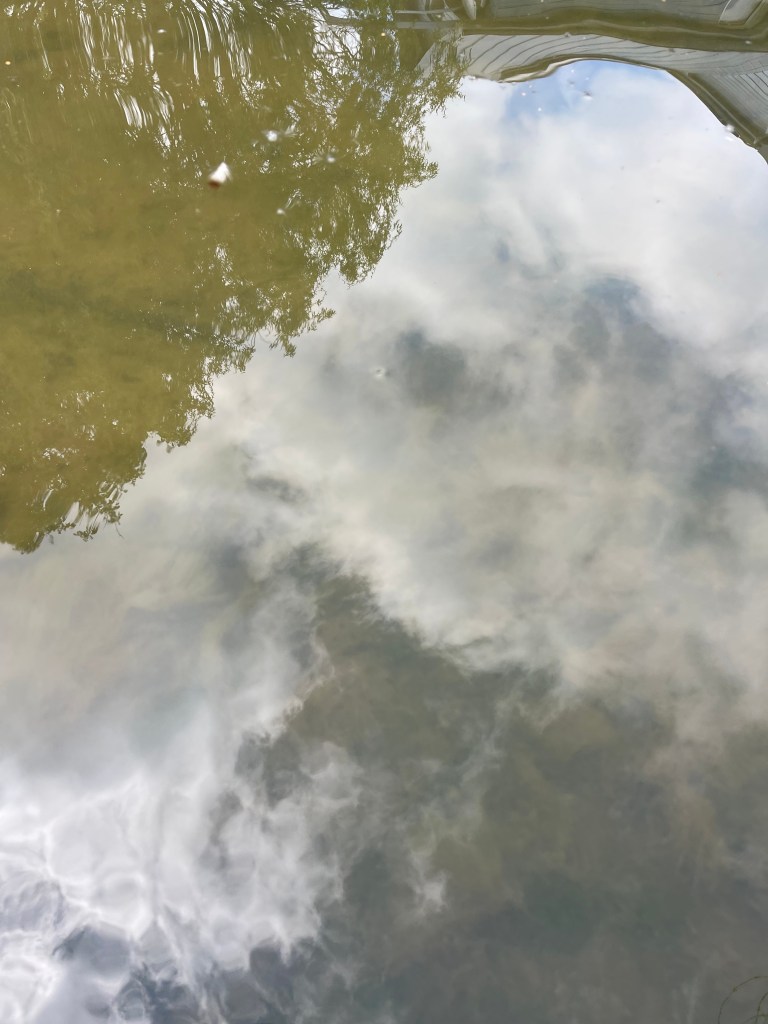
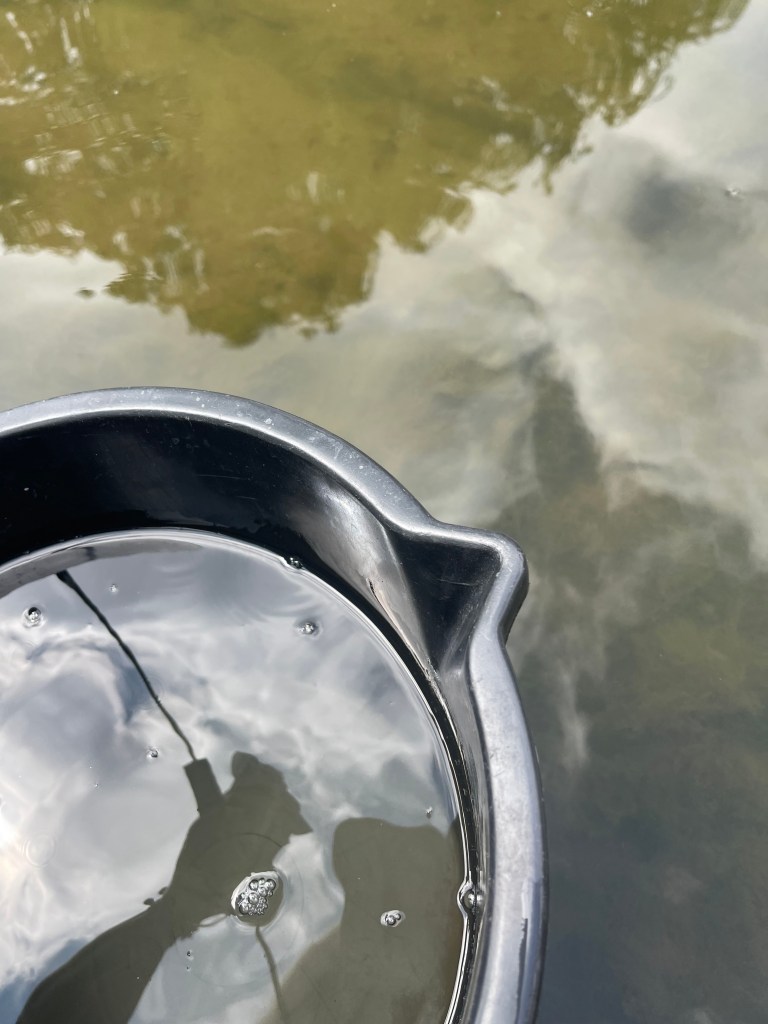
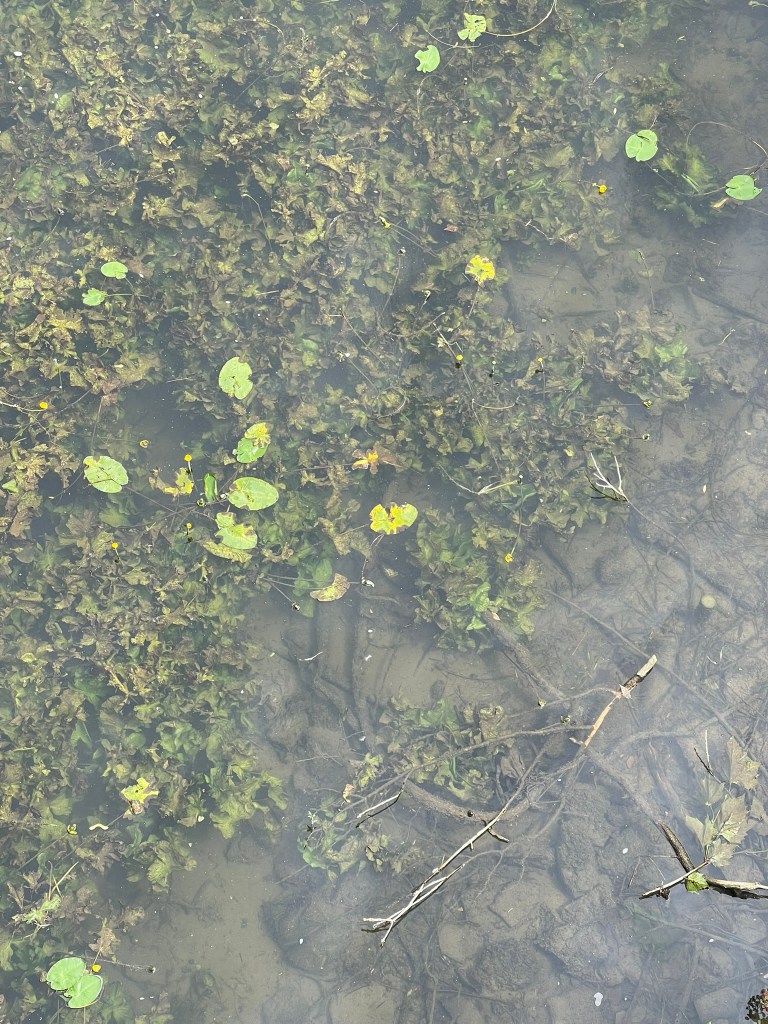
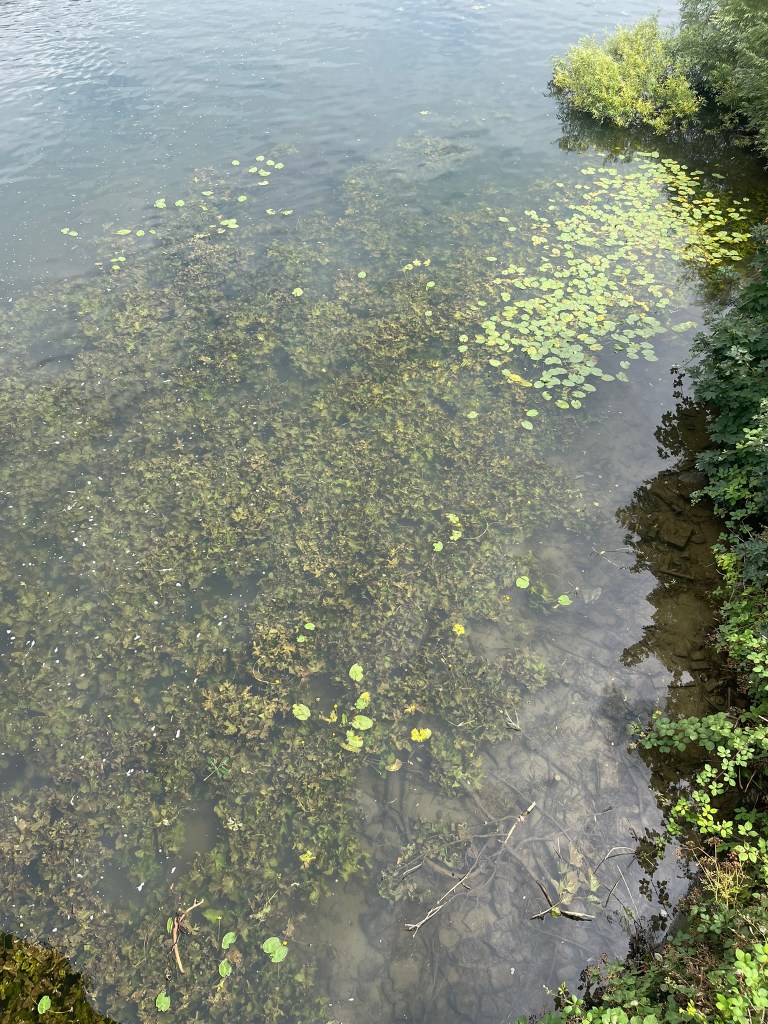
Taking water from the river.
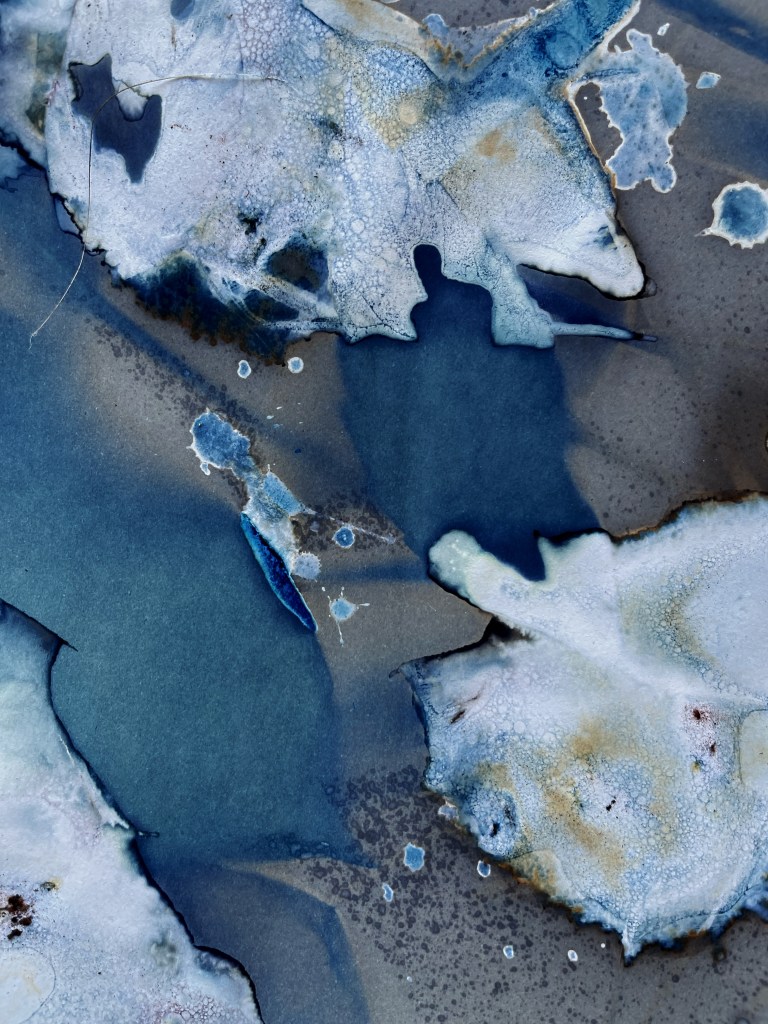
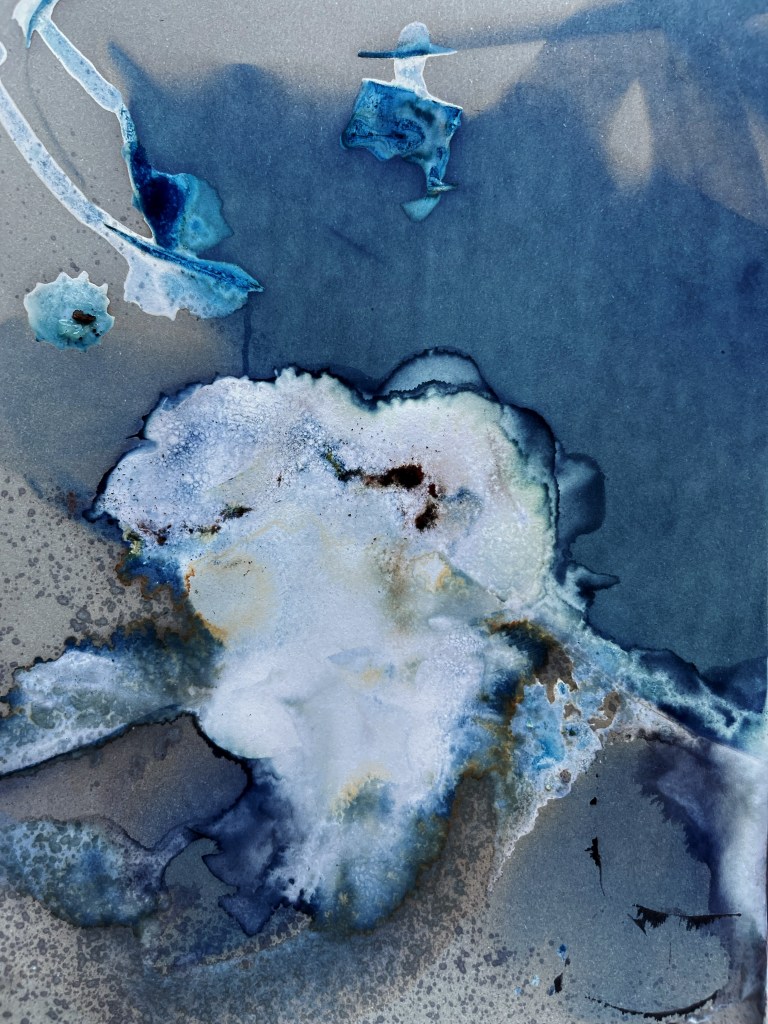
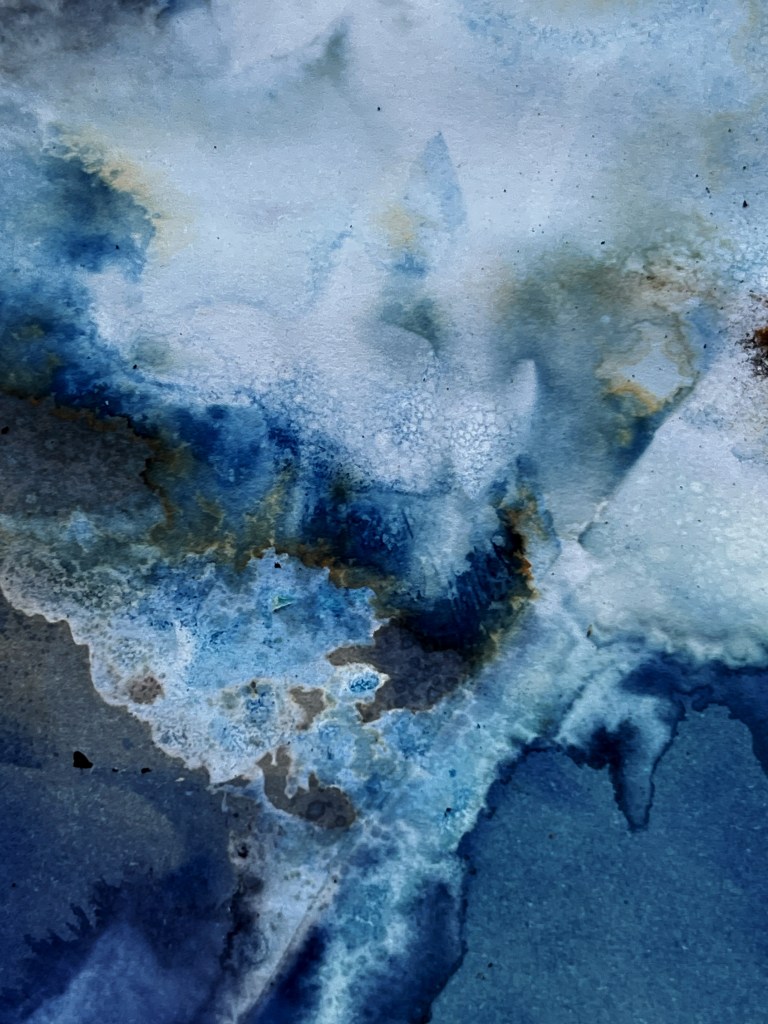
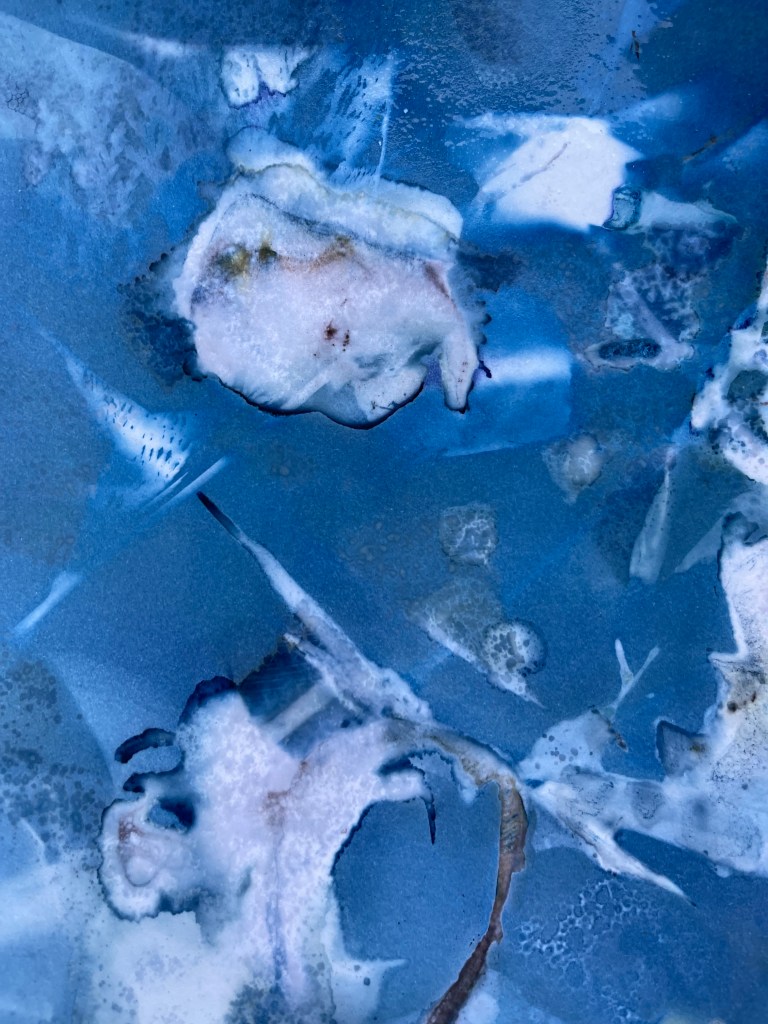
The first set of cyanoptypes using the river water within the chemical process.
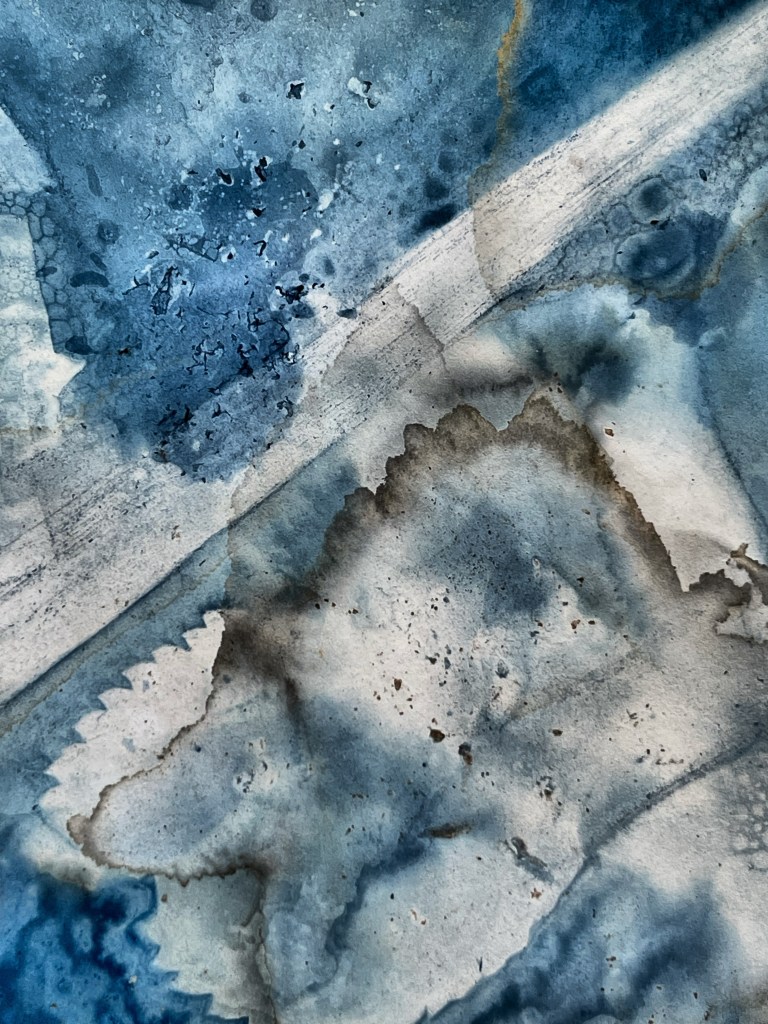
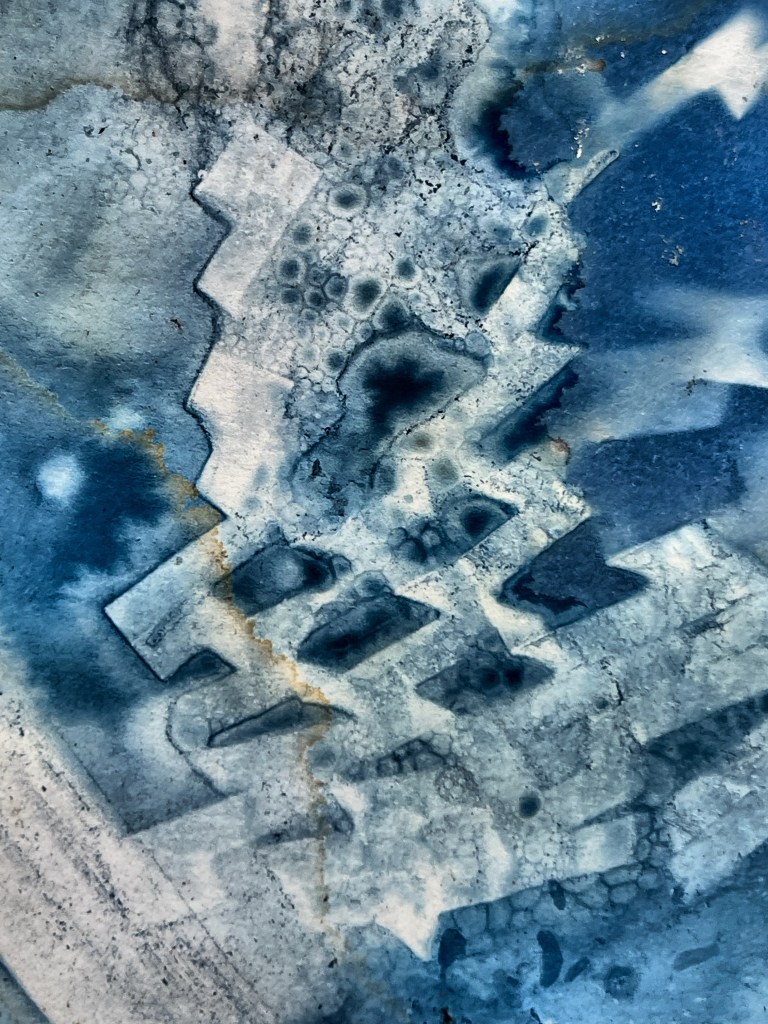
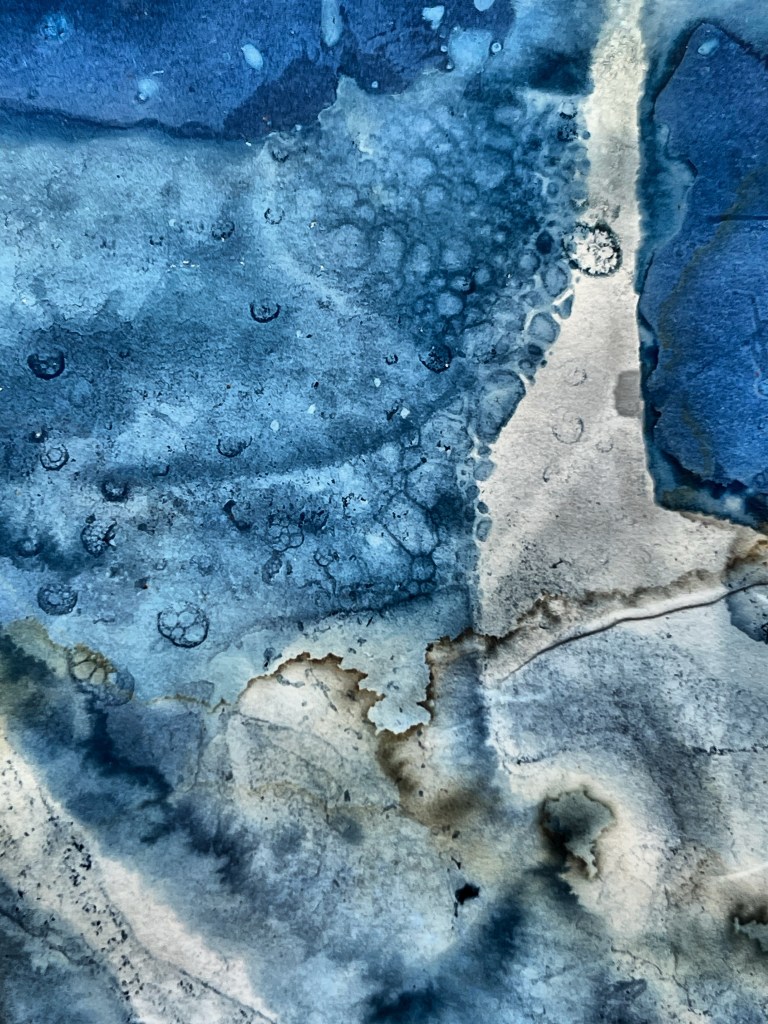
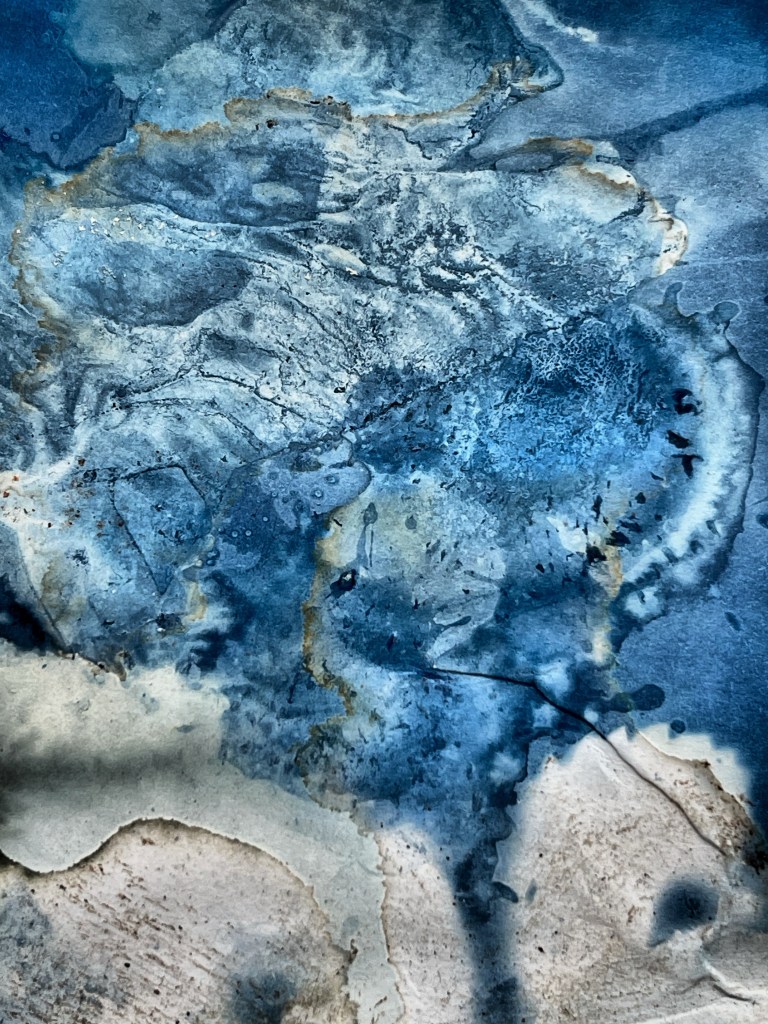
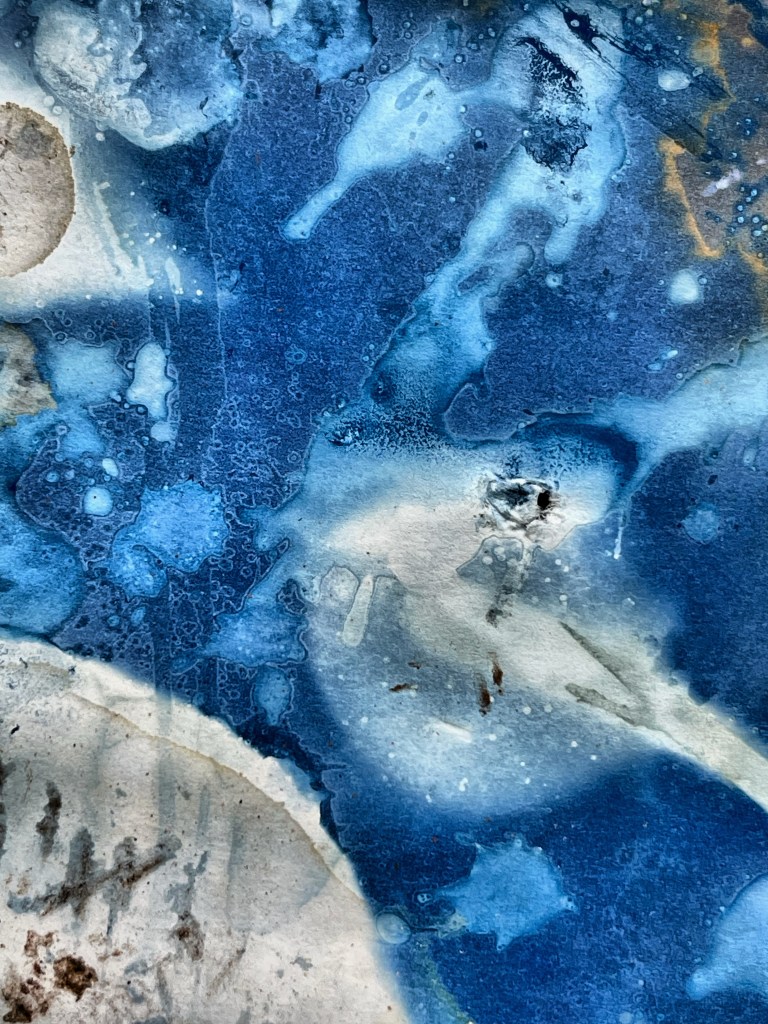
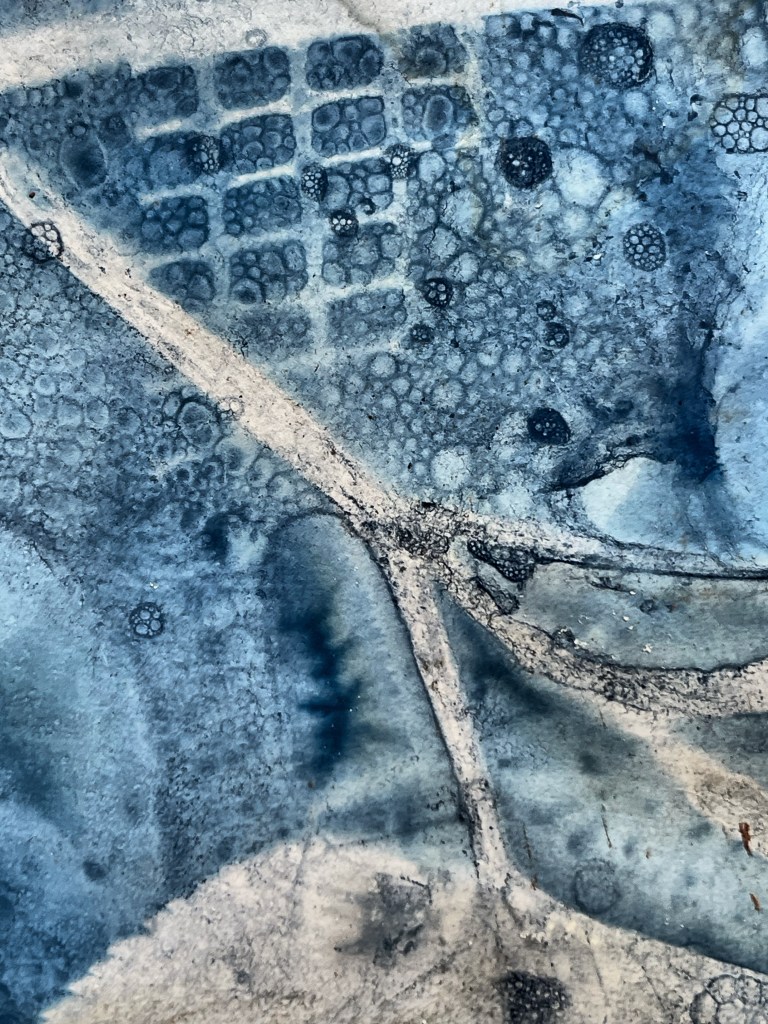
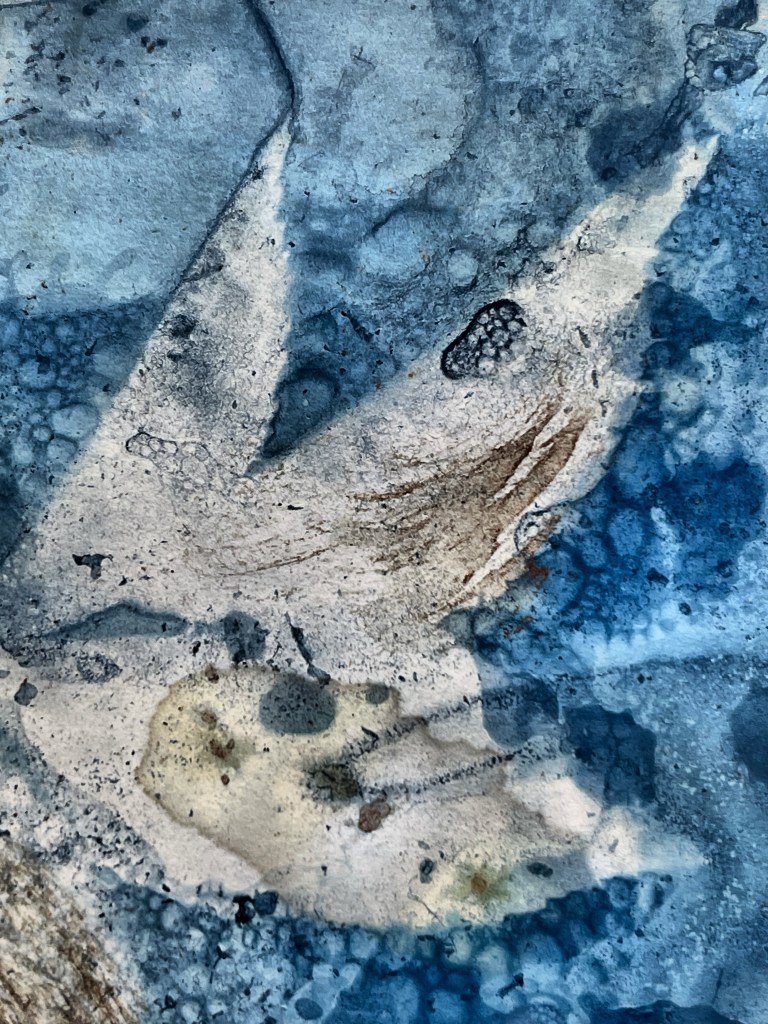
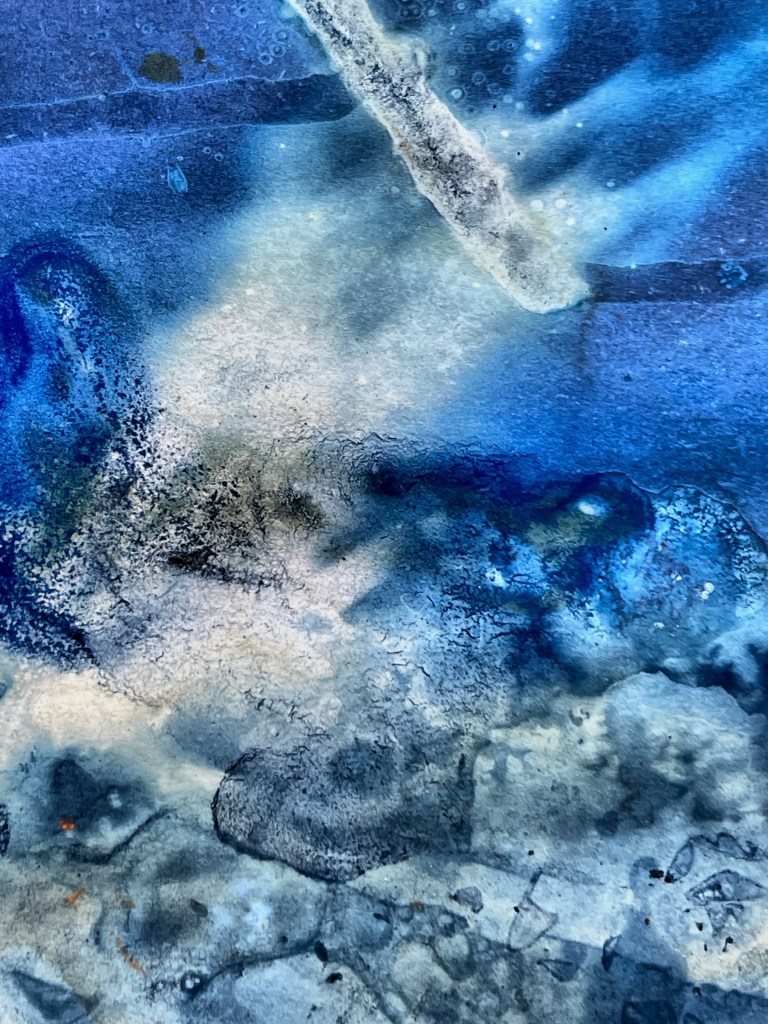
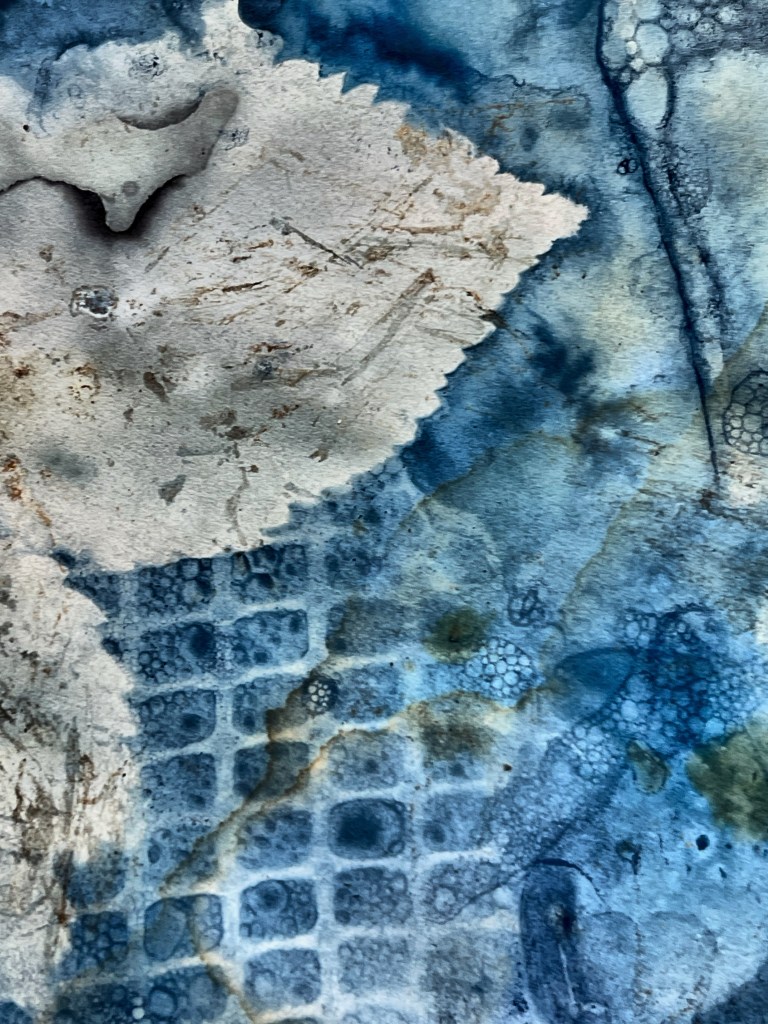
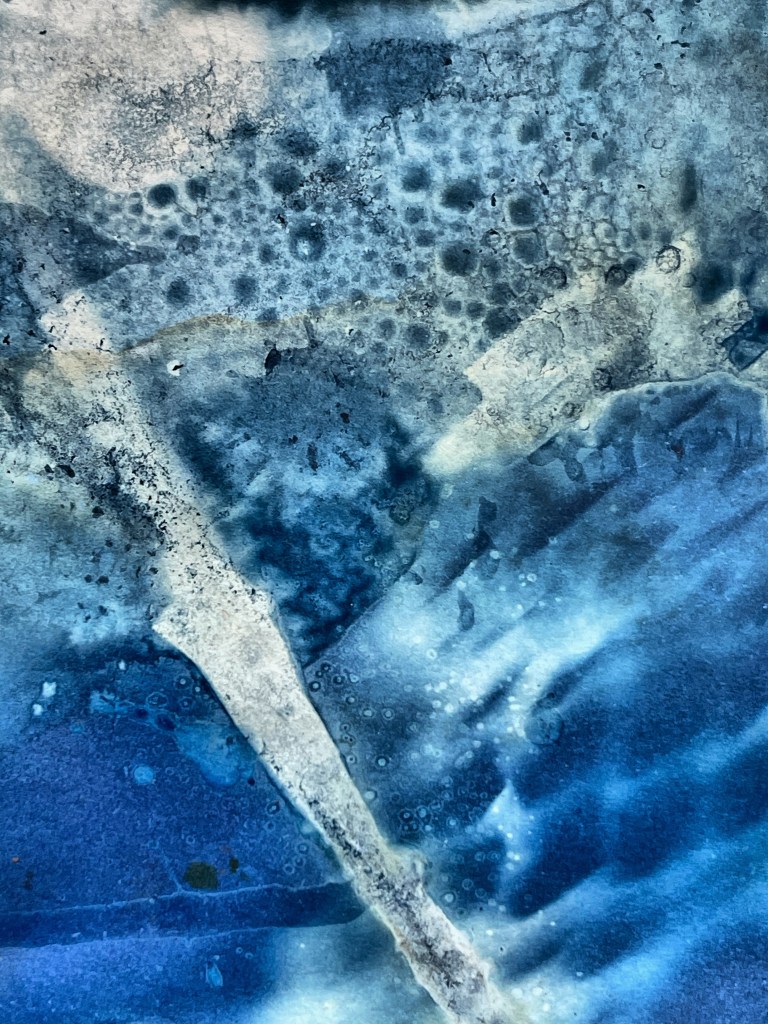
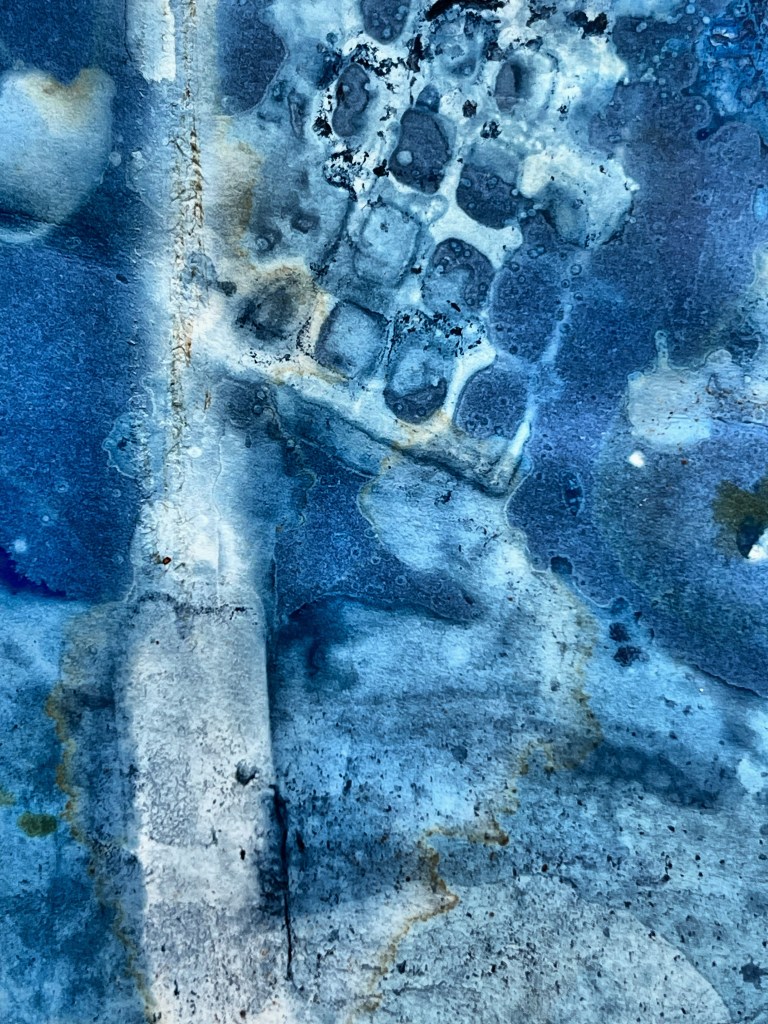
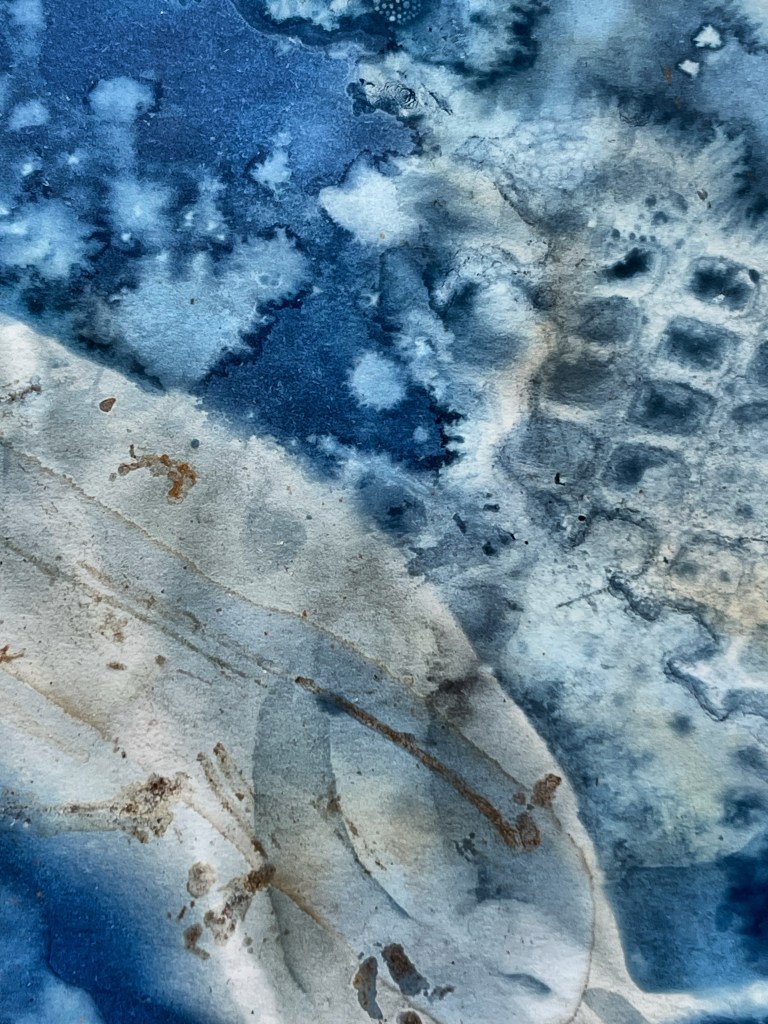
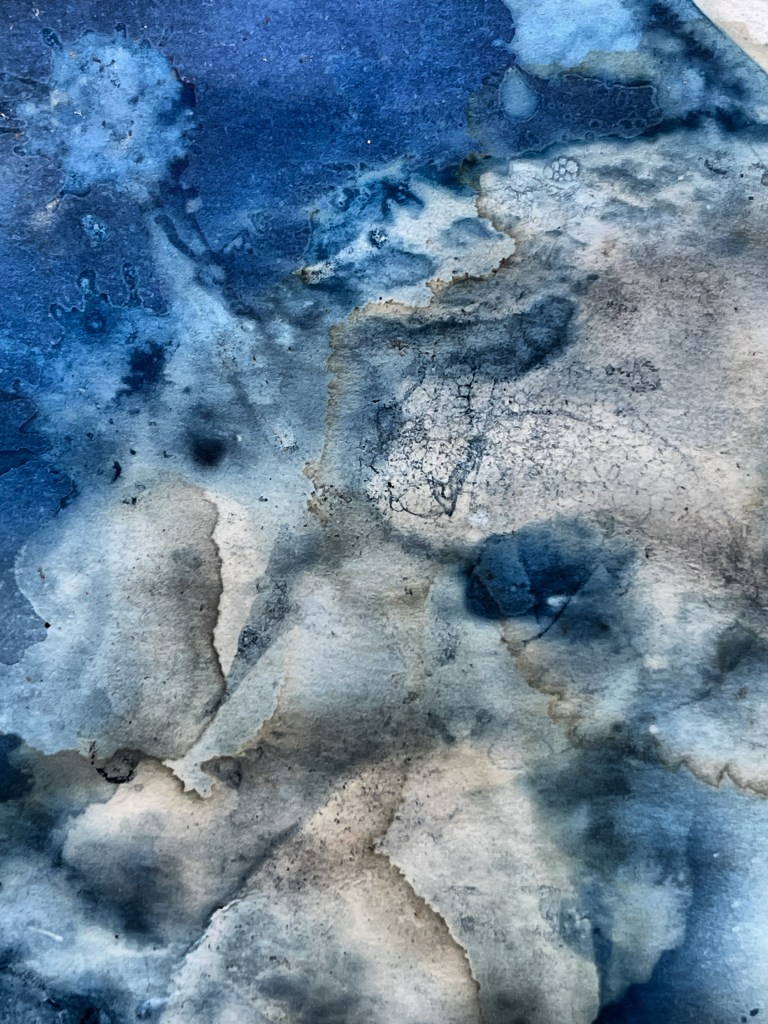

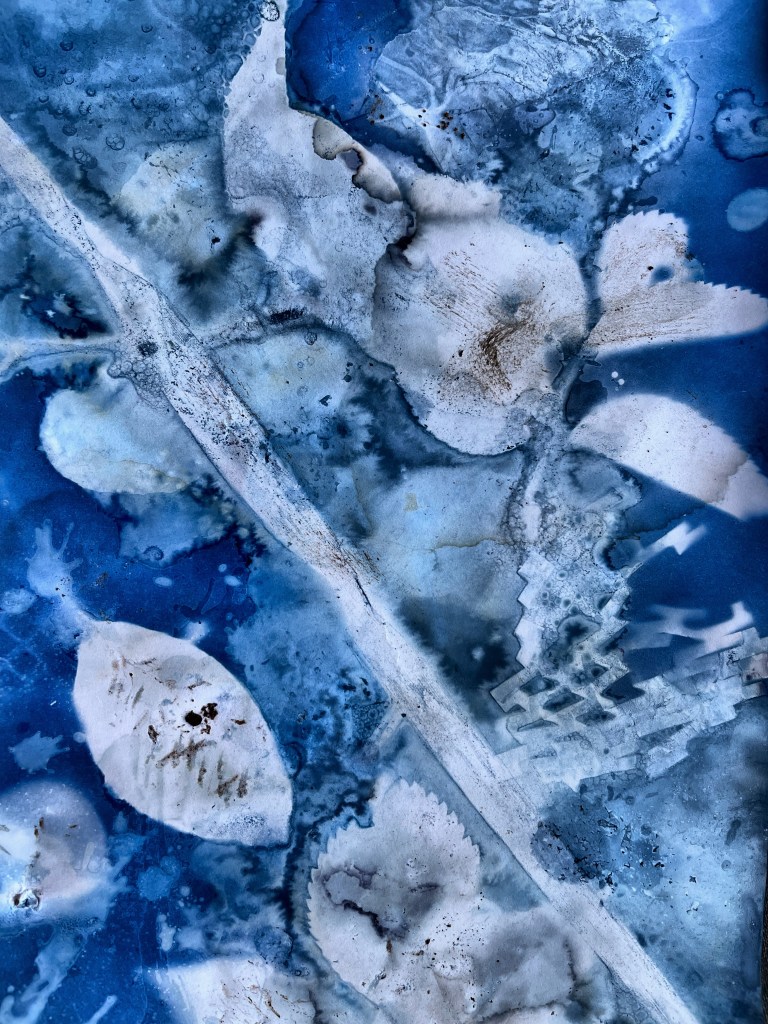
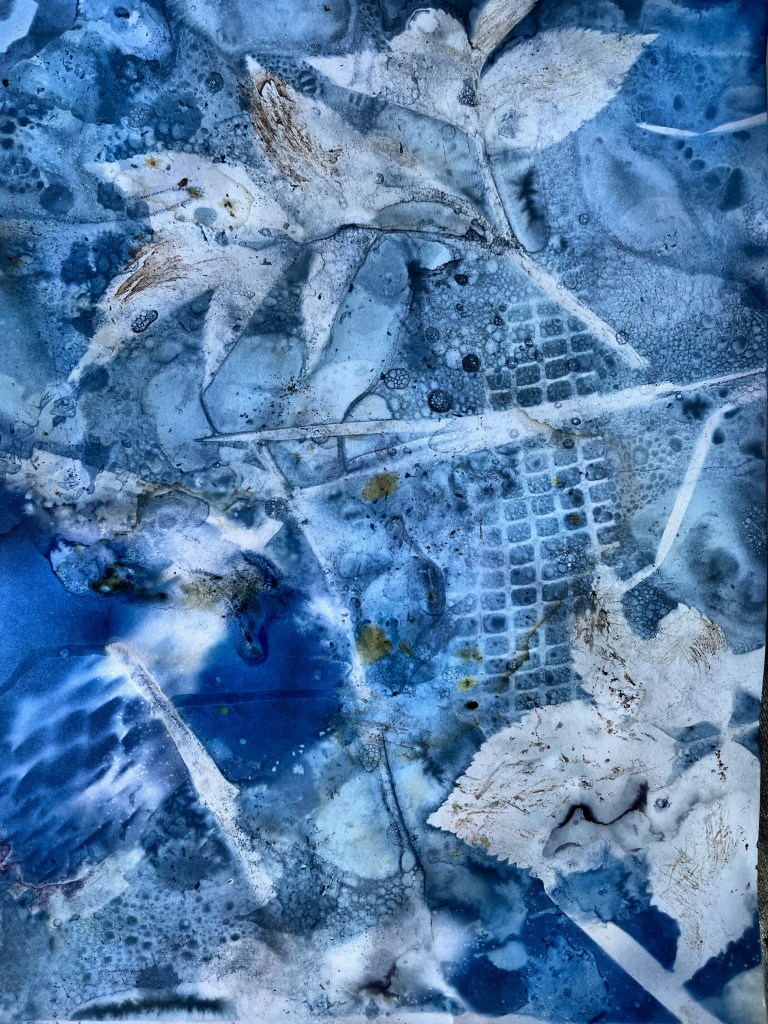
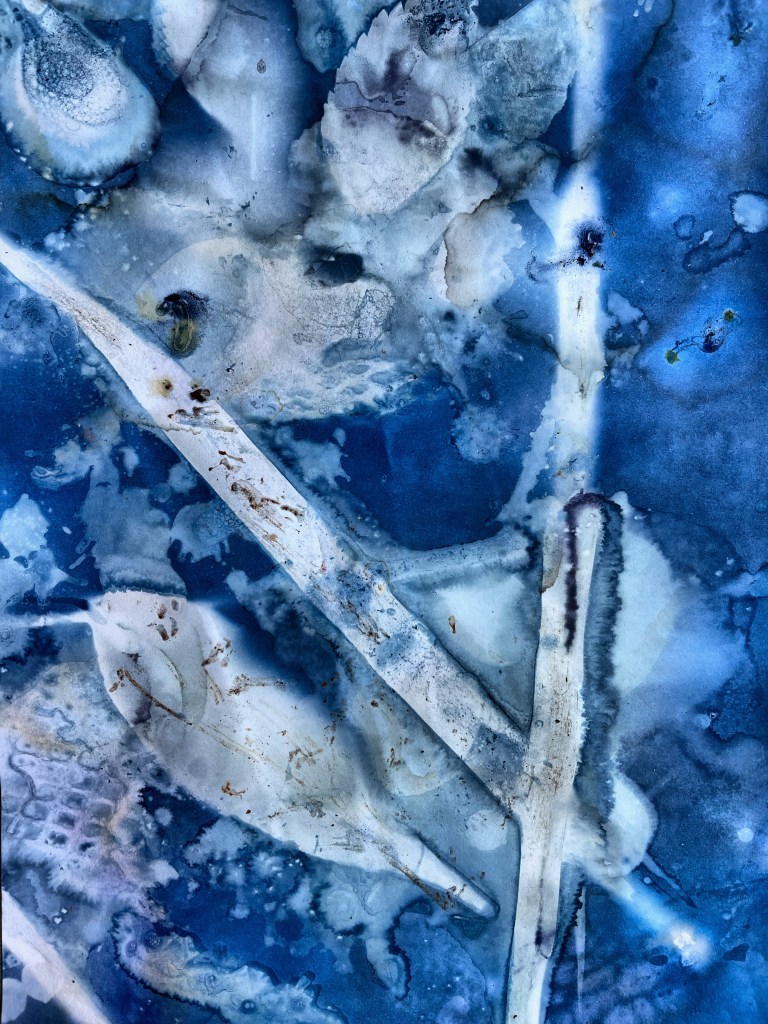

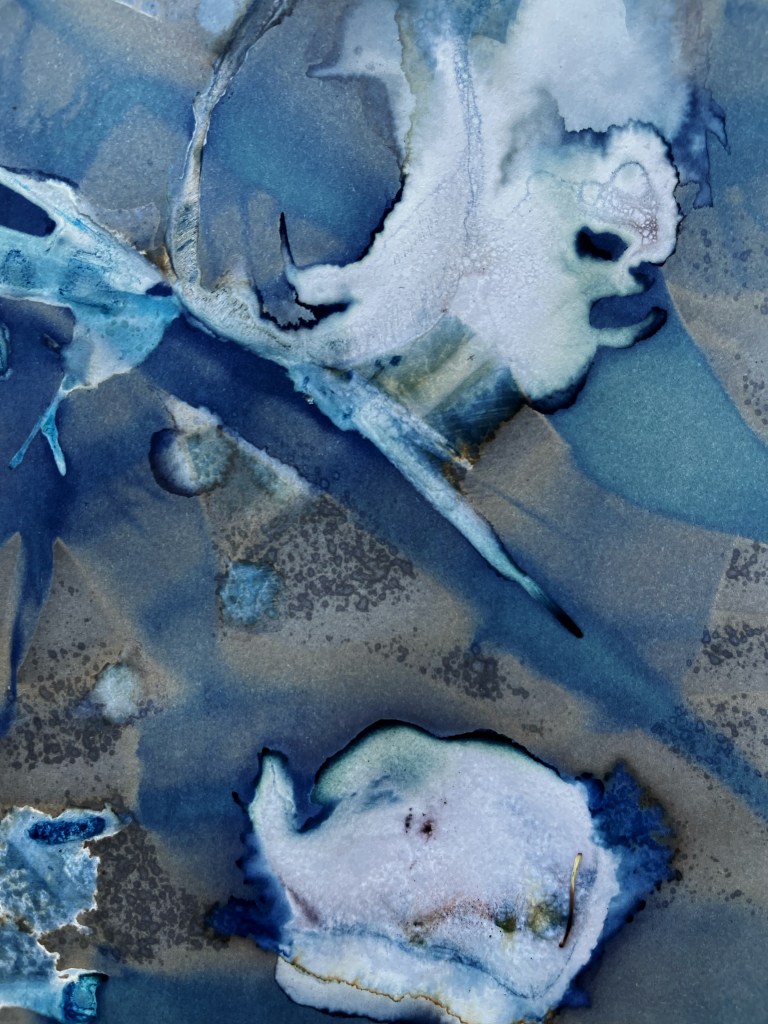
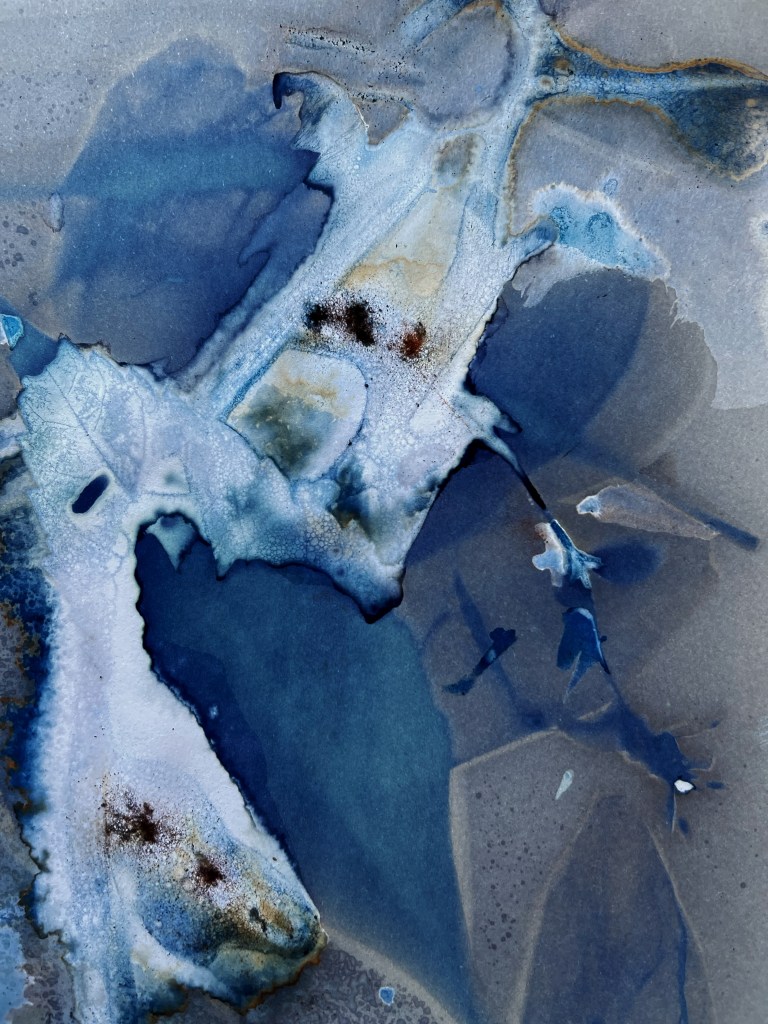
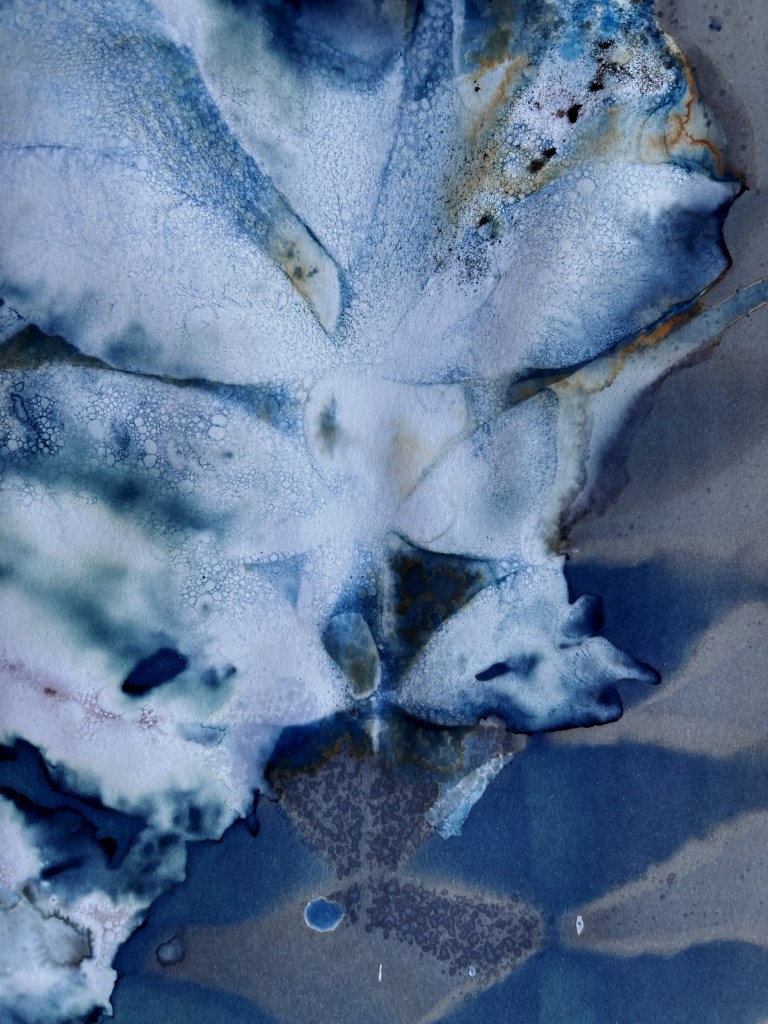
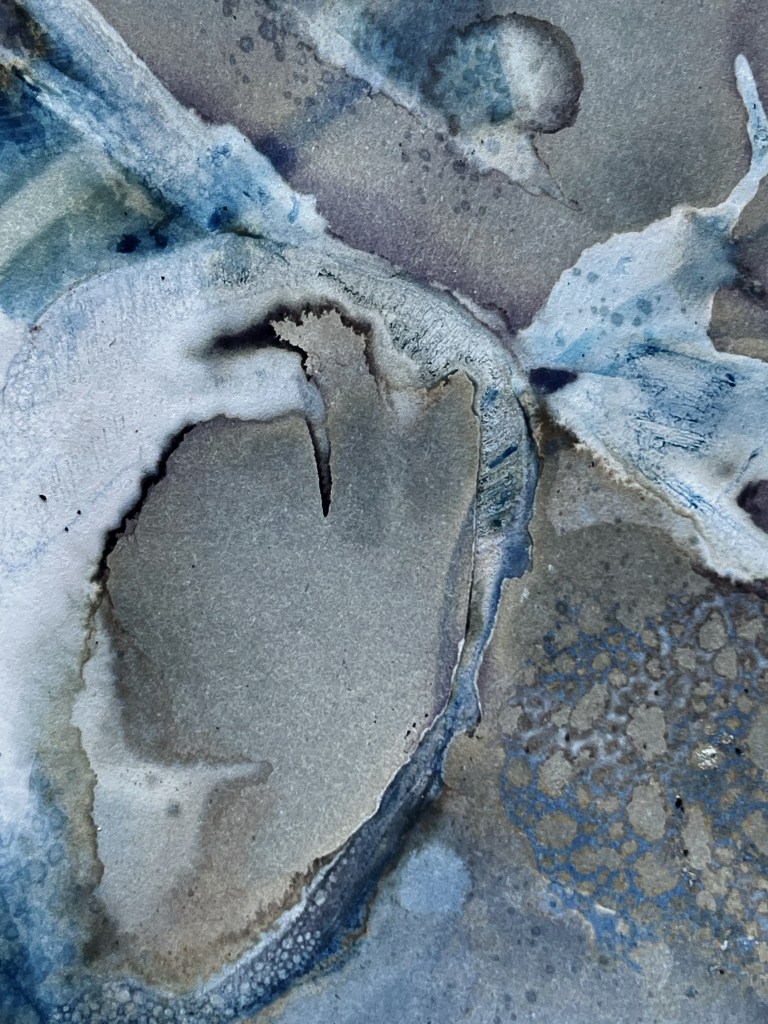
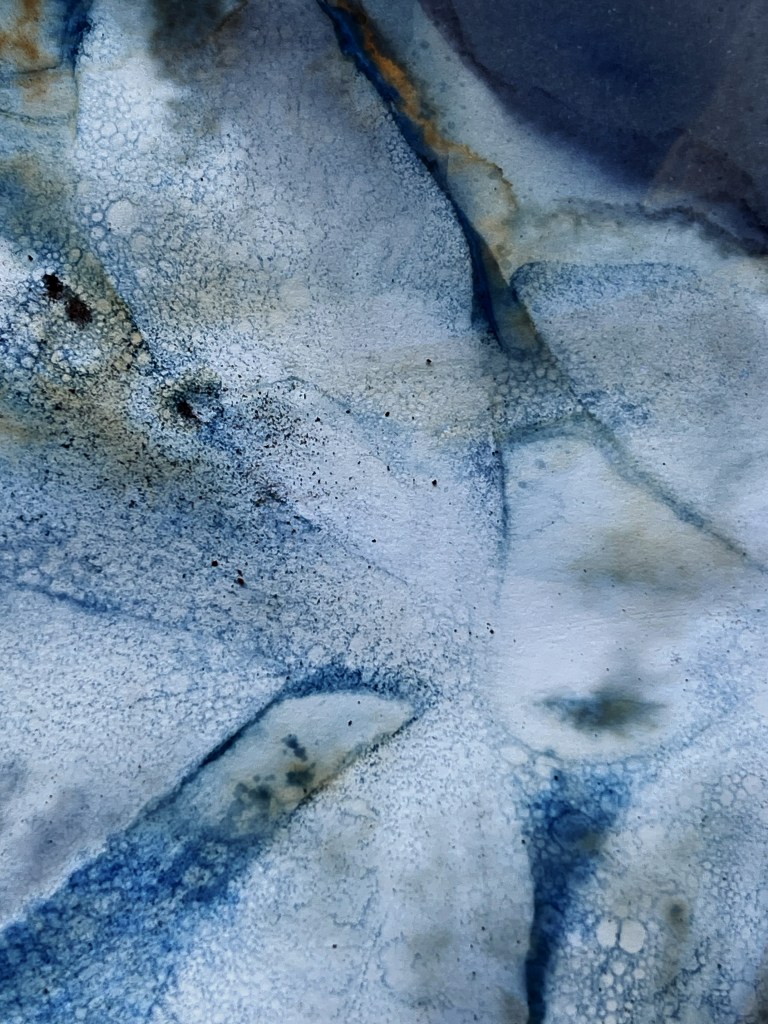
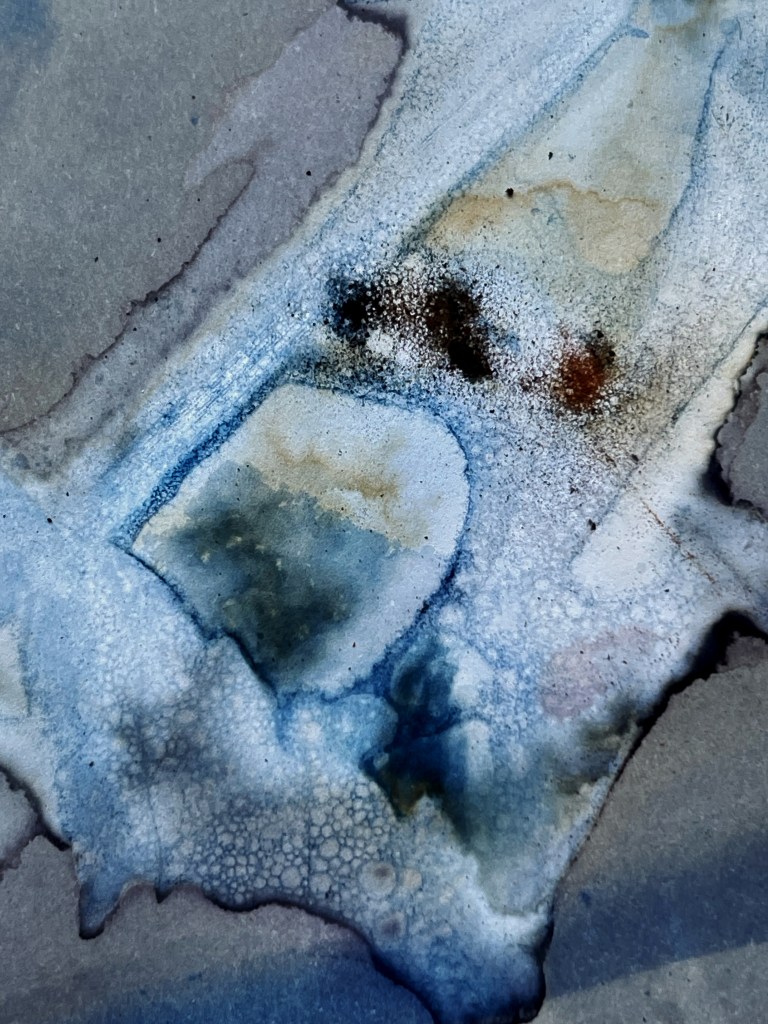
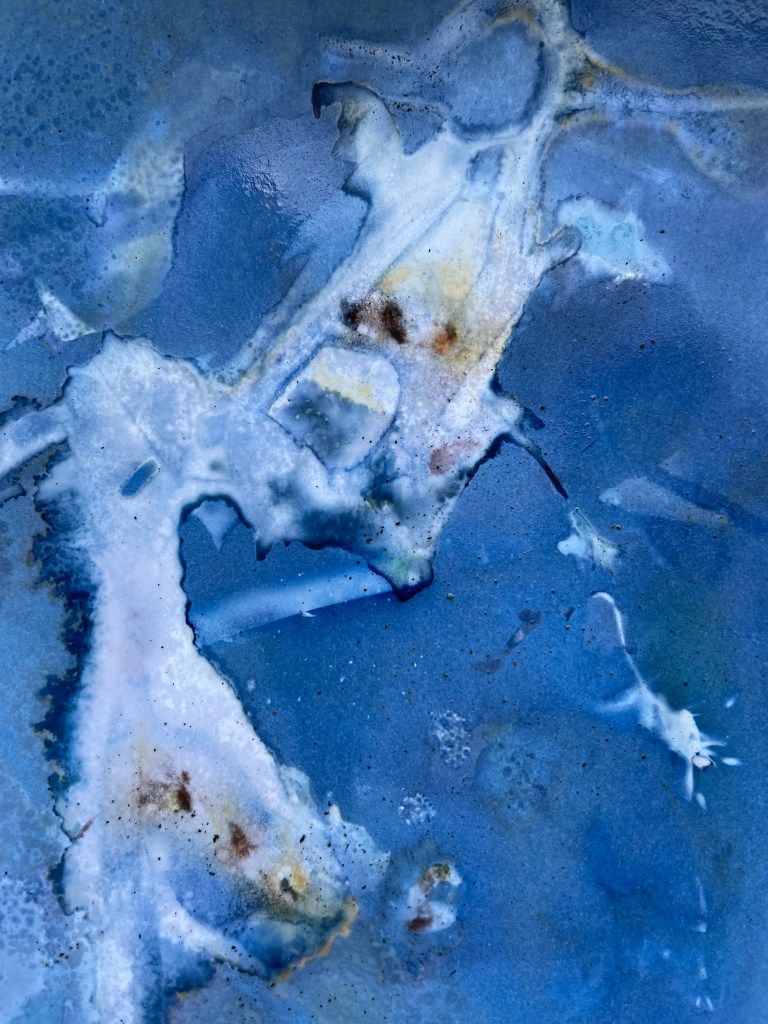
The second set of cyanotypes have been rinsed through with the river water. For the first time there was very little rubbish to collect. As the river is so shallow at the edge I did manage to stir up the sediment from the bottom with my bucket and pick up algae and some grit from the river.
Using this natural source may alter the cyanotypes as the river has a different PH to tap water. It maybe something very subtle, may alter the development process, weaken or speed up the process of have little effect. One thing I did notice was the water was very clear, albeit slightly green when it sat on the paper. This may have been it mixing with the chemicals.
By using the river water it adds a layer of unpredictability, uncertainty and also authenticity, visually embedding the waters story, in that snapshot of the ecosystem at that time. The physical state of the river at that moment, its health when the water was taken. (Today 18th May 2025). The river becomes both the collaborator and the creator.
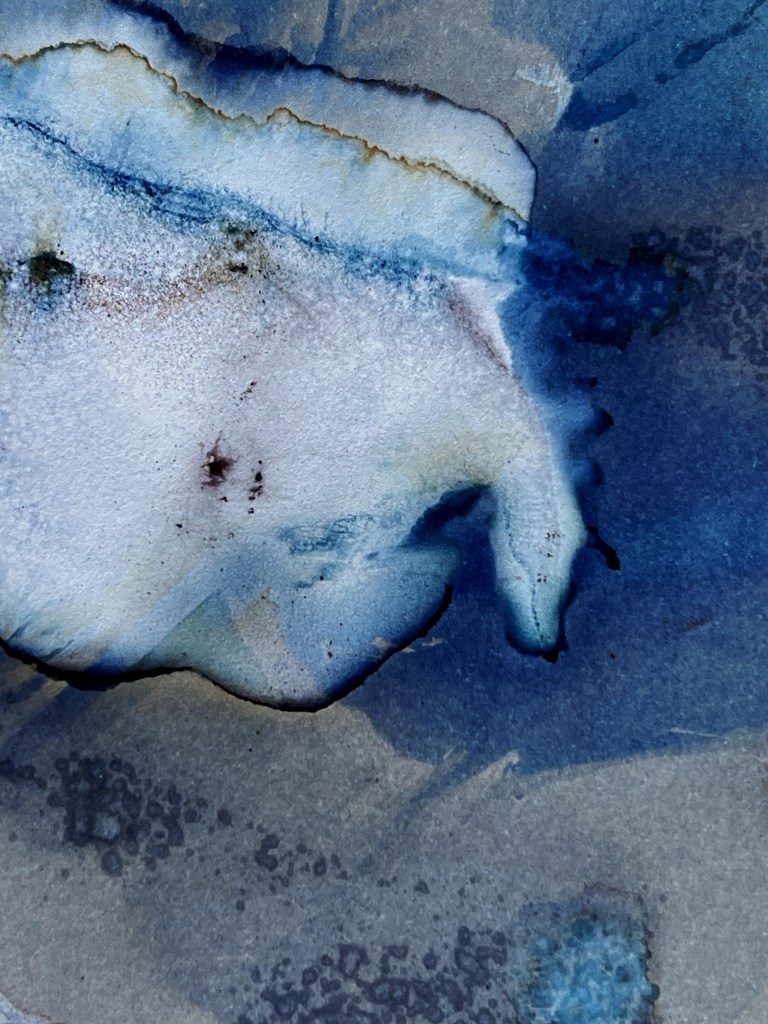
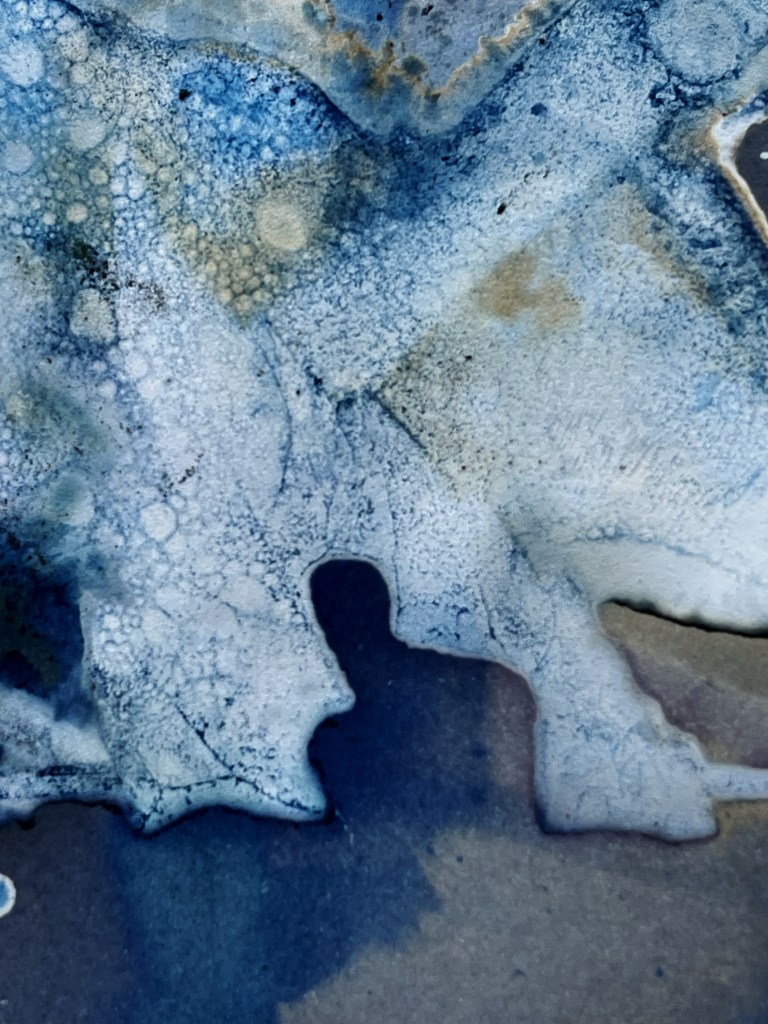
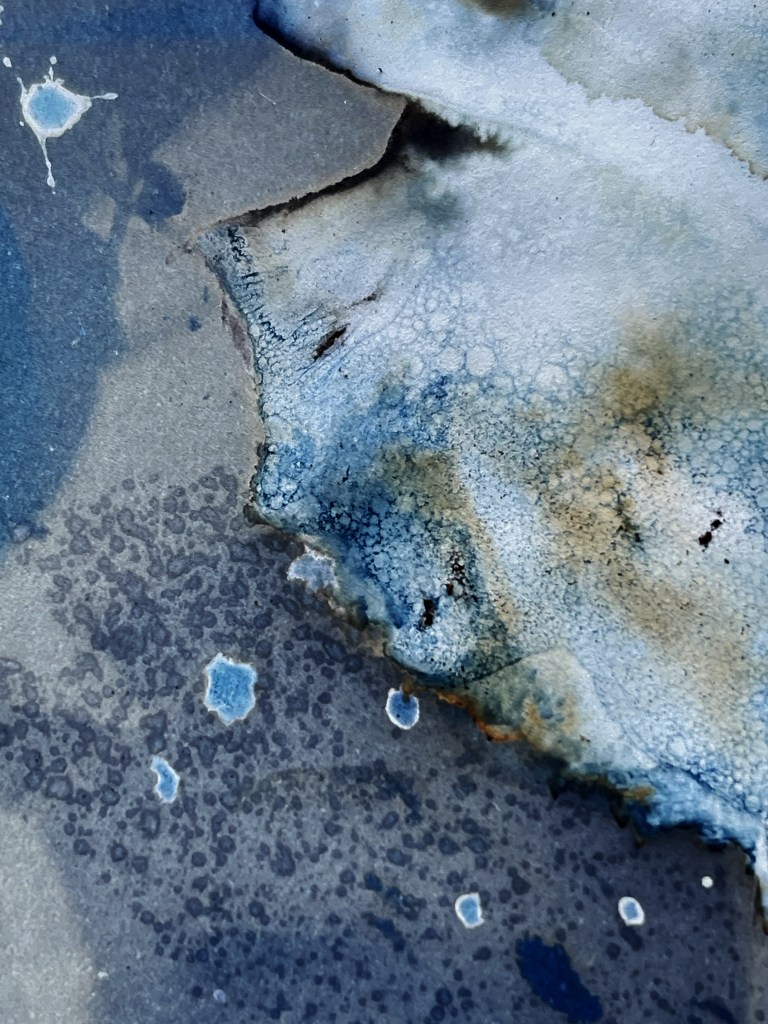
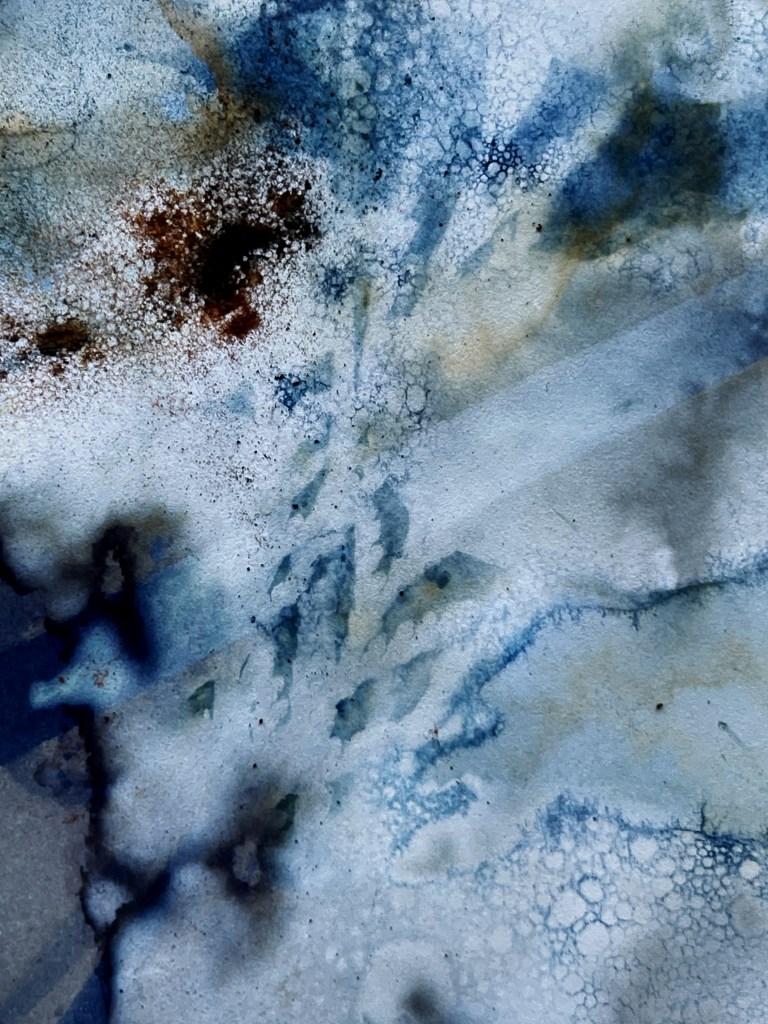
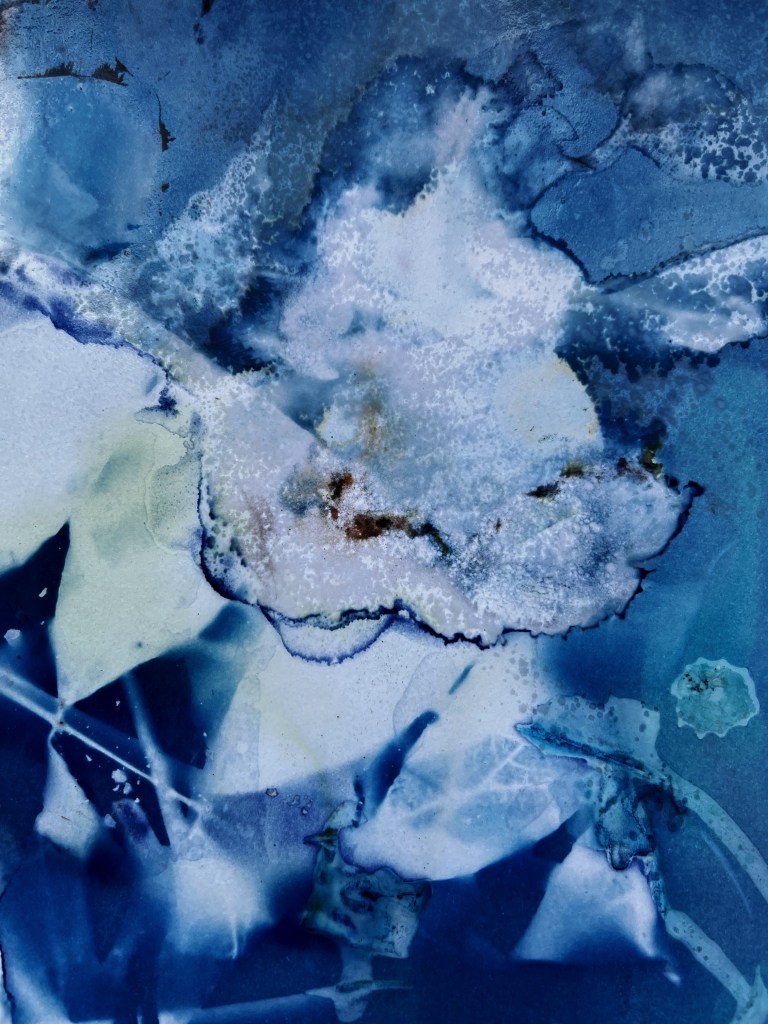
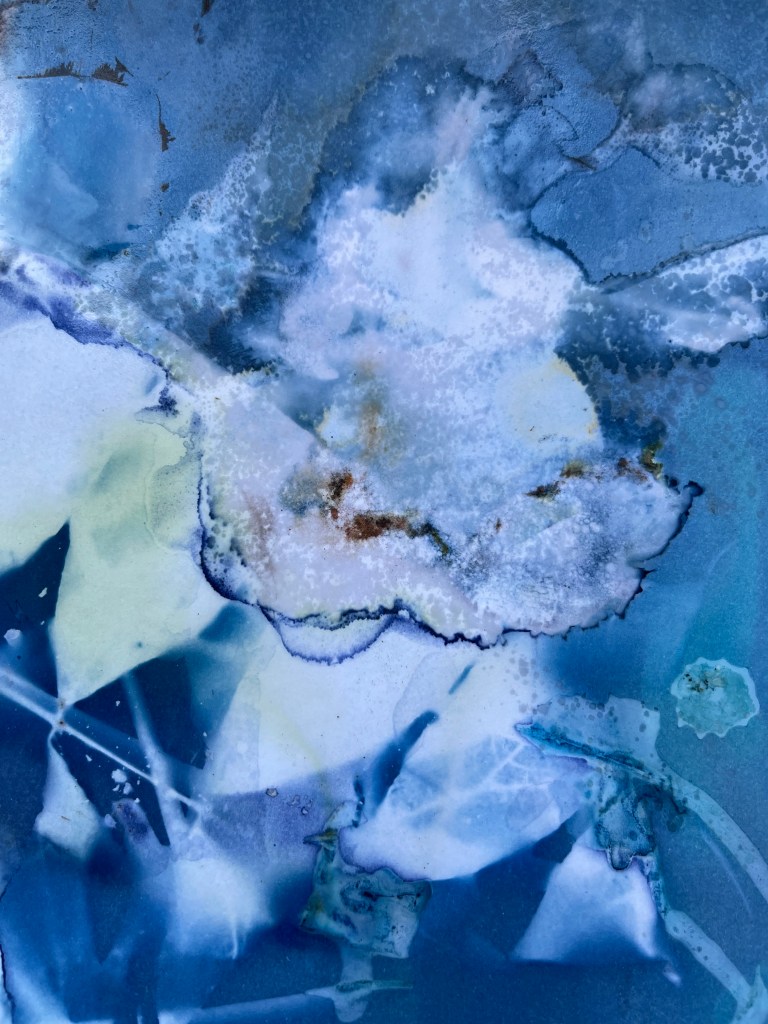
The pieces are embedded with marks from the found objects, the sediment, minerals, and the algae. The pieces feel alive with the ecological narrative, organic with a weathered natural feel, uniquely textural and layered with rich streaks of uneven tones. An entanglement of natural and found objects. I do feel they are are definitely a different hue of blue.






Reflection
I am genuinely pleased with how all of these pieces have turned out. The layering and textures feel rich and alive, the subtle shifts in colour brought by the different approaches have given each print it’s own individuality.
It feels as though I’ve turned a small corner. I can see a clearer path forward in my practice. Collaborating with the river water and allowing it to be both a medium and a partner, feels so much more authentic to what I am striving to achieve. There is something real and honest about working with the open water, loving it in the gentler seasons and fearing it in the harsh winter months.
Using the water, sediment and algae as collaborators, gives the work a life beyond my own decisions. I’m curious to see how the unseasonably warm weather (May 2025) affects the river. If the water levels drop further, I may be able to reach more of the exposed riverbed to create another series of cyanotypes. The thought of what might be revealed there, both physically and in the work itself, feels full of possibility.
Using the natural source of the river may have subtlety altered the cyanotypes by perhaps changing, weakening or speeding up the development process. Although the water was remarkable clear, it had a very slight green tone when touching the paper.
The entanglement of natural and discarded forms left the cyanotypes rich with weathered, layered, organic, uneven tones and textures. Even the blue is a slightly different hue.


 Viv King. Level 3. BA Fine Art