Over the past several weeks (January – February 2026), we have been on seven separate flood alerts. Alerts are issued when surface water can’t drain away because the ground is saturated. When the river is running high and fast it spills over the banks and footpaths, blocking some access points. The alerts can quickly progress into a warnings.
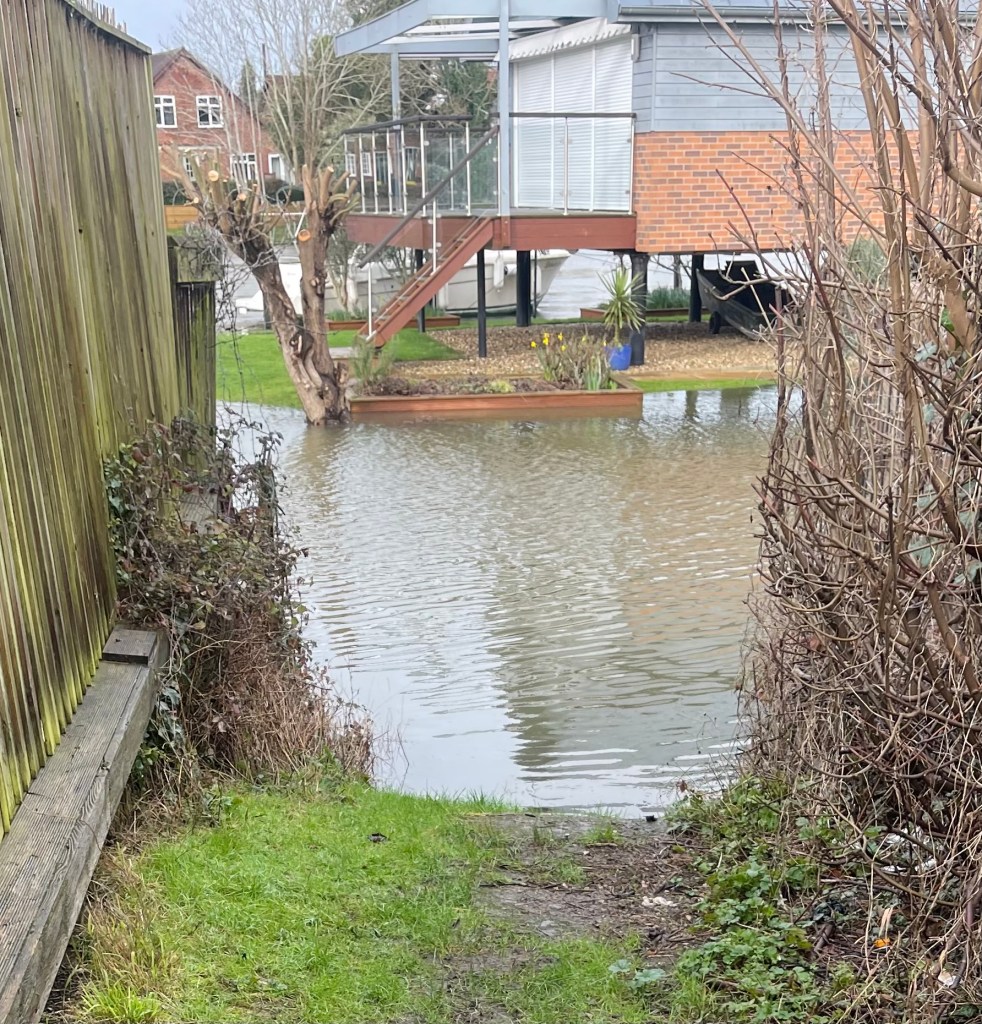
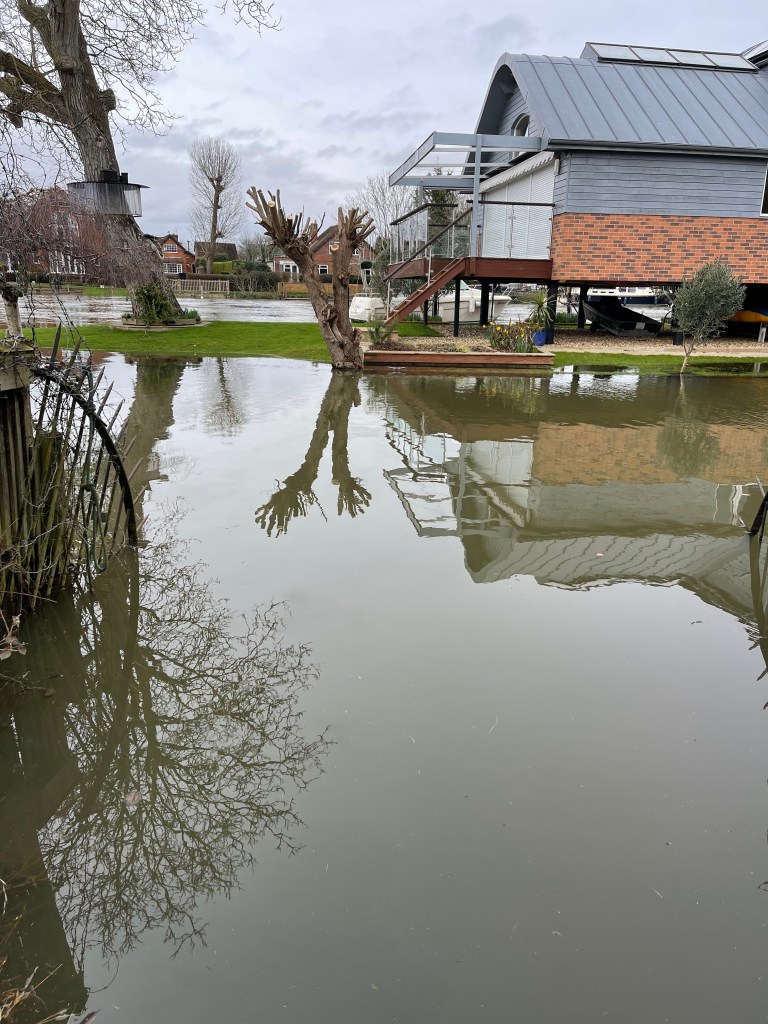
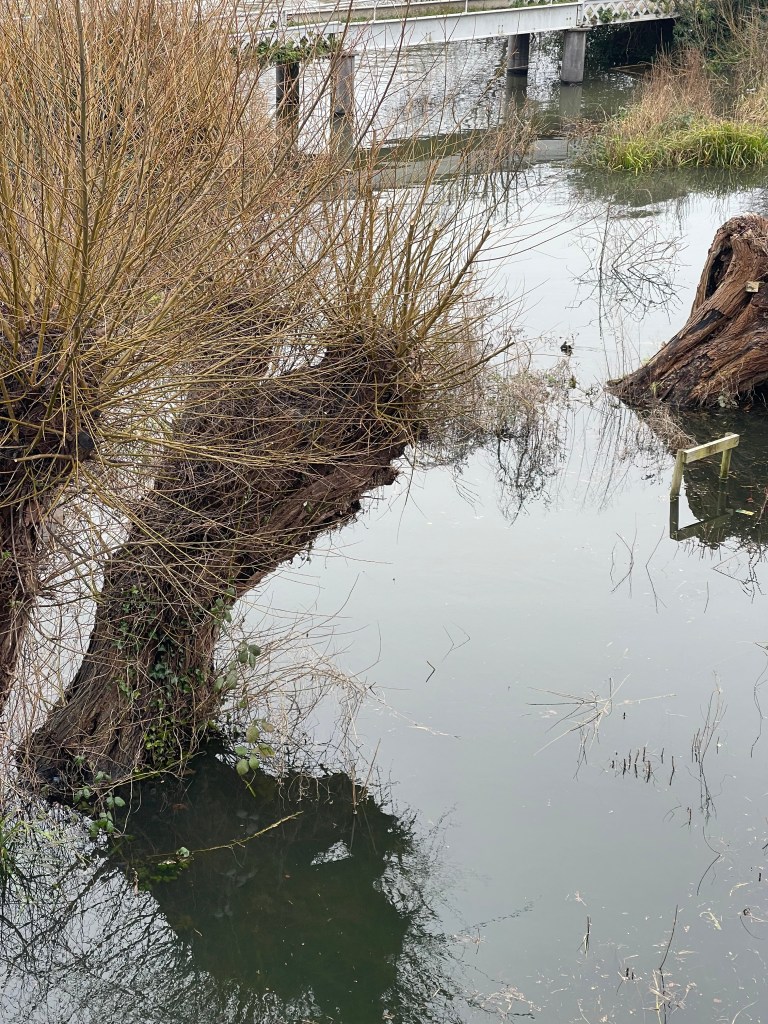
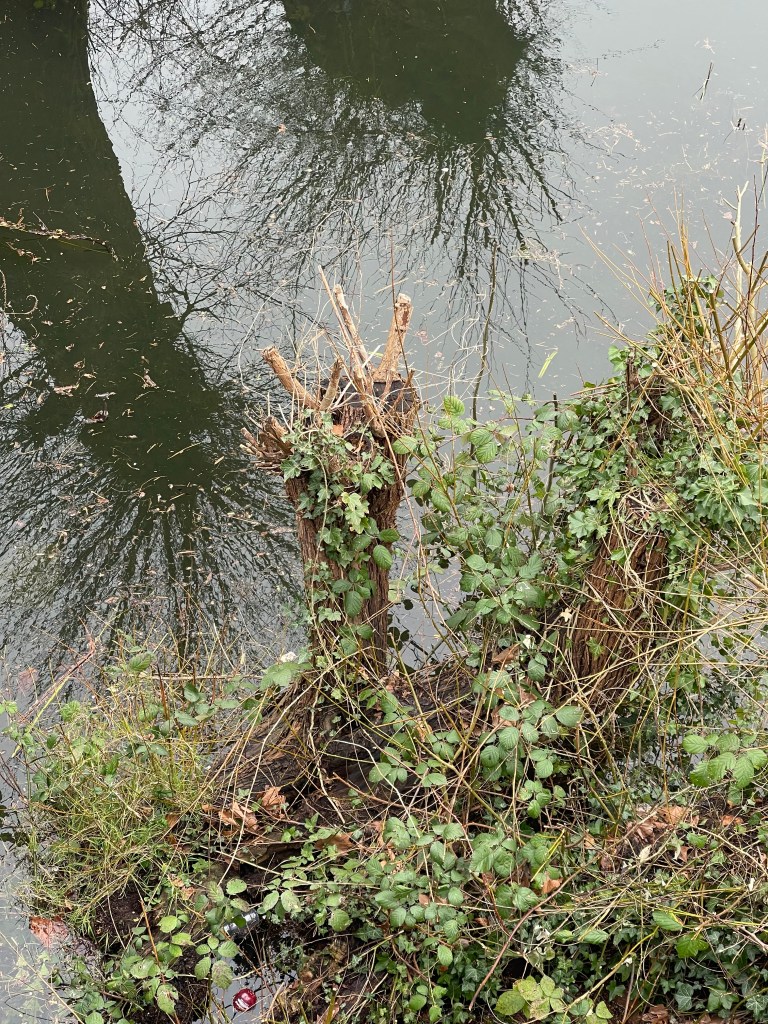
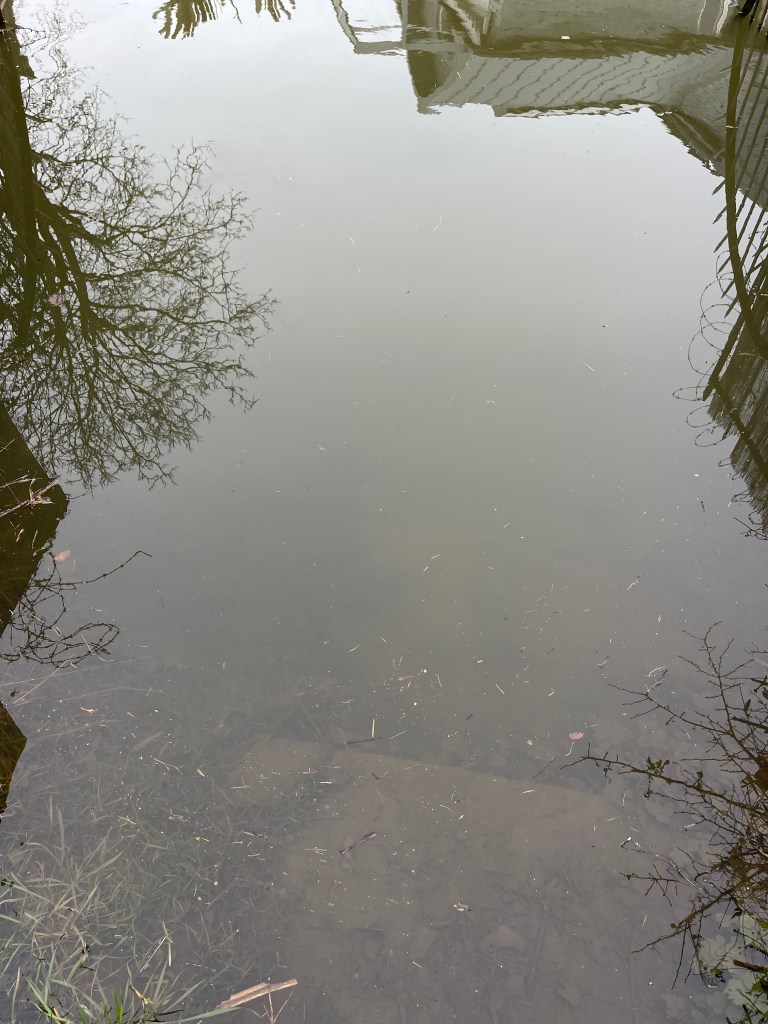
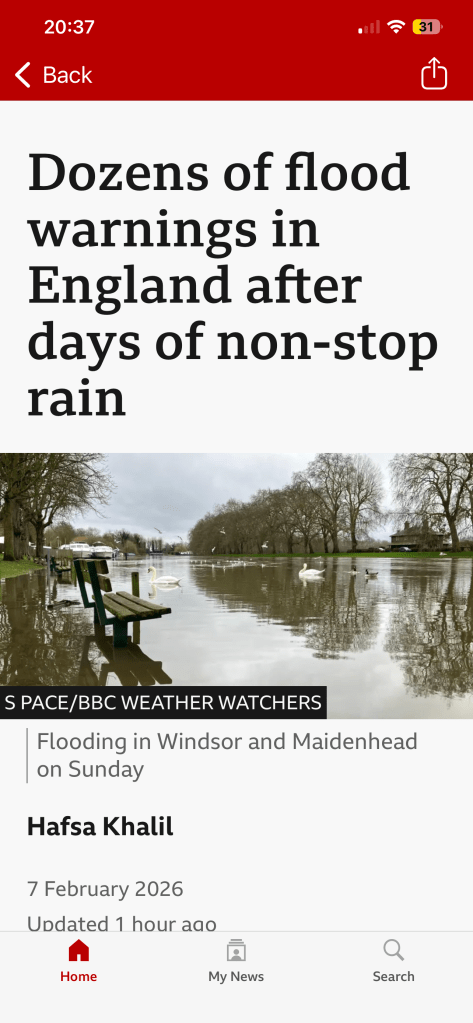
Despite the persistent and continual heavy rain across the whole country, we haven’t been placed on a flood warning. The river is being carefully managed by the Lock Keepers rather than the Environmental Agency. These individuals, with years of embodied knowledge are working tirelessly adjusting the sluice gates and redistributing the flow through the locks in vast volumes.
My relationship with the open water becomes the most unstable during the winter months, this tension sits at the core of my practice. The love/hate, surface/depth, visibility and concealment are the dichotomies I return to while working with found objects and river water to stain, mark and build layered textures and colour that illustrate this instability.
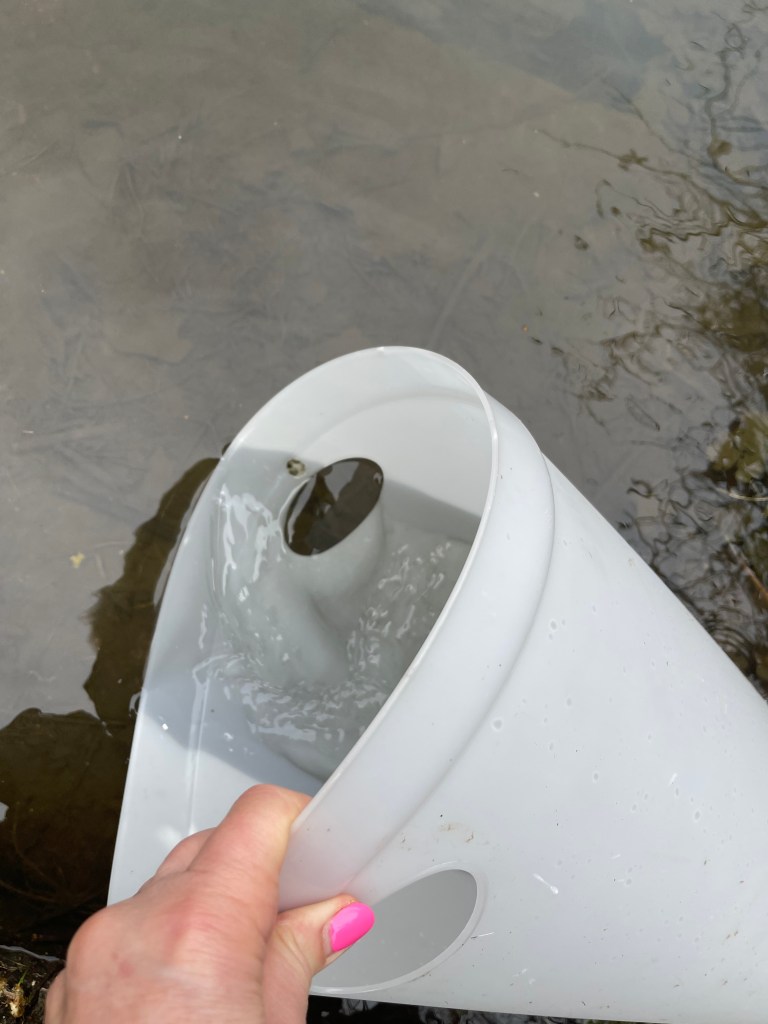
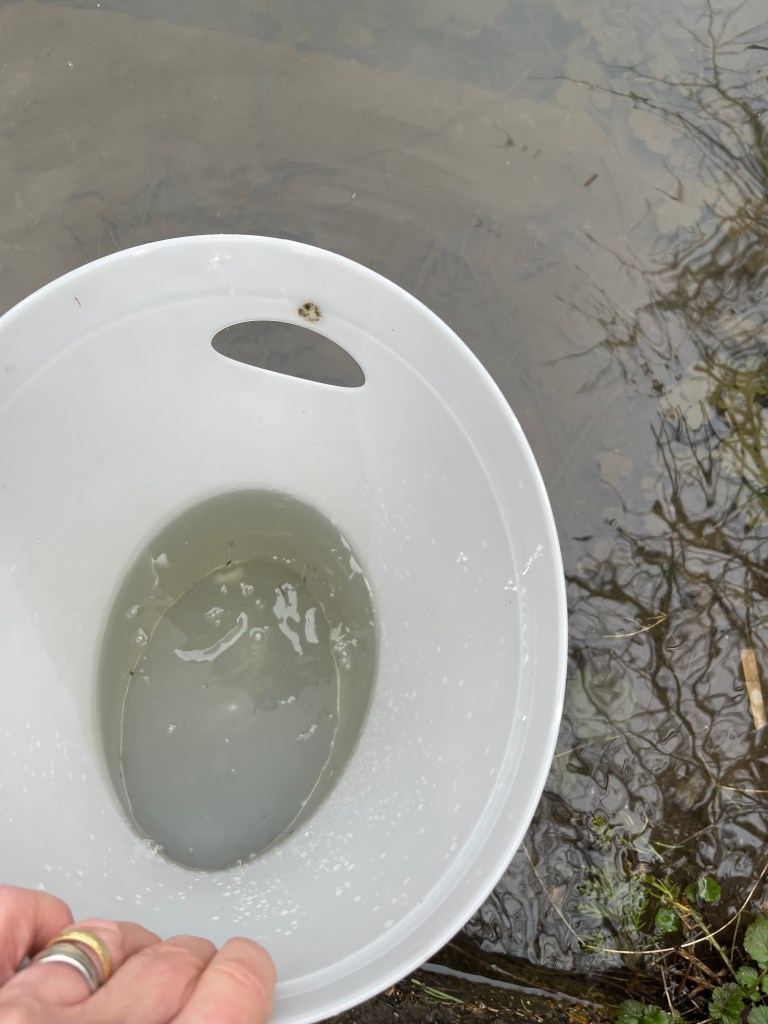
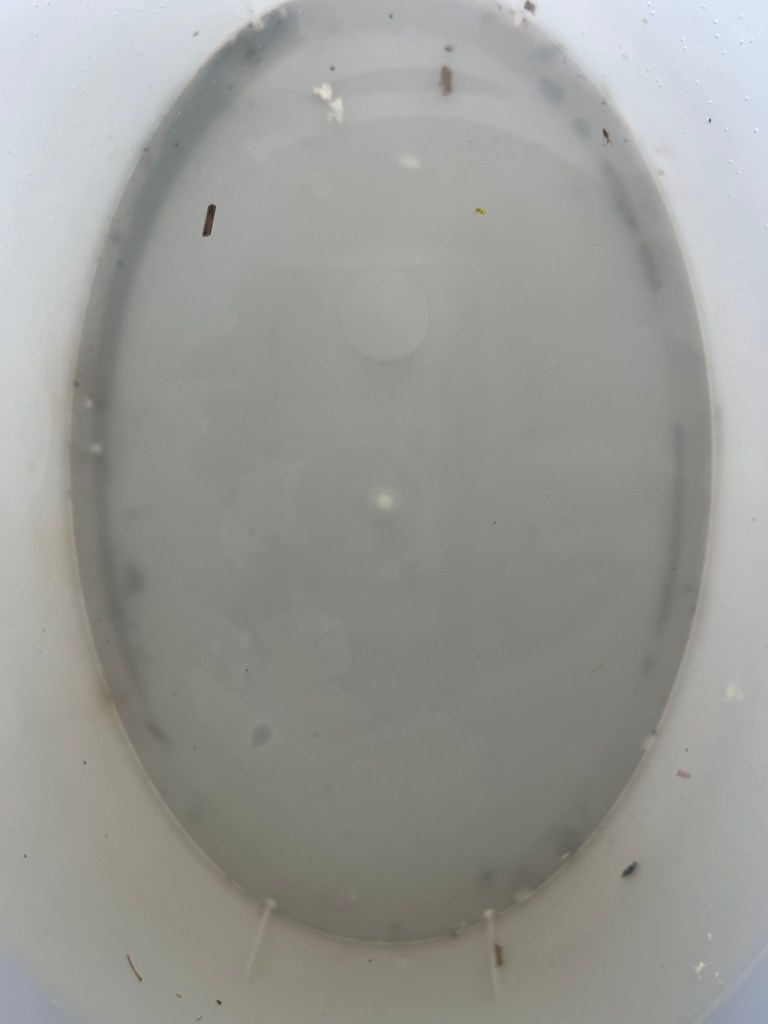
Because the river is running so high and fast, it is not safe for me to leave anything submerged, even if I anchor it. I am very conscious not to leave any traces of litter. Instead I collected the water and brought it home.
The found objects include berries, leaves, some netting and a rusty tin, however I reproduced the food waste, which was carrot and cucumber peelings. I am constantly collecting bits as I see them when I am out walking, many of the objects are dried at home and are re-used as many times as possible.
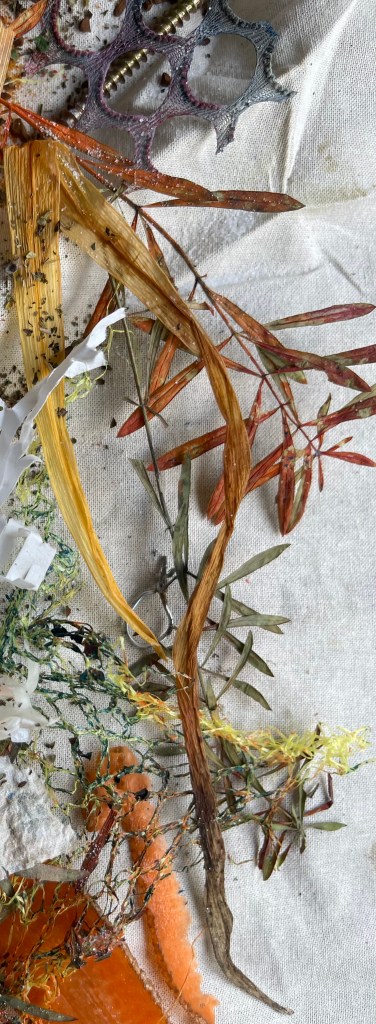
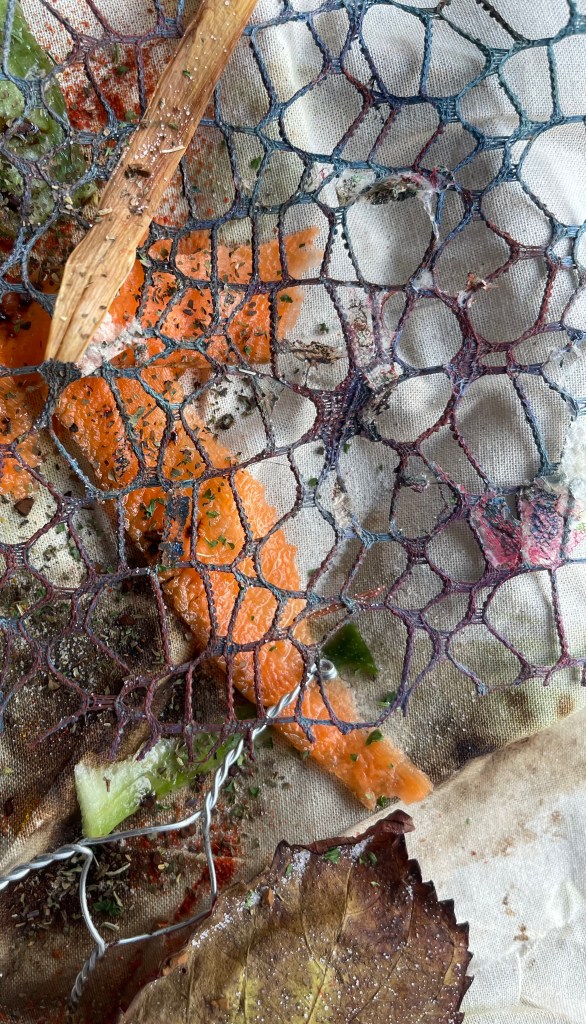
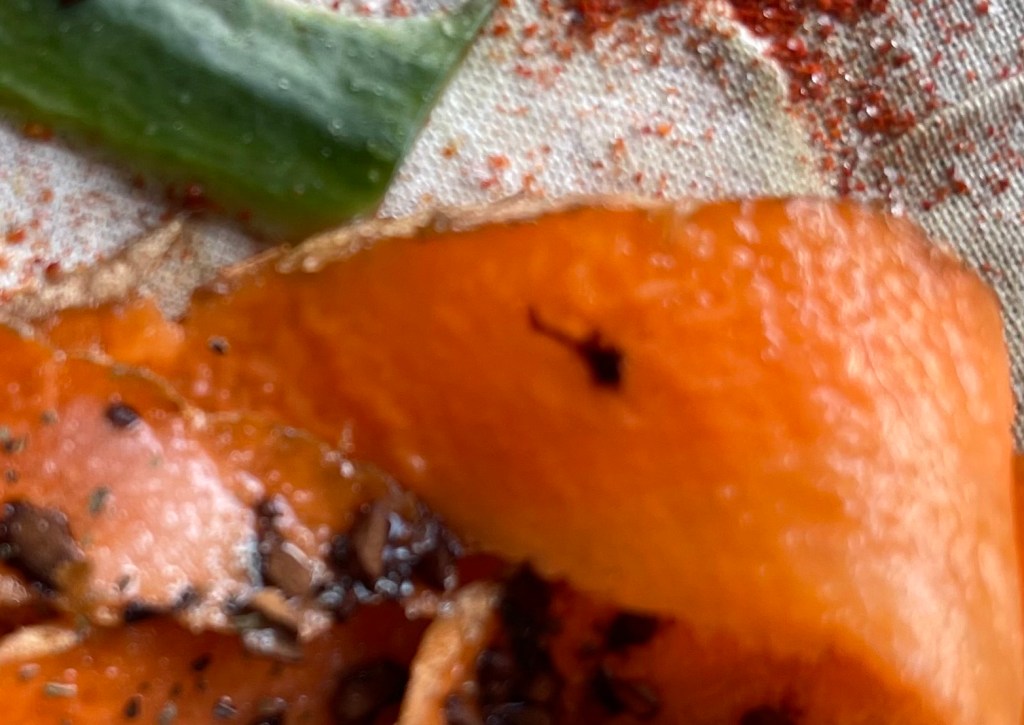
The found objects are rolled up with some calico around the rusty tin, bound with rubber bands and submerged into the river water.
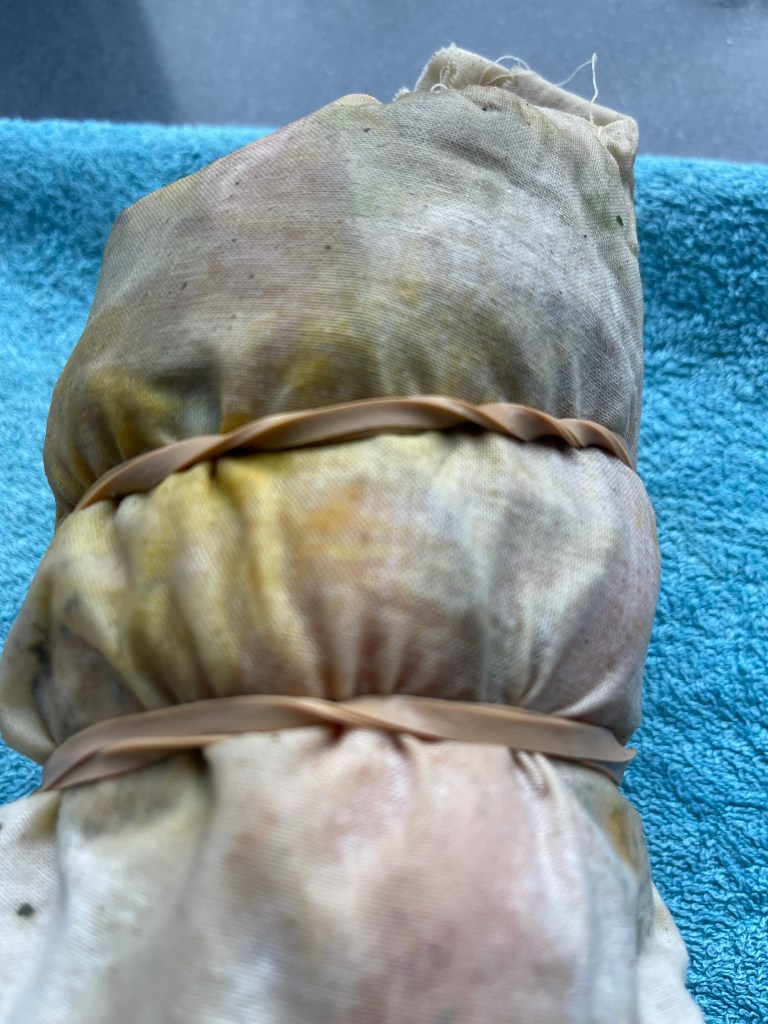
After 24 hours I unrolled the bundle and allow it to dry.
The river banks are saturated, burst and split in some places, carrying the weight of the water. By using the fabric in this way, a piece to represent Above and Below, I hope to engage the viewer with the physical symbolism of the piece communicated through the textures and movement of the water. The whole piece is submerged initially as I wanted to use the river water as a dye and a catalyst.
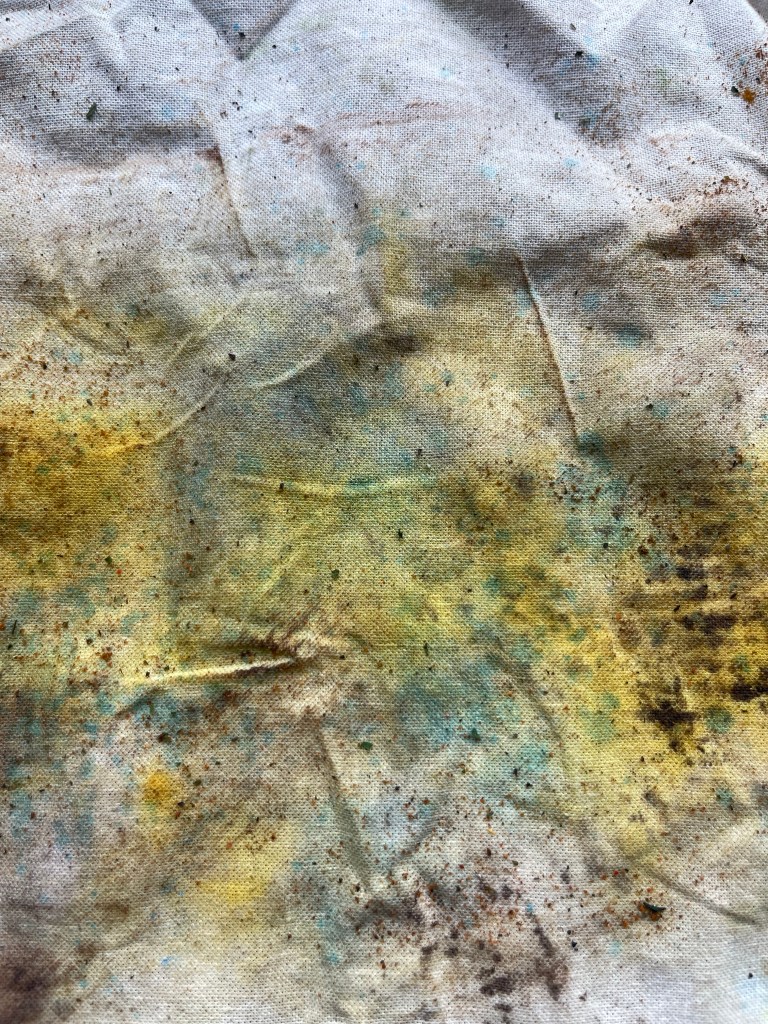
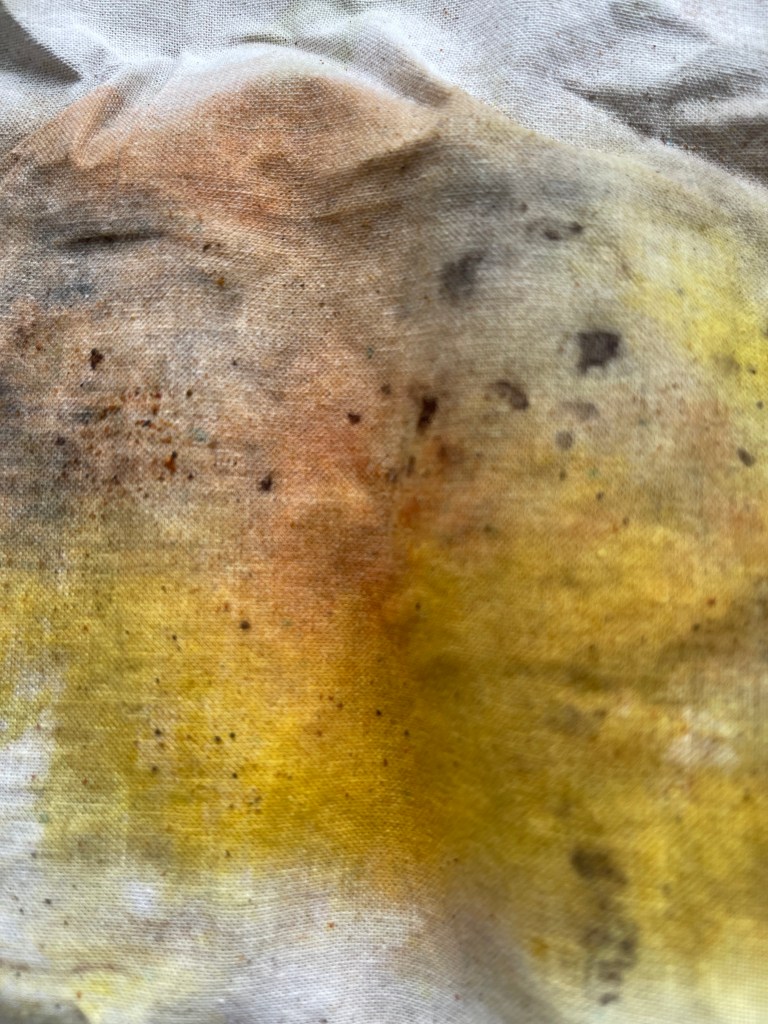
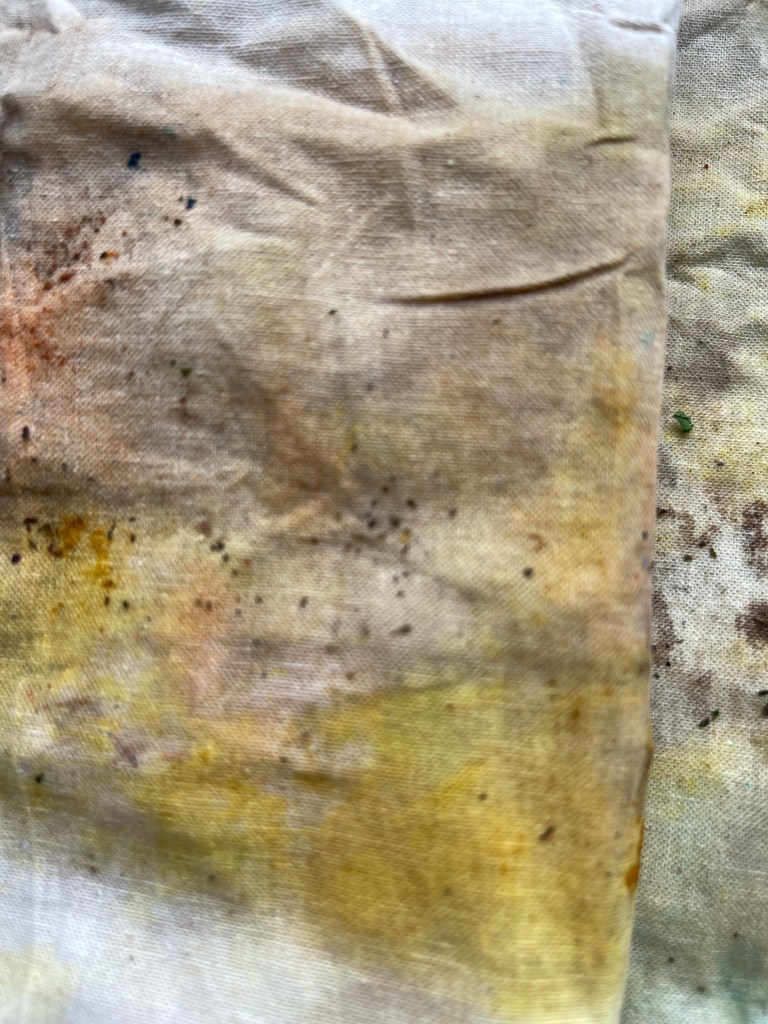
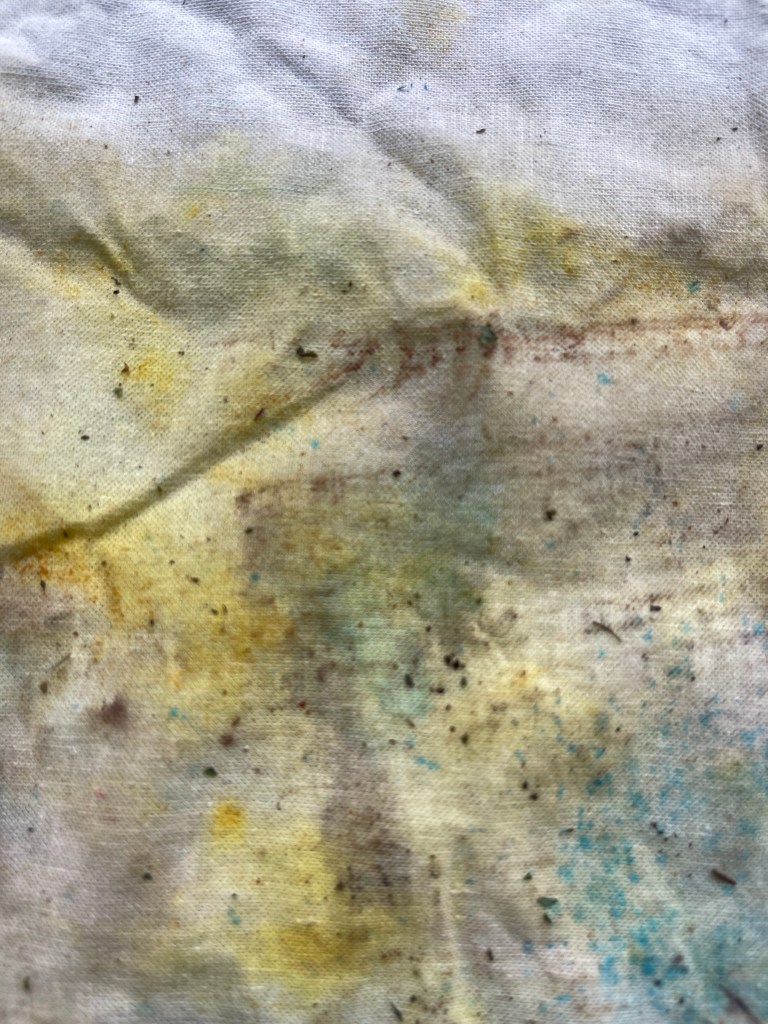
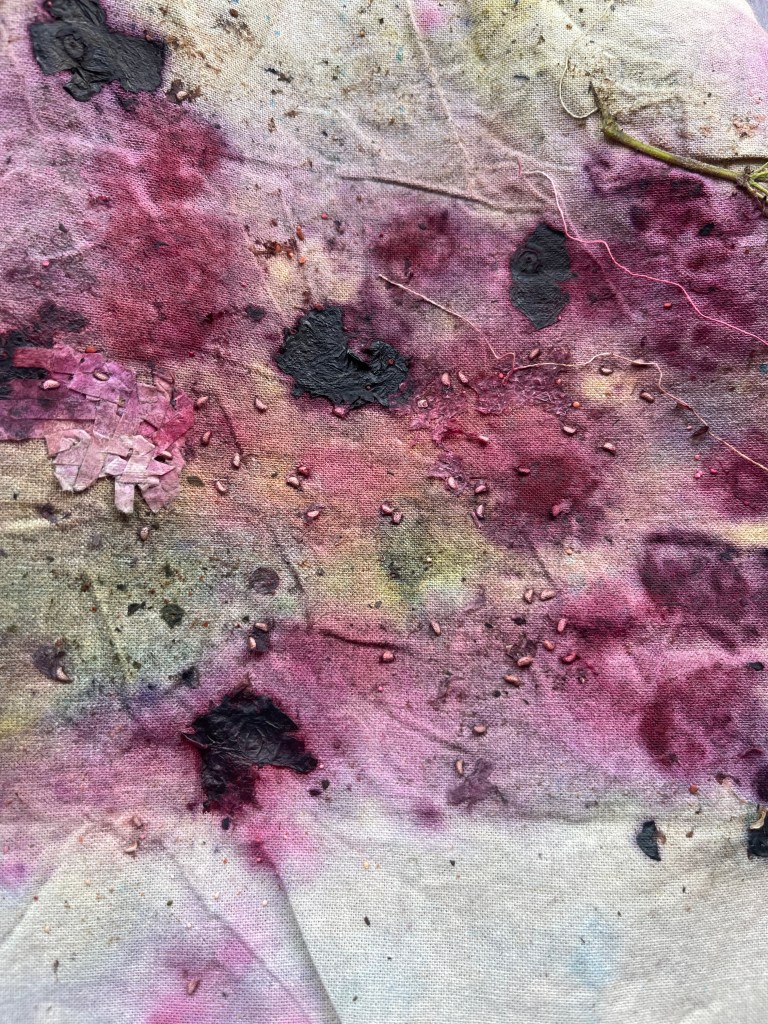
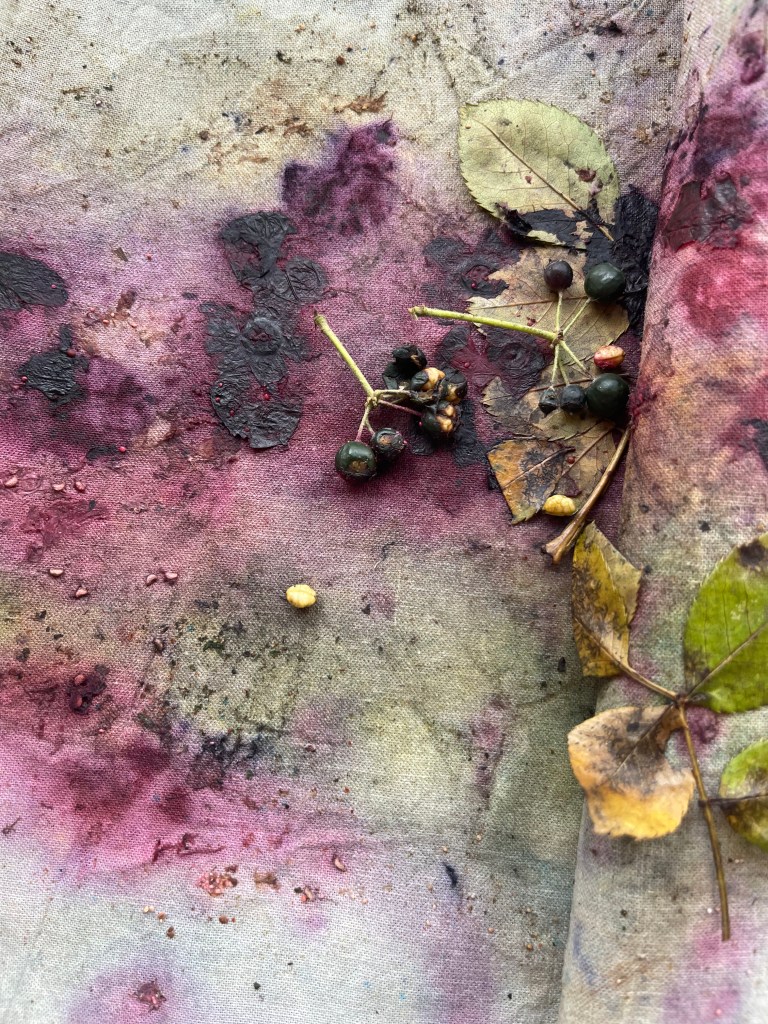
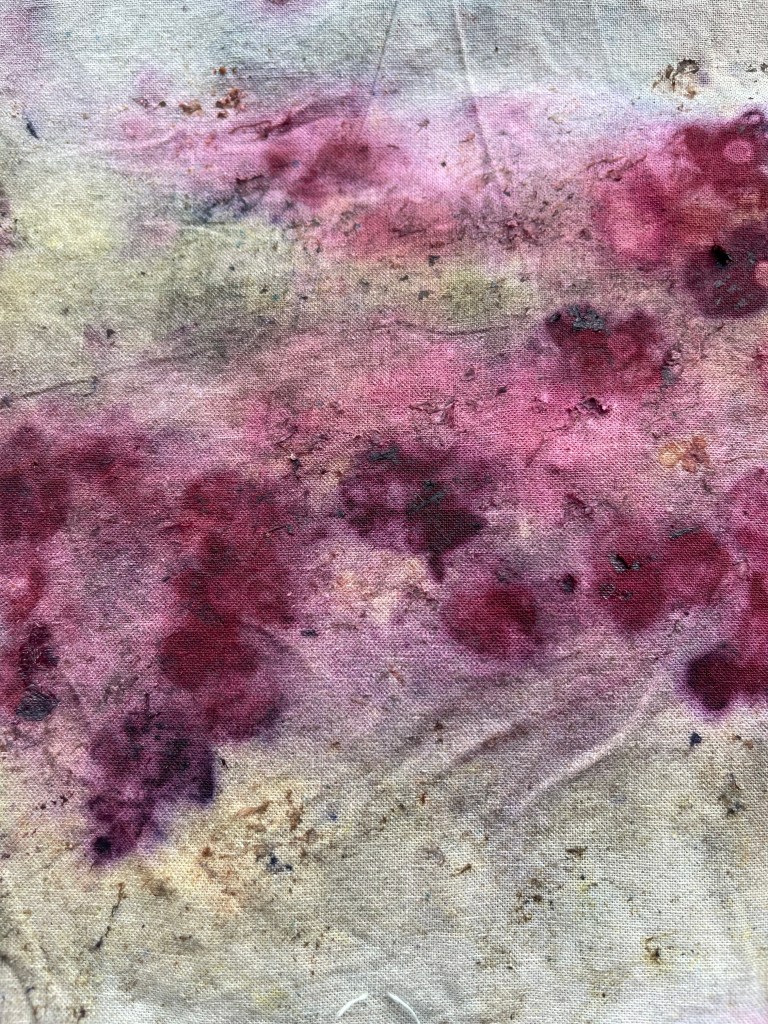
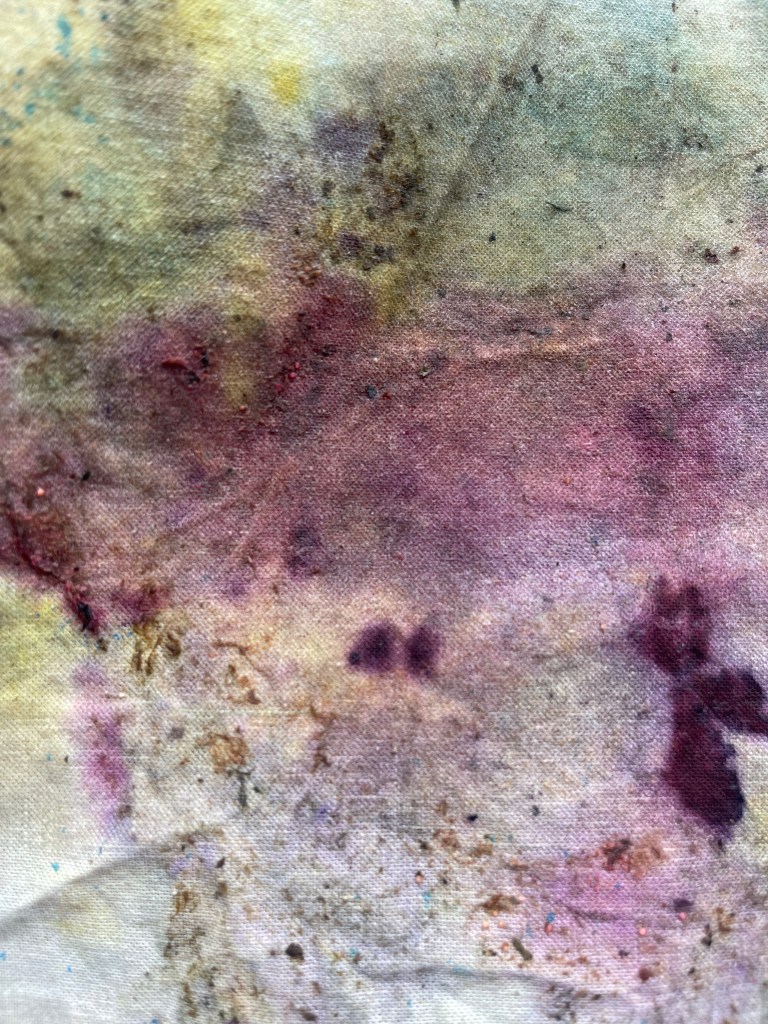
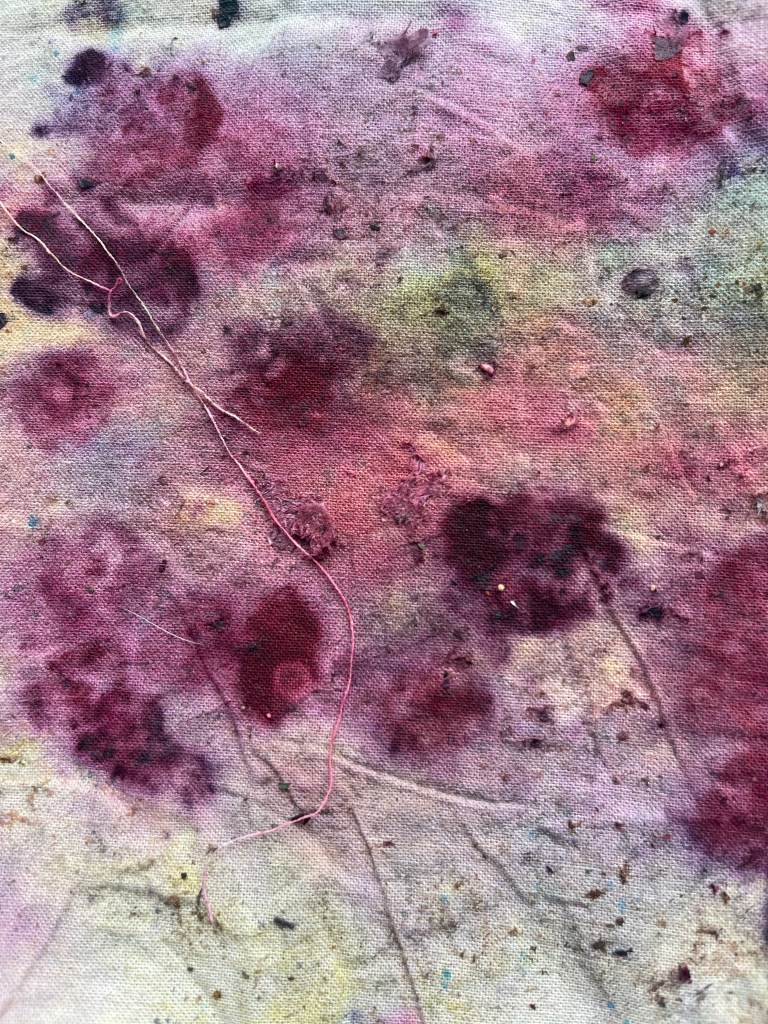
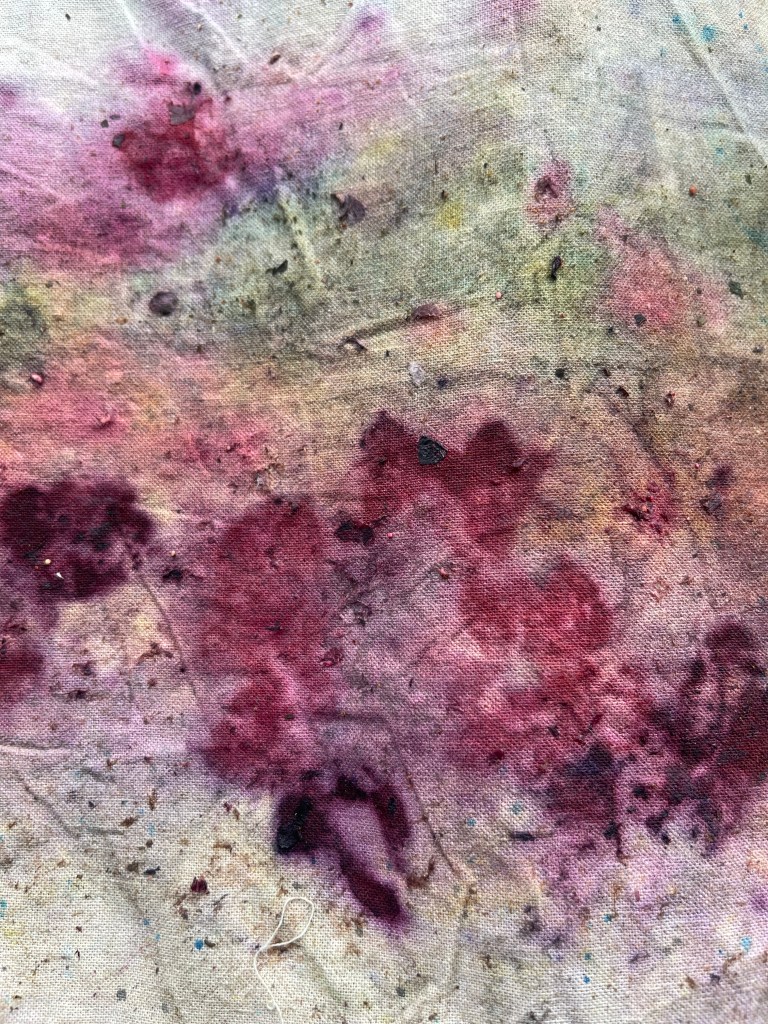
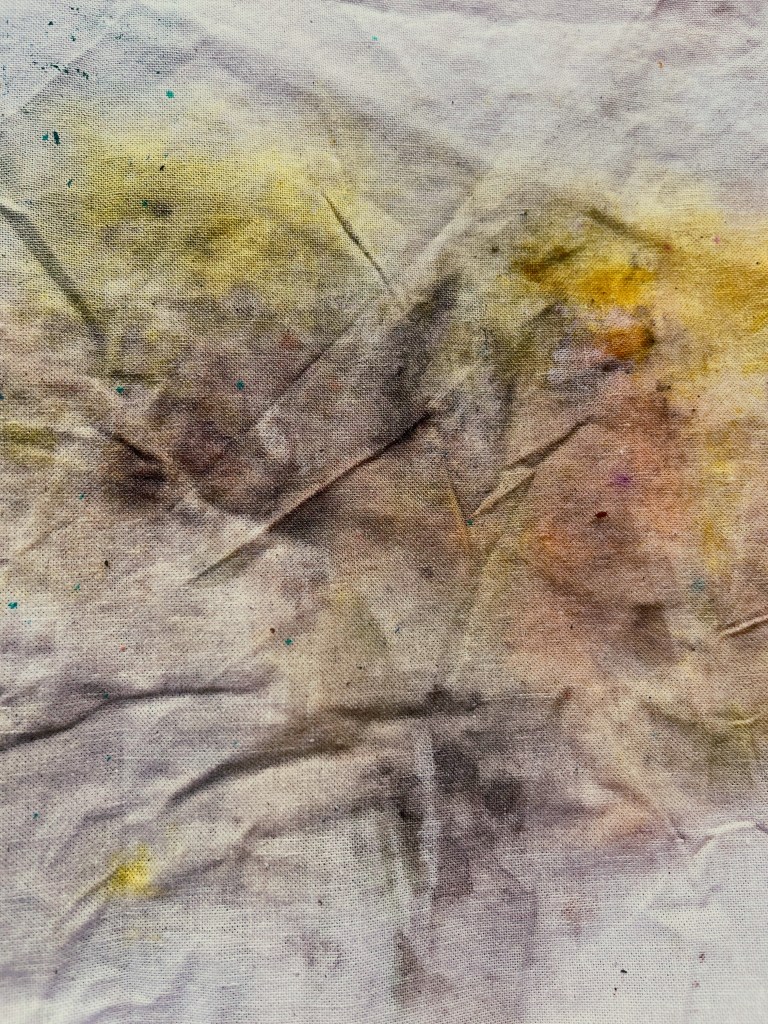
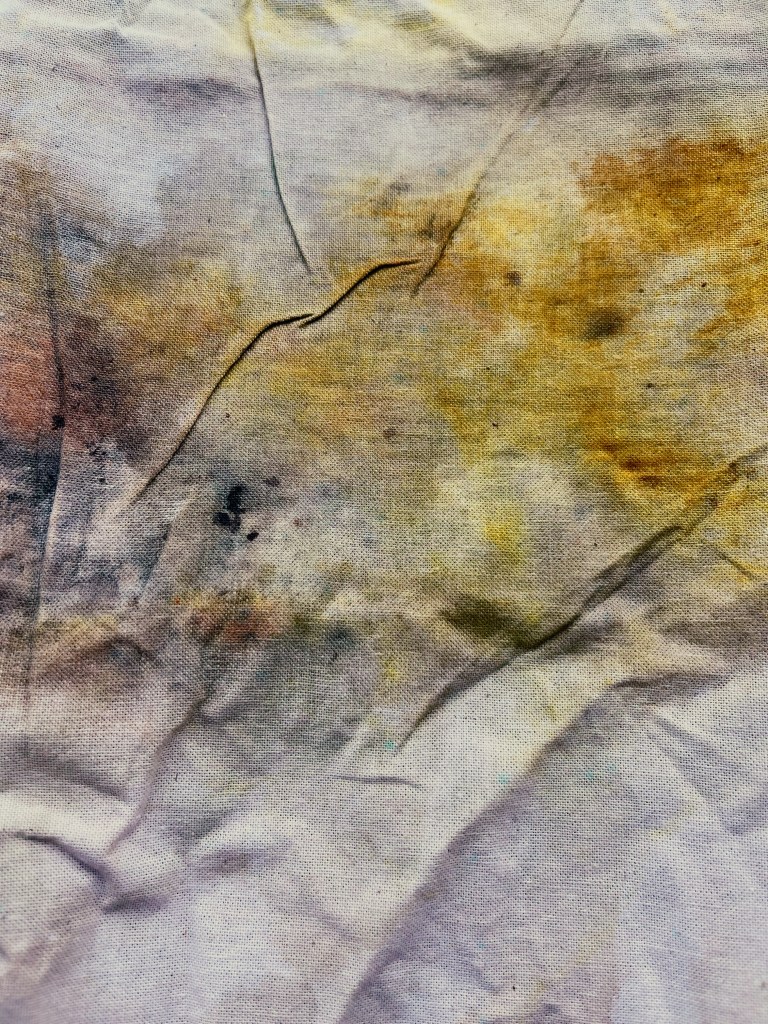
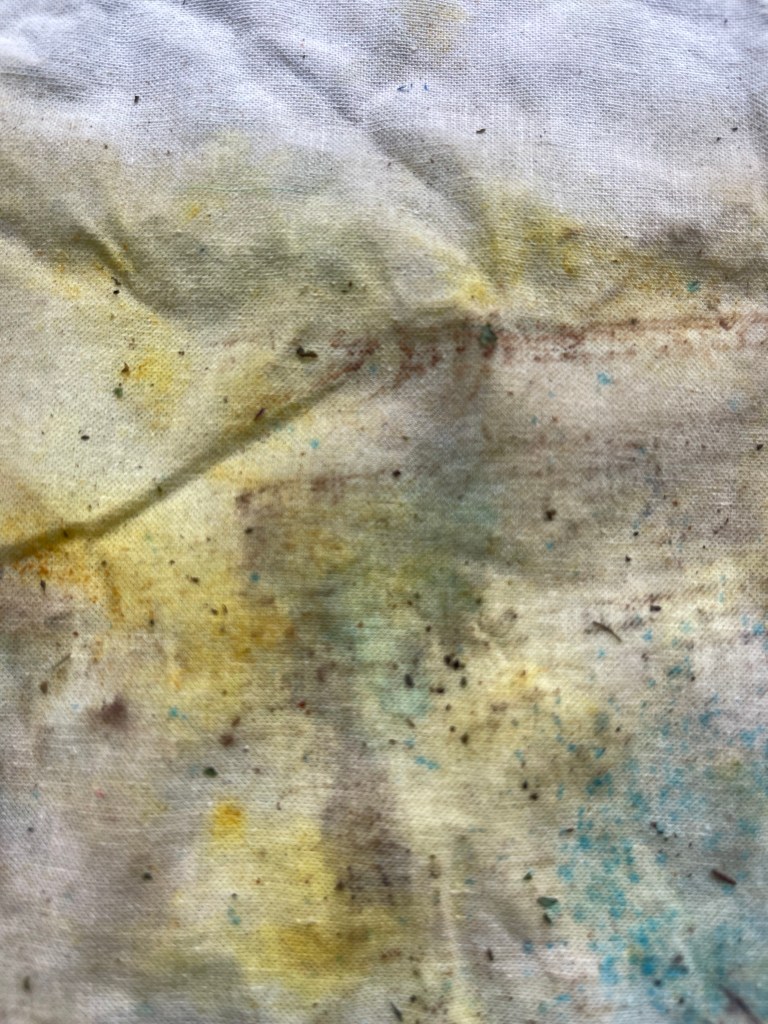
The textures and layering are starting to emerge, the colour of the berries are rich, and the rust from the can has stuck to the fabric in definite lines.
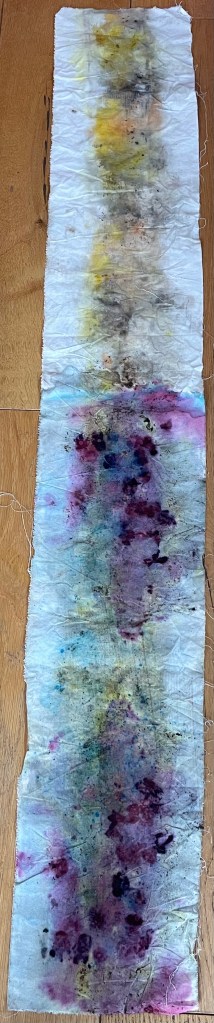
Now the fabric is stained all over, it was important to try and define the Above and Below by making a conscious mark to define the land and the water. The top half is exposed to the sir, a little sunlight and the wind, where the fabric is free from the weight of the water, to enabling the dying process to oxidise and fix irregularly.
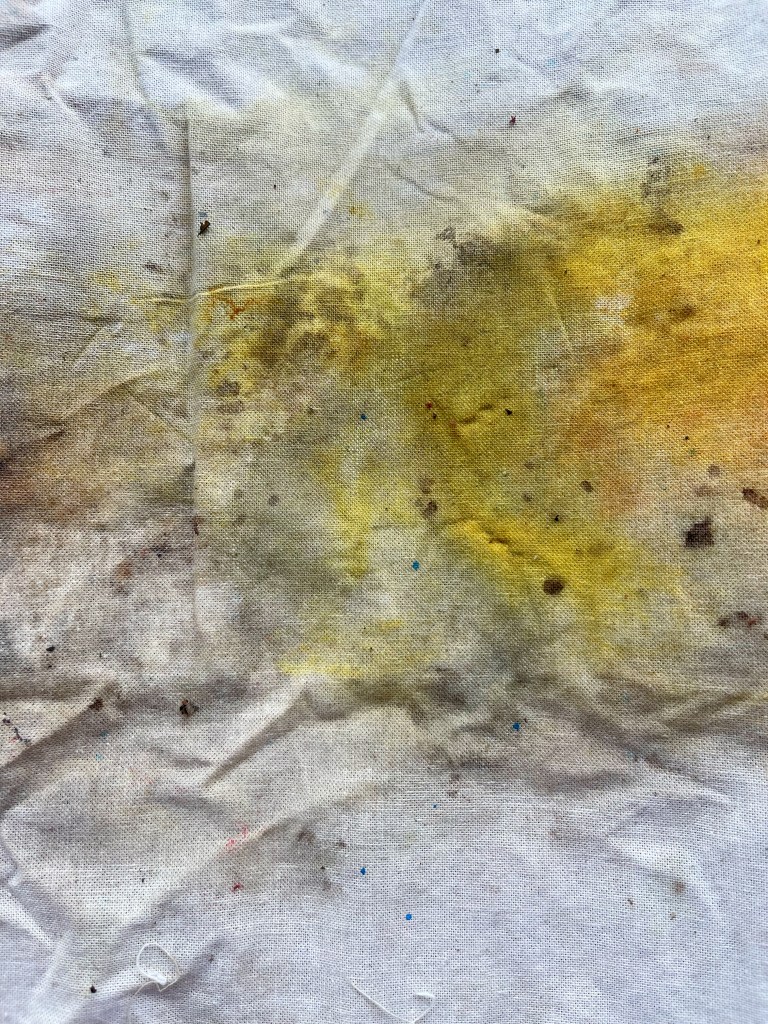
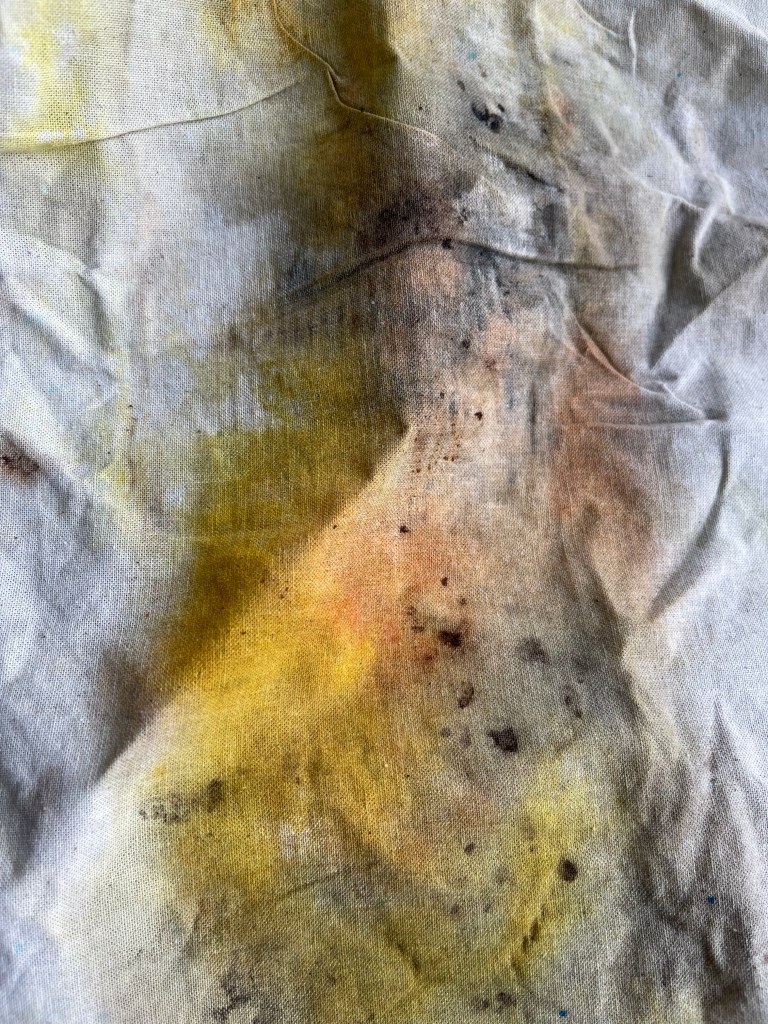
The bottom half is submerged back in the water to allow for the pigments to bleed and dissolve, dispersing, softening and staining with unpredictability, leaving the river to take control and dictate the marks.
Above
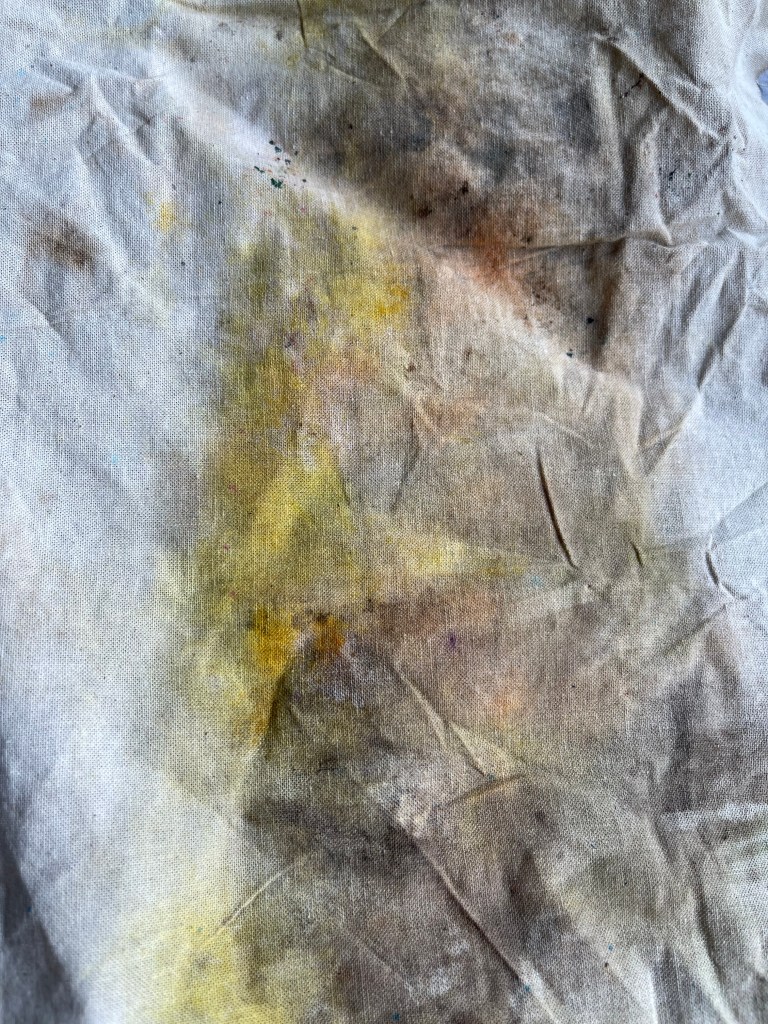
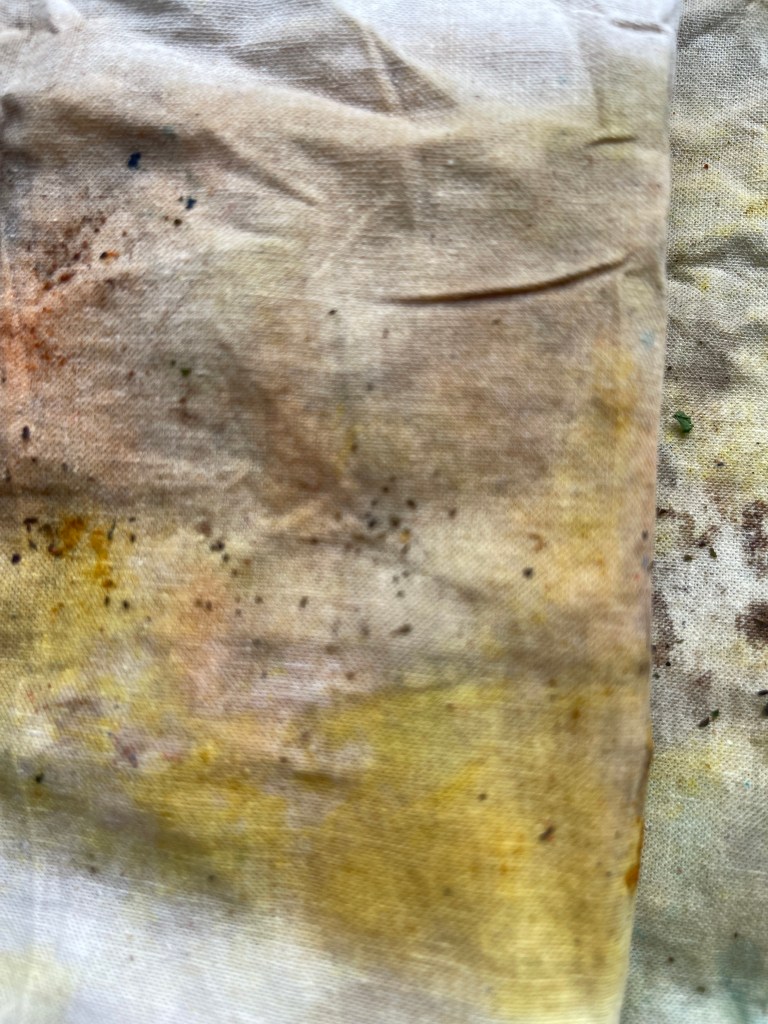
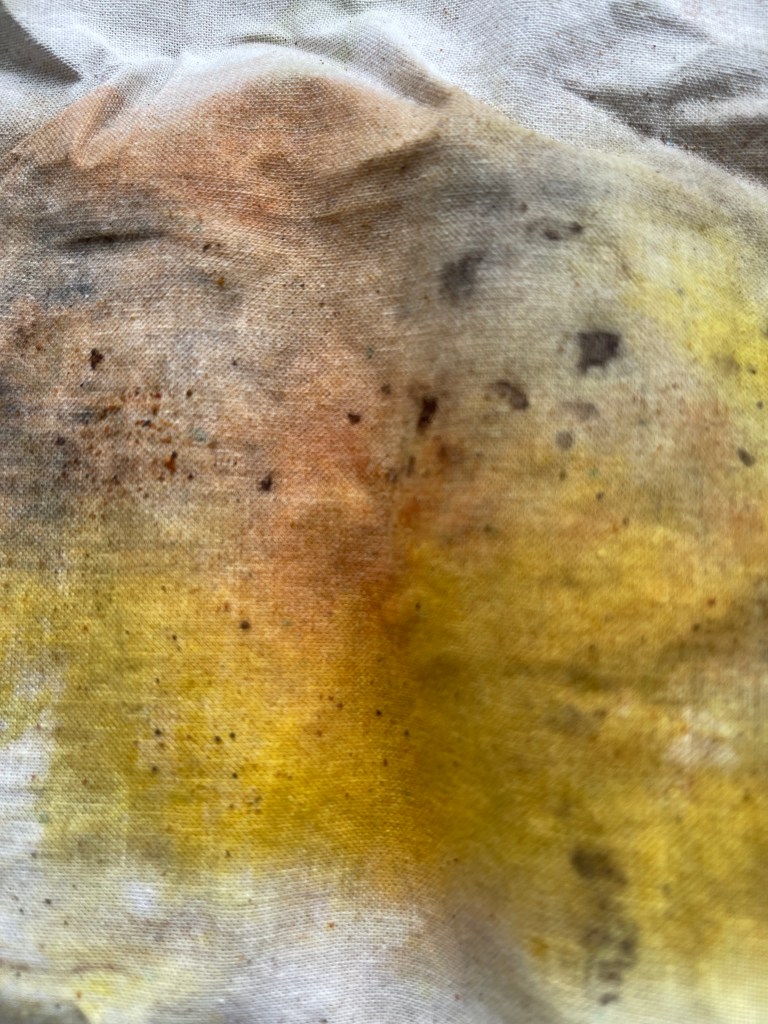
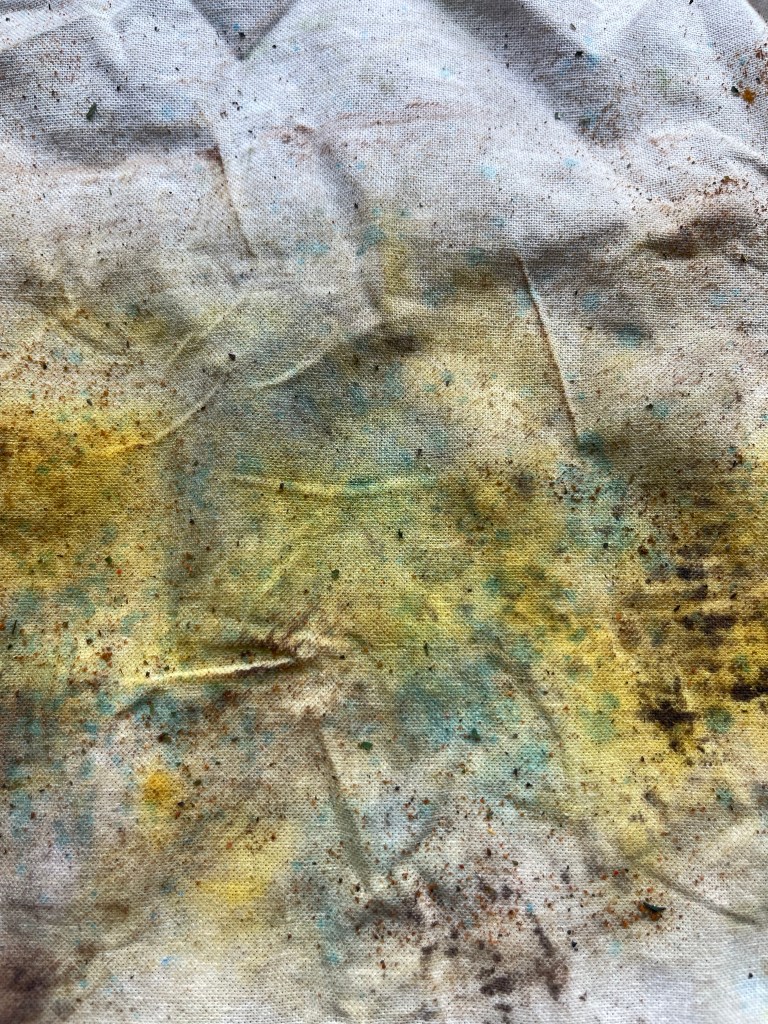
Below
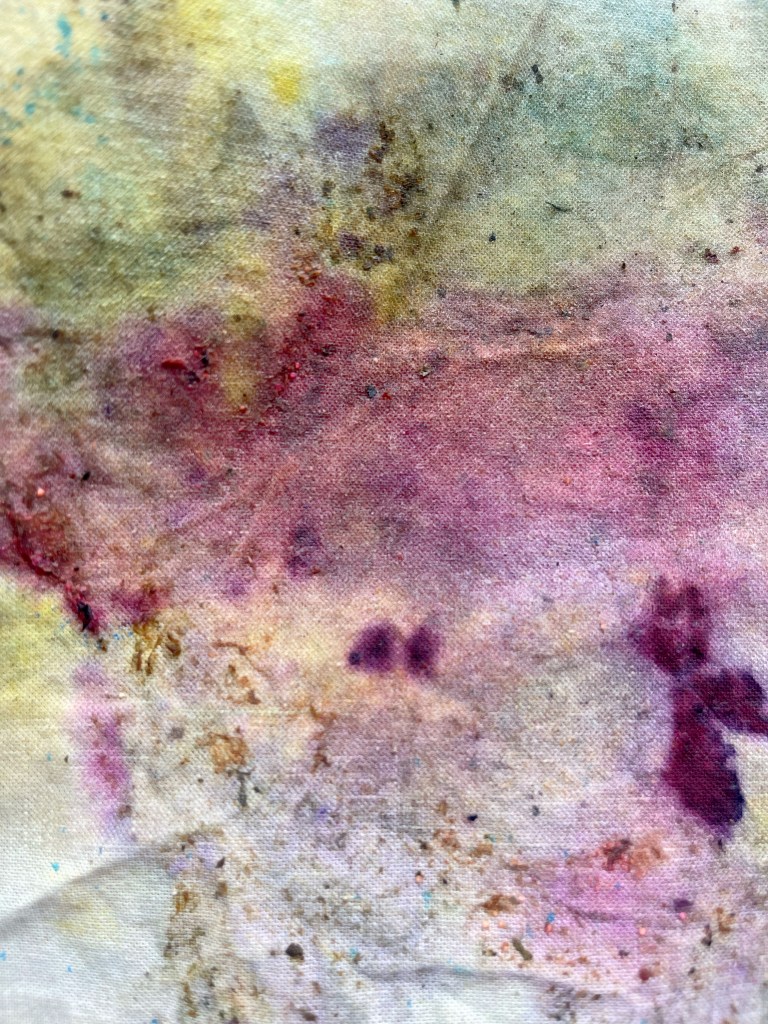
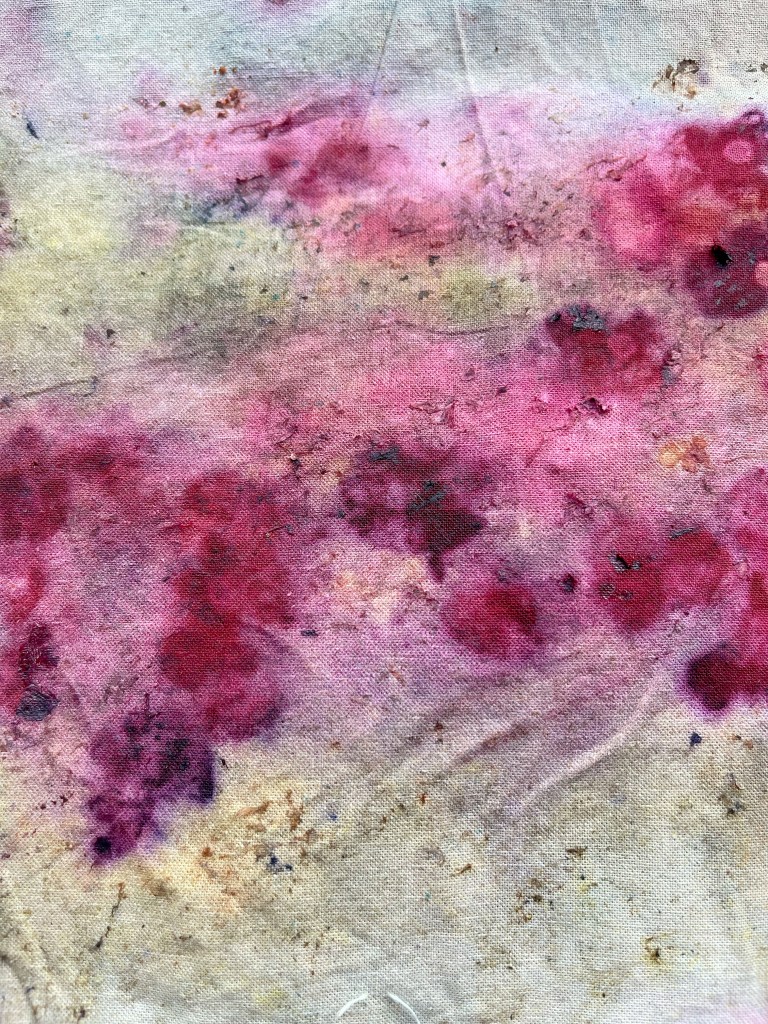
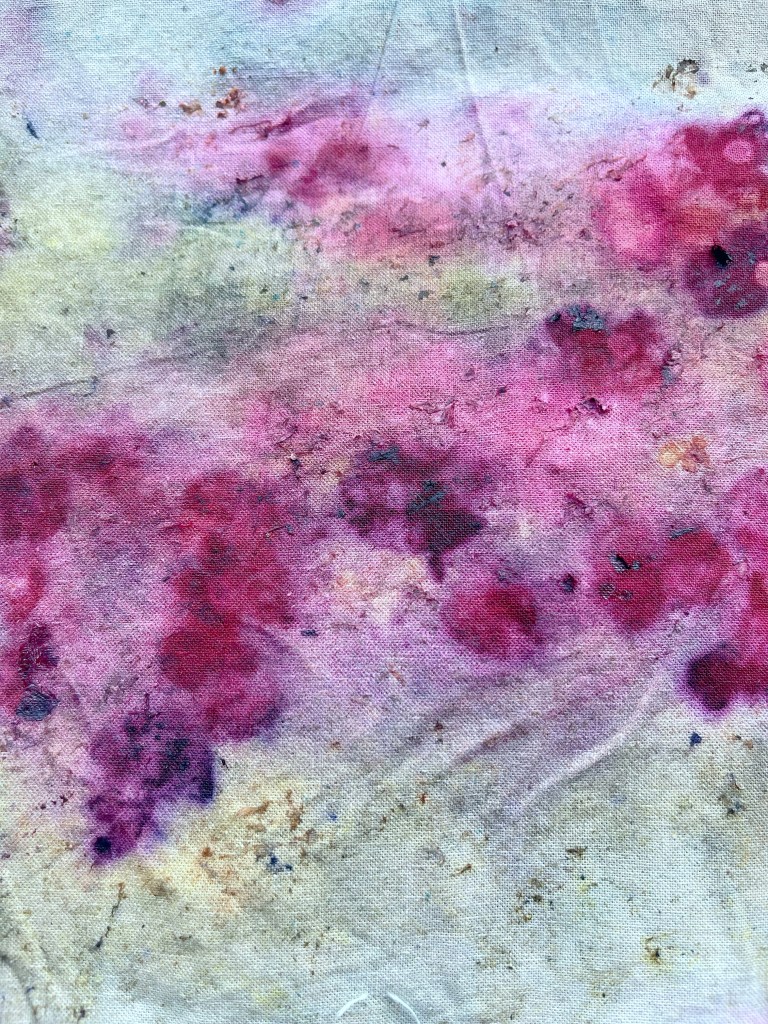
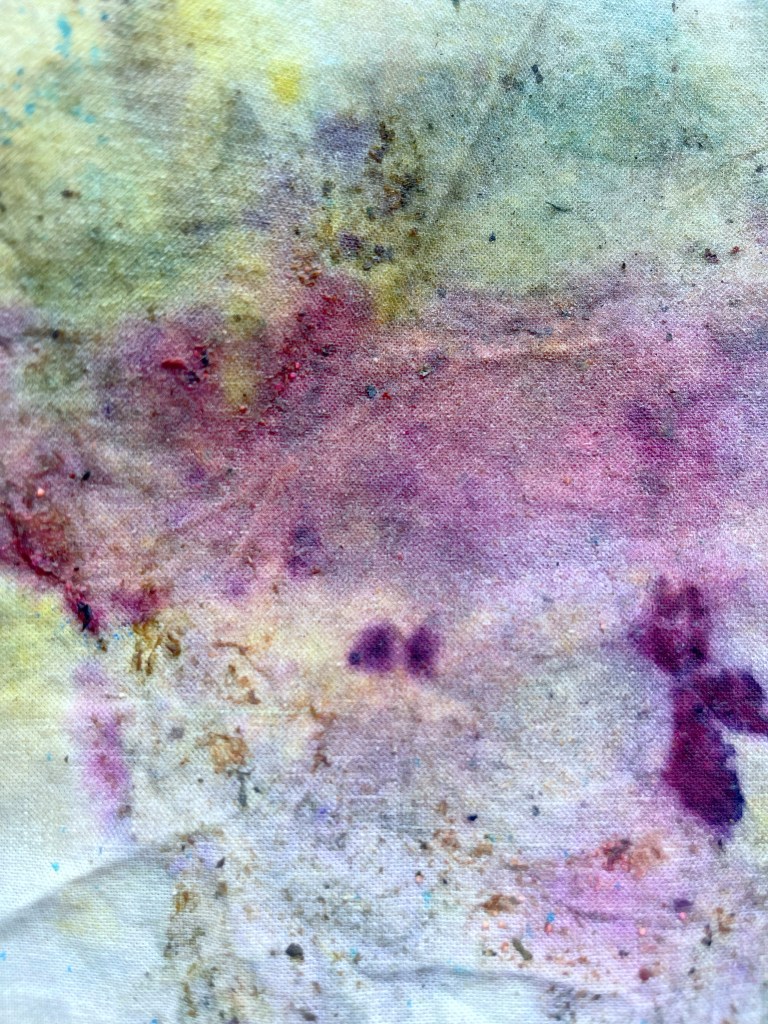
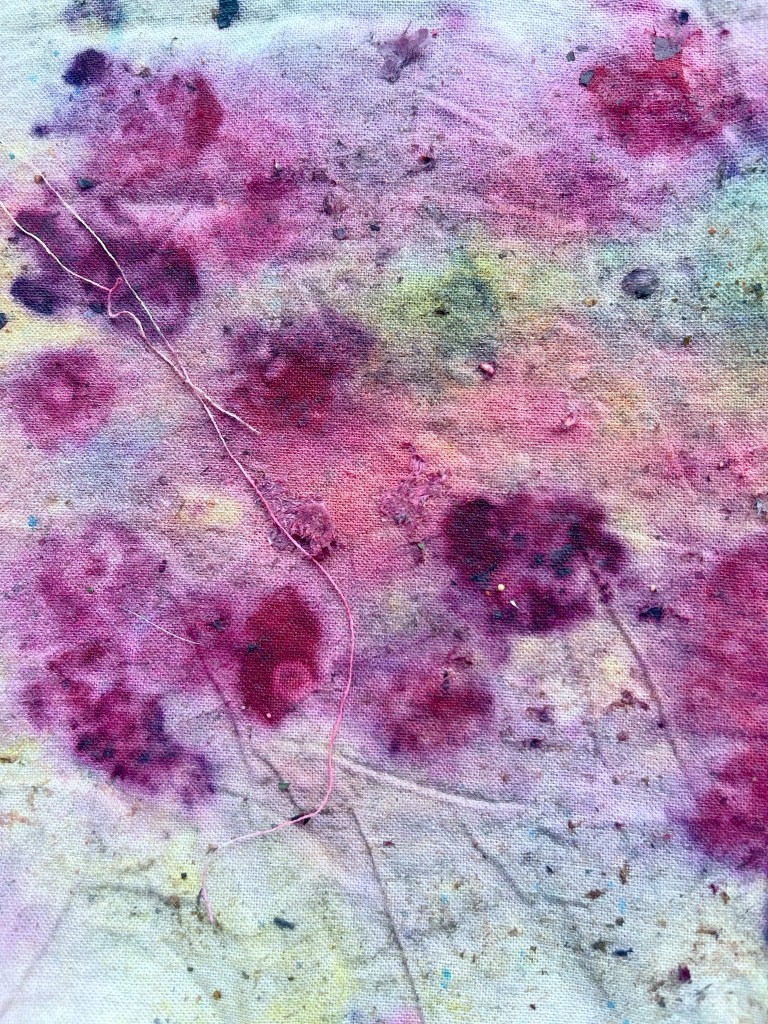
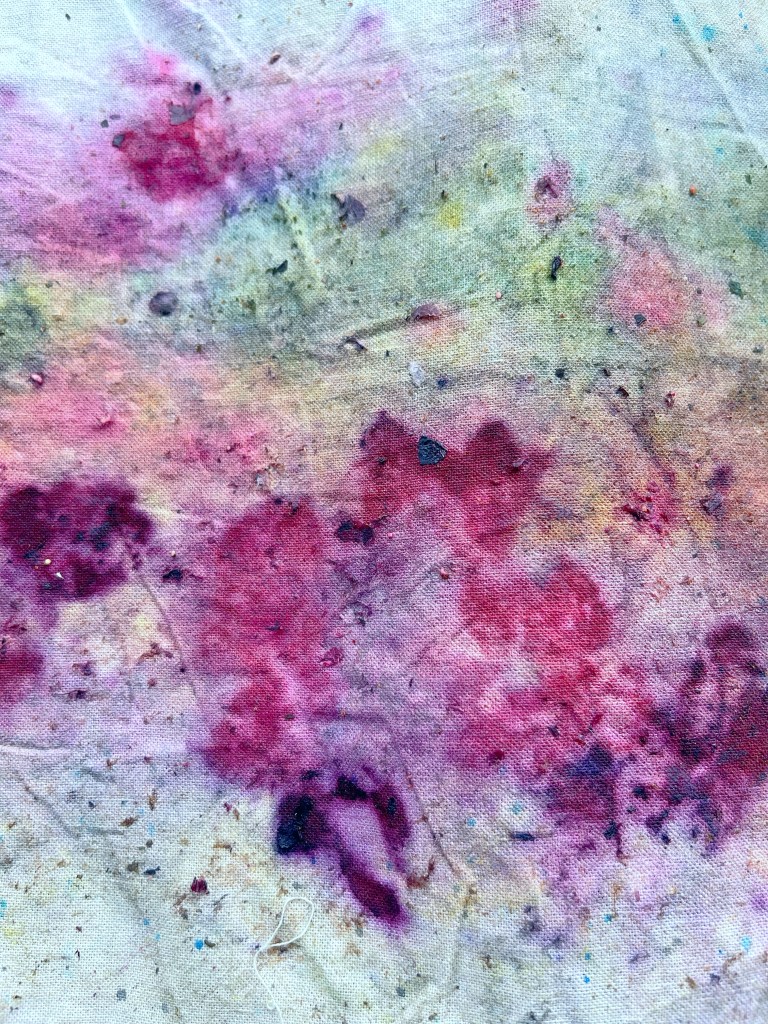
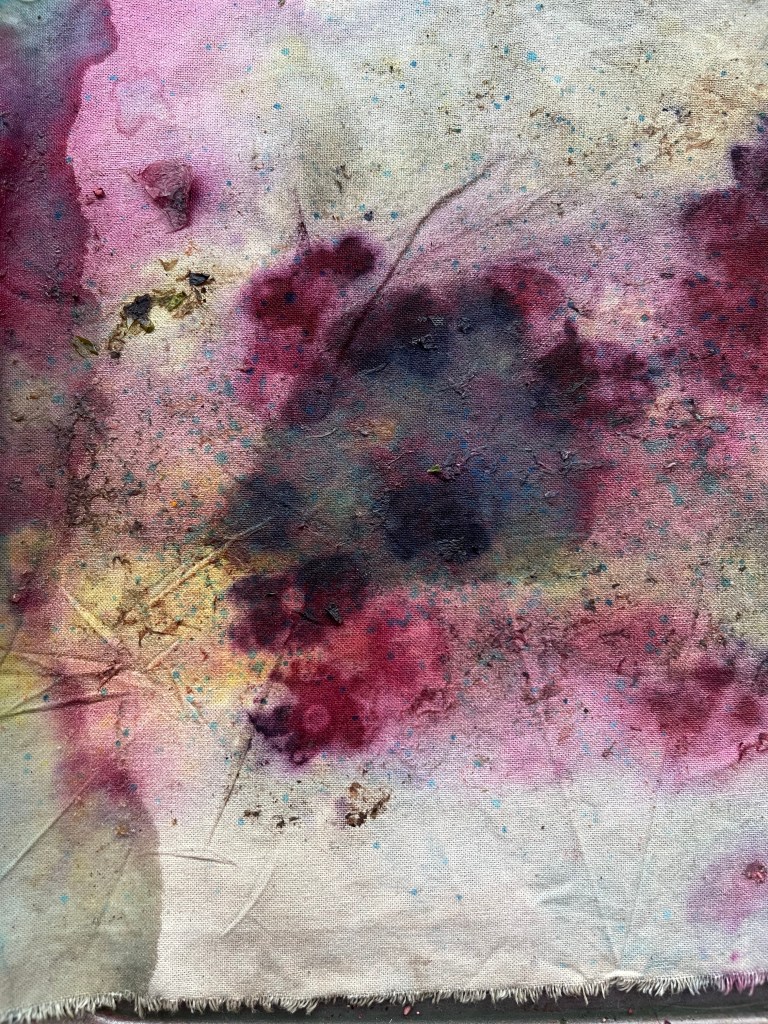
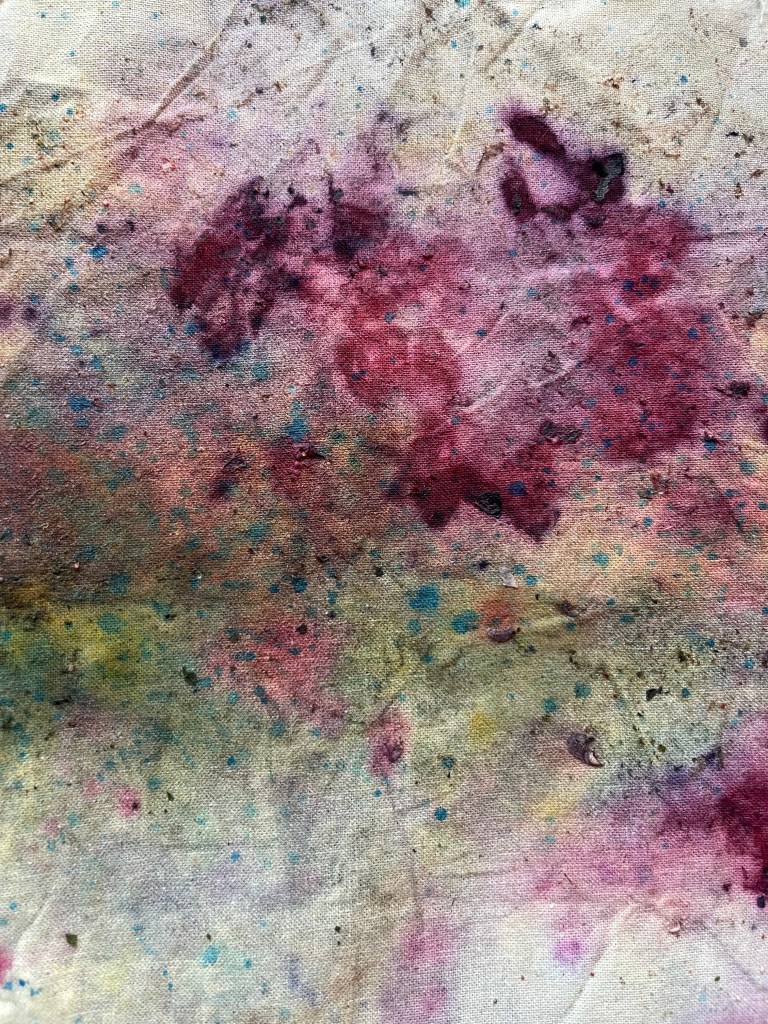
The line between Above and Below becomes an important part of the composition, the threshold seam between the two parts, mineral residue of marks.
As I have documented the piece over a few days the fabric becomes stretched, frayed and slightly misshapened. The berries ferment and the metal objects corrode. As I have added to the piece it becomes a mixture of human intervention and being ecologically free.
The found objects stain, bleed, and are squashed into the fabric. The water alters the pigment, scaring and recording the marks. The fabric becomes a temporary flood plain as it retains all the shifted waste, absorbing what the water leaves behind, a memory of the level of change. Nothing remains stable.
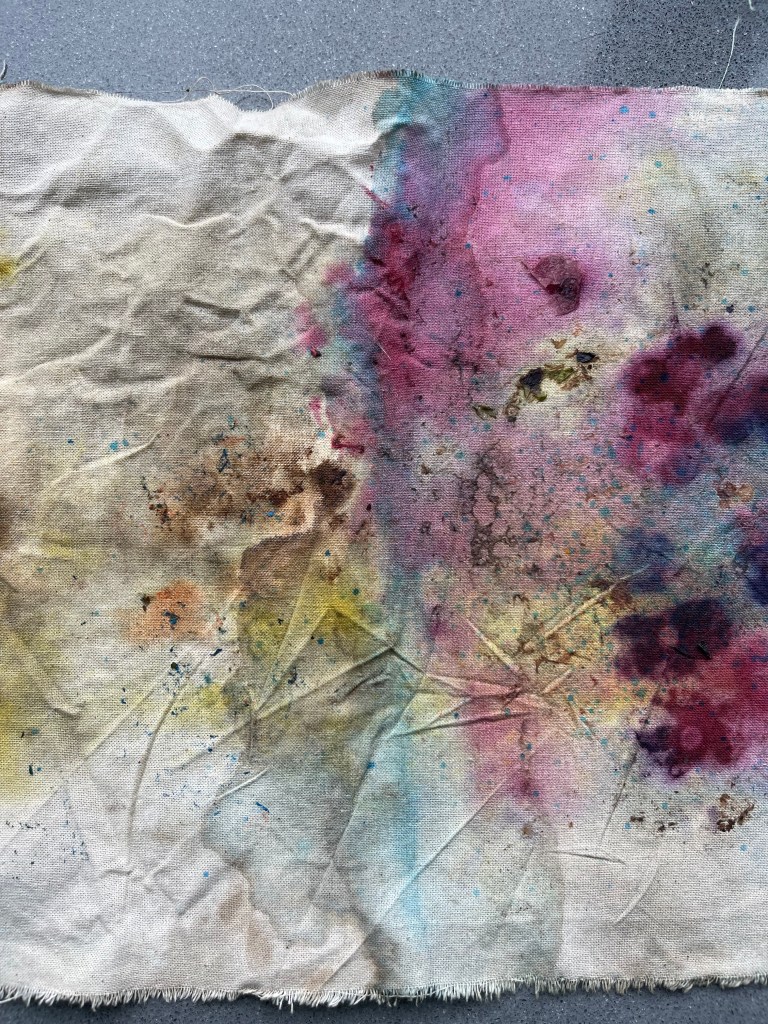
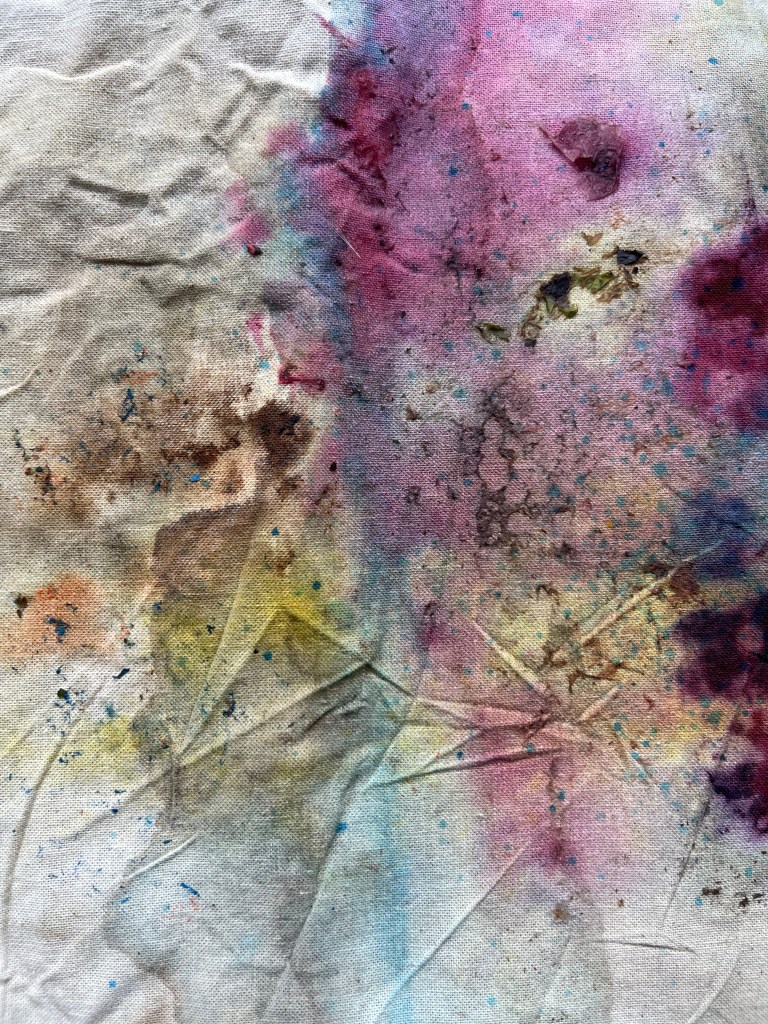
Above and Below – unbleached calico, mixed media, approximately 1500mm x 500mm


Reflection
The river has been running too high and fast to safely submerge objects in situ, instead of a bonding my thoughts surrounding this project I collected the river water and brought it home to use. By doing this I felt I was preserving the authenticity even though I was shifting from outdoor to indoor, therefore adding in an element of wild to controlled environment.
The found objects exploration was successful. The berries produced rich, unpredictable stains and the rusty tin made definite linear marks on the fabric. As the layering began to emerge, I worked over the threshold seam to encourage became a strong compositional element. The mineral residues and tide like marks, reinforced the idea of the fabric temporarily acting as a flood plain. The works physical honesty was strengthened with the fraying, fermentation and corrosion of the material echoing the instability of the river banks themselves.
As I had made the decision to make this in one piece, with a prominent dividing line, next time I will use a different support and try two pieces to allow them to speak differently. I also feel very inspired with the work of Tan Zi Xi – MessyMsxi and would like to try a digital piece using one of my photographs of the River Thames.
I feel the submersion could have been more well documented to strengthen the contextual narrative, enabling the viewer to have a deeper understanding of my practice.
Moving forward and on future display, should the piece be suspended or draped? Would that further emphasise the physical separation of Above and Below to reinforce this heavy weight of water and how gravity affects this?
By substituting the food waste, was I being untrue to the authenticity? Should I have just not included it?
Overall the work negotiates the human intervention and ecological process demonstrating the material sensitivity as well as being open to change by recording residues as well as the boundaries formed by the overspilling water.
Silent Crit
I put this piece into our monthly crit. Briefly these are the thoughts from the meeting:
Am I showing this, or will I show it as an installation? Is one side Above and one side Below? Is everything below the horizon line? The marks and textures are particularly interesting? How did you get the definite folded lines? And are the curvy lines in the top right corner representative of the water?
I have the urge to turn it up the other way so Above becomes the earth and Below becomes an array of flowers with the landscape underneath, the creases in the fabric become the rocky terrain.
How do I achieve such vivid rich colours? The weave of the calico is quite broad. I’m interested how you would display it? How big is it? Could I hang it from the ceiling? The creases make beautiful marks and I can see the definite line where the water meets the land. It could be a coast line.
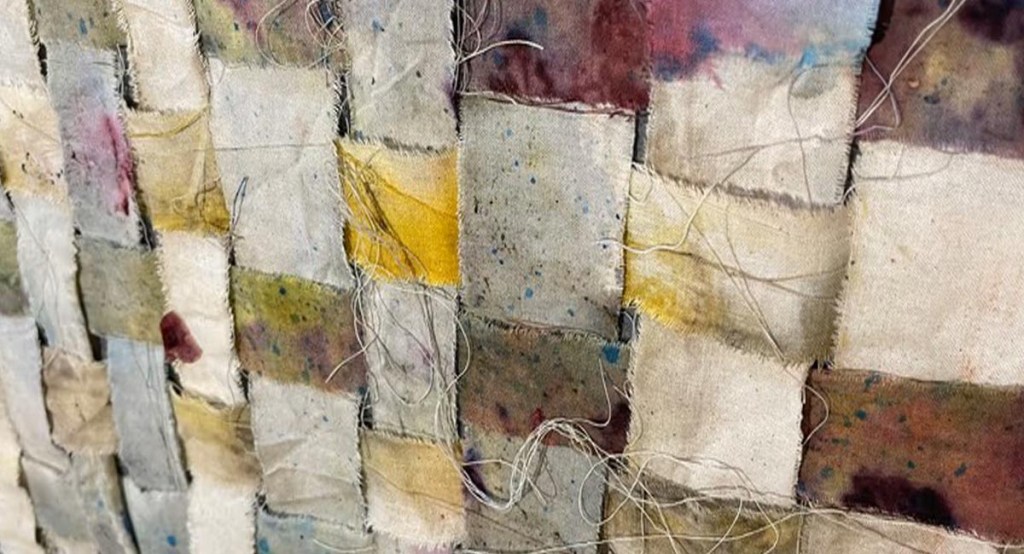
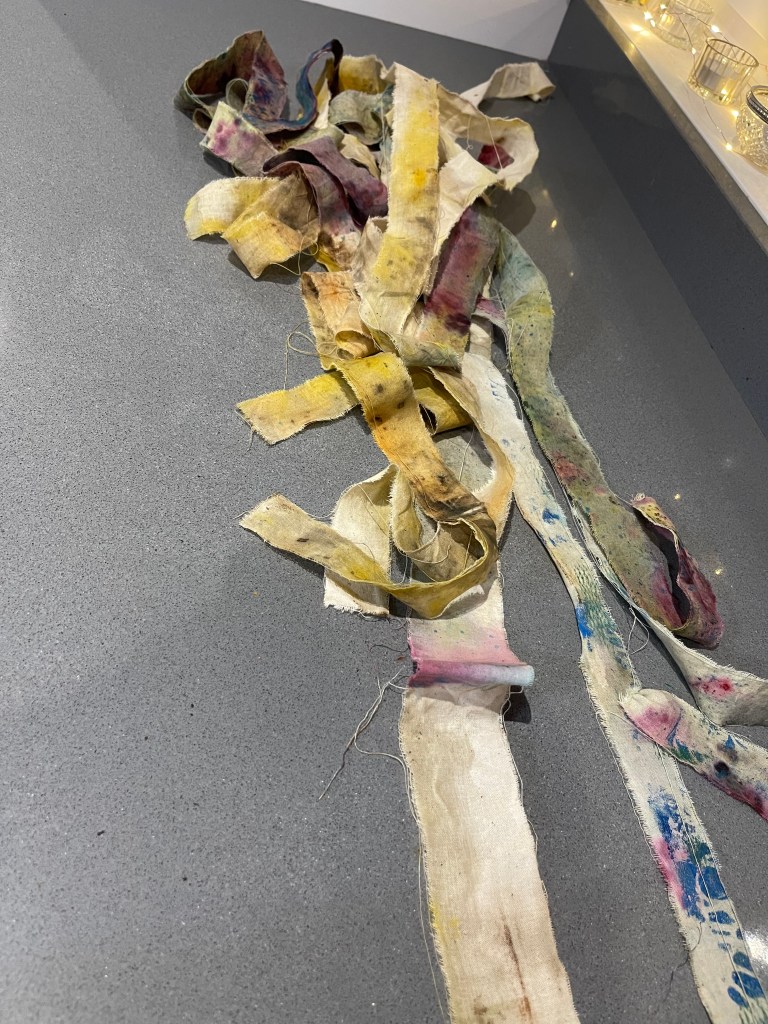
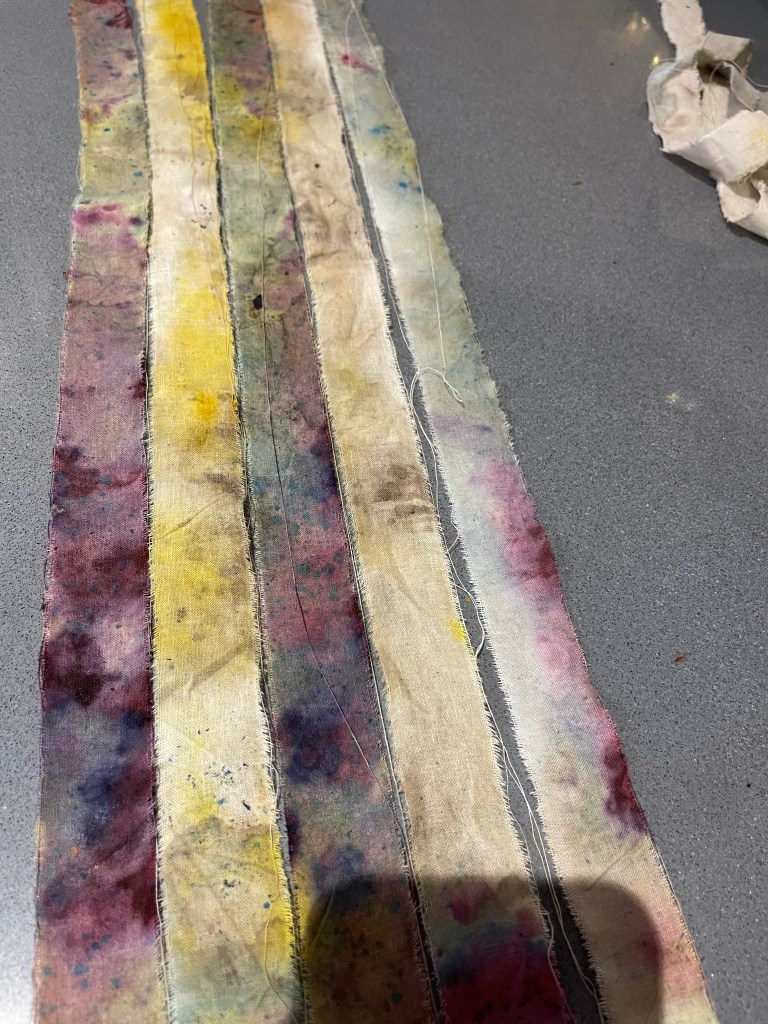
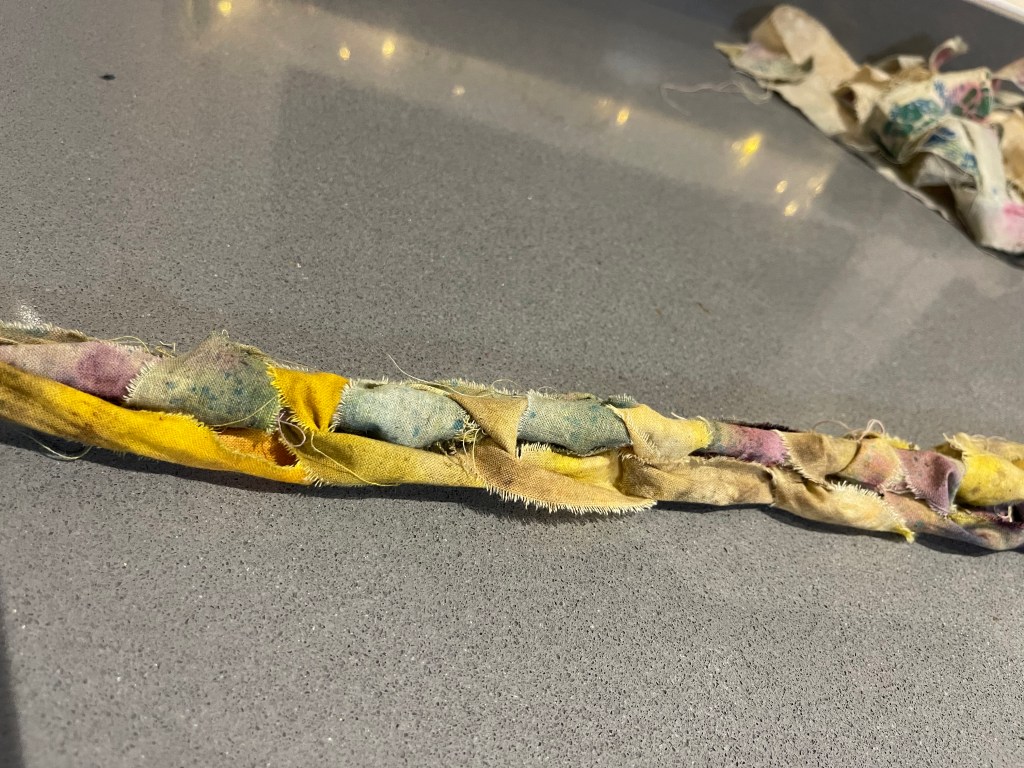
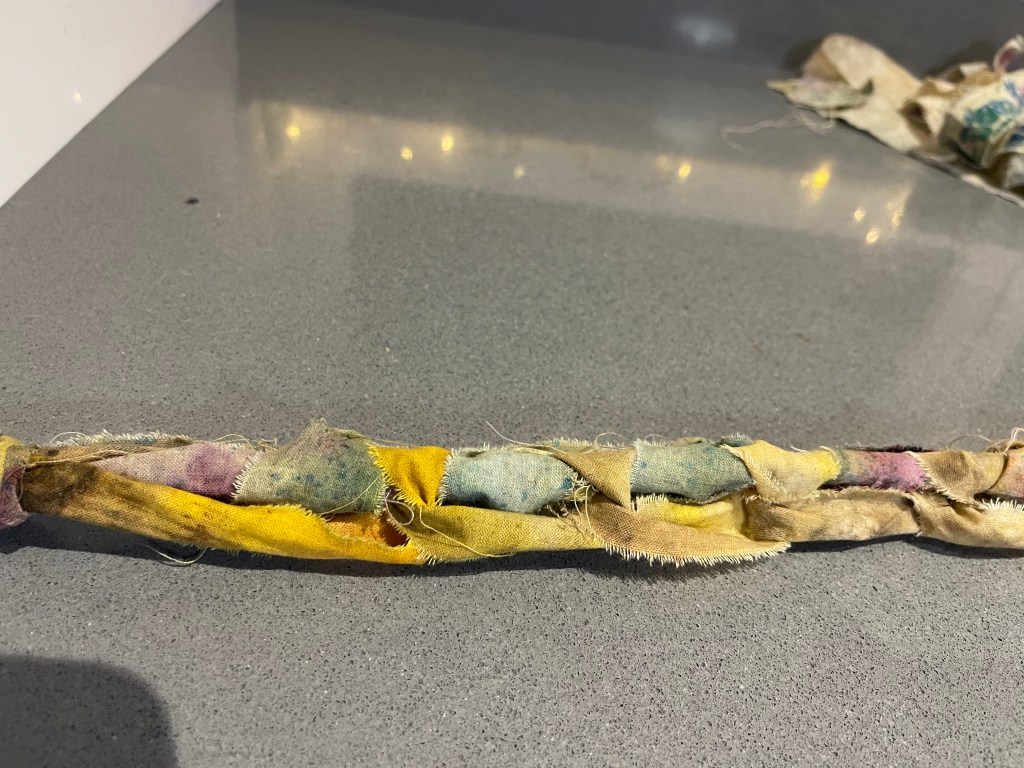
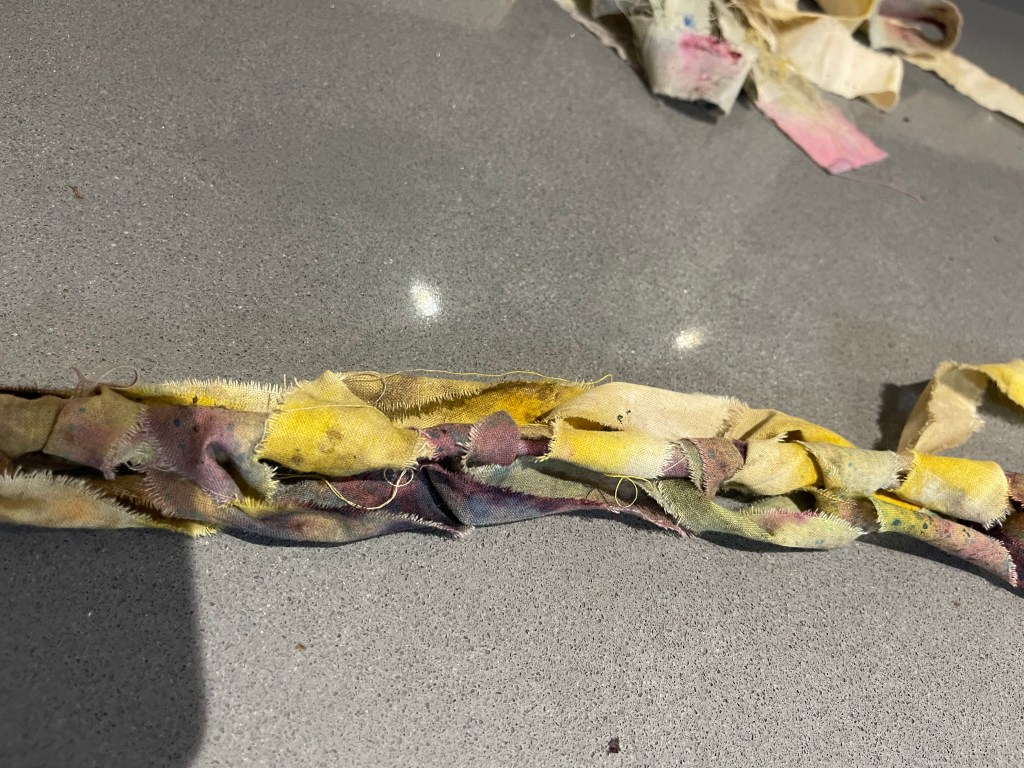
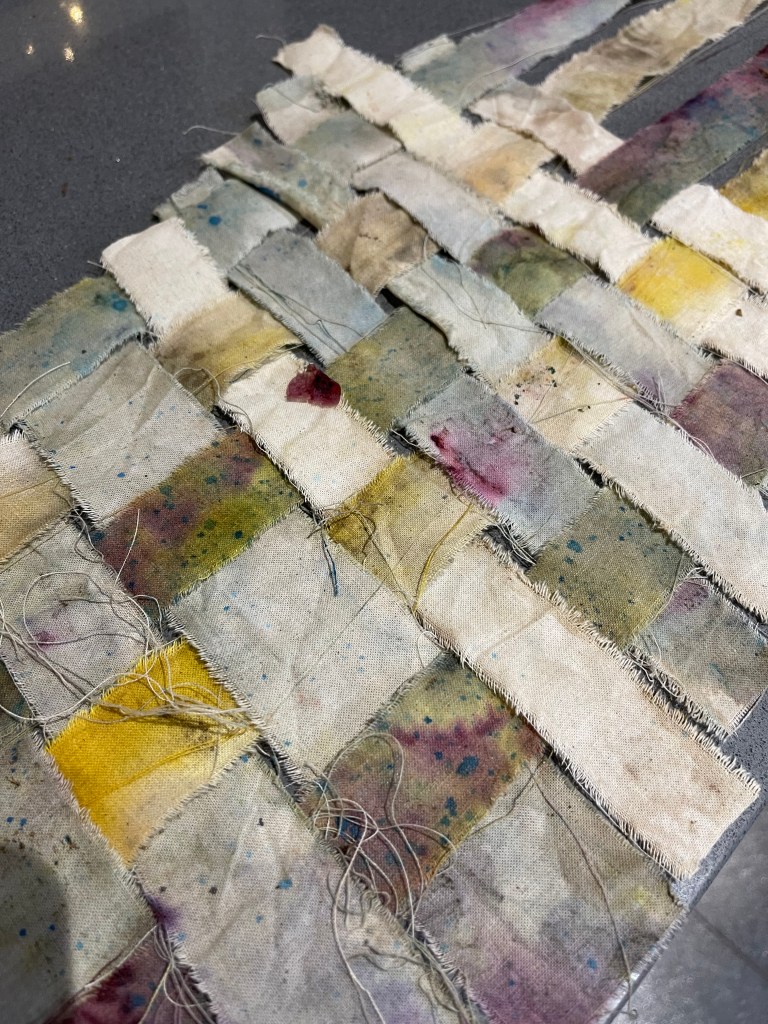
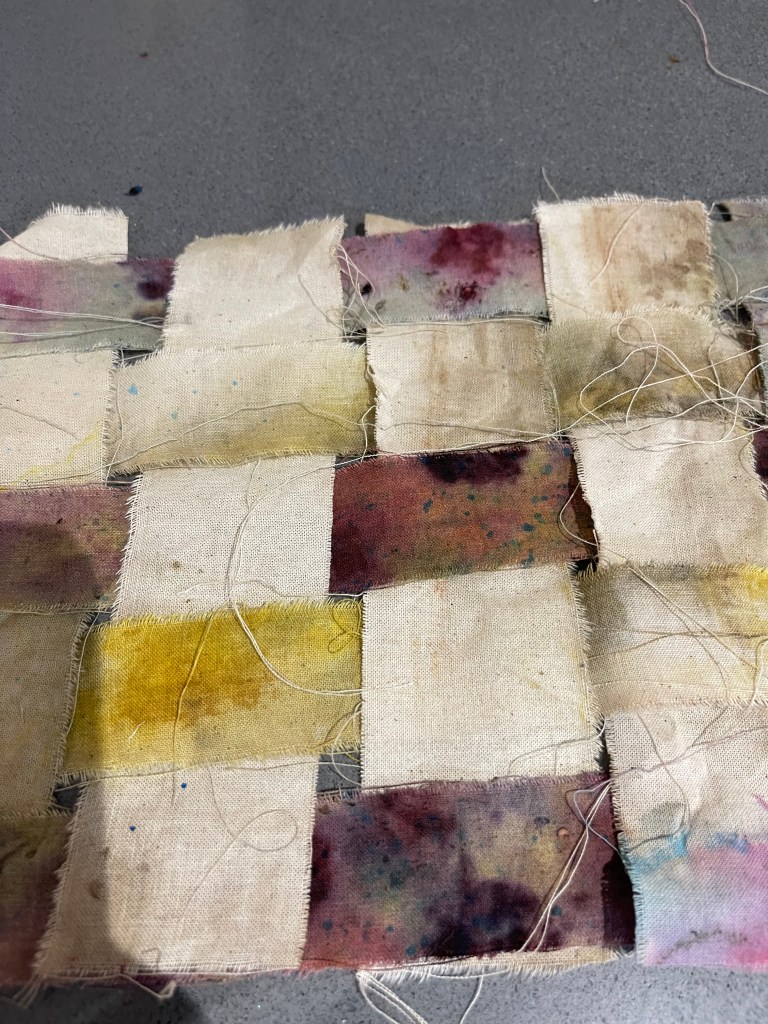
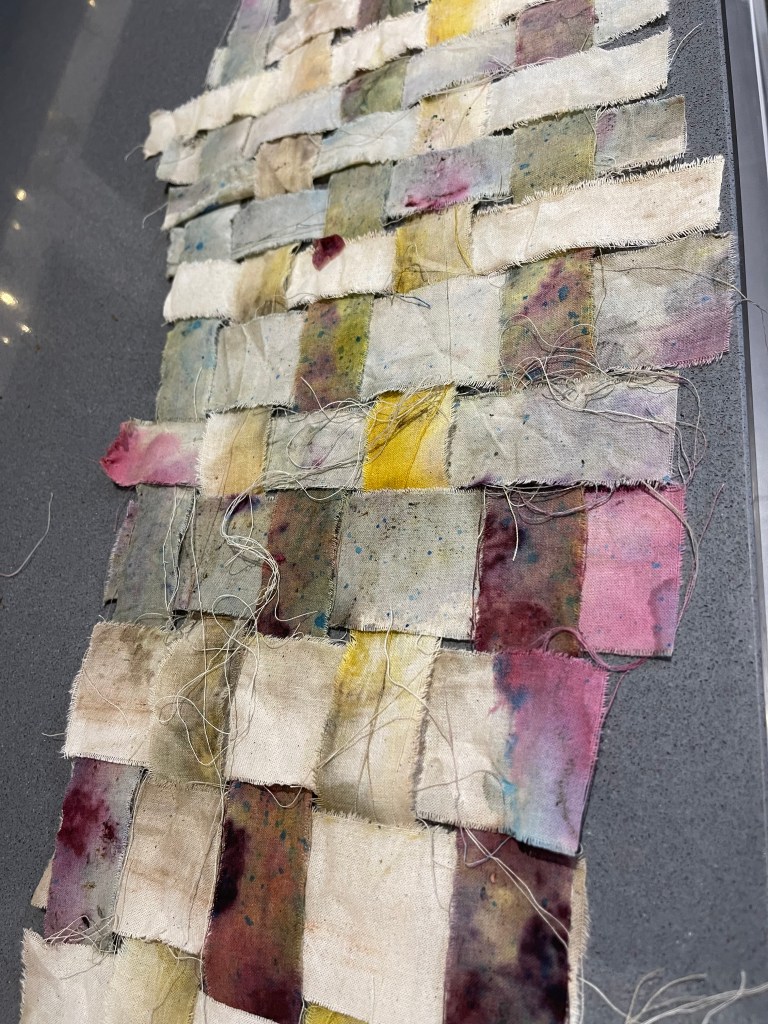
Have you thought about tearing the work into strips and weaving it back together to show how above and Below are always intrinsically linked? Mixing the light and the dark.
I really love how you create such harmonious mixtures of colours. I can see the debris in both looking up and down. Through the river. The geometric shapes juxtapositioned against the organic marks is quite powerful. The human contrast against the natural forms.
How do I work? Do I bring the water home or work in situ?
This was an extension of the project to try what was suggested. Some of the pieces worked really well, particularly the colours and textures in the weave piece. Everything was ripped and torn, creating new frayed edges.
External Projects
Moving forward I have also been thinking about my work commercially and feel maybe although the experiments will never end, should I be producing work that is more likely to sell? I’m not sure. I am always ‘busy’ with collaborations, enjoying the interaction with other artists and fellow students. I should probably be more active on social media, Instagram is the platform I use the most. I will also enter a couple of competitions, for the experience. i have been looking at building a website. My blog is public so should I be using this as my space as I pay a fee per year?
To some extent my work is public facing already, however I could reach a broader audience, in an effort to build and sustain professional relationships with other artists. Perhaps using Instagram as the main platform as this is where I feel most confident, and reach out to other environmental artists.
I am very mindful of my environmental impact, consciously not leaving any traces. I will always continue to work in this way.

 Viv King. Level 3. BA Fine Art