
I visited the Kiefer / Van Gogh exhibition at the Royal Academy with fellow student Vicky. We had hoped to attend the Summer Exhibition, however fully booked, this was a good alternative. Surprisingly enough, we both got so much out of this, it was quite unexpected.
In 1963, aged 18 Anselm Kiefer received a travel bursary that allowed him to follow in Vincent van Gogh’s footsteps through the Netherlands, Belgium and France, first in Paris and ending up in Arles and the neighbouring village of Fourques in Provence. On His travels, which he termed an ‘initiating journey’, Kiefer kept a diary filled with notes and drawings.
Text by Anselm Keifer. Translated from the German by Damion Searls. Extracts selected by Julien Domercq and Natasha Fyfe. Taken from the booklet form the exhibition.
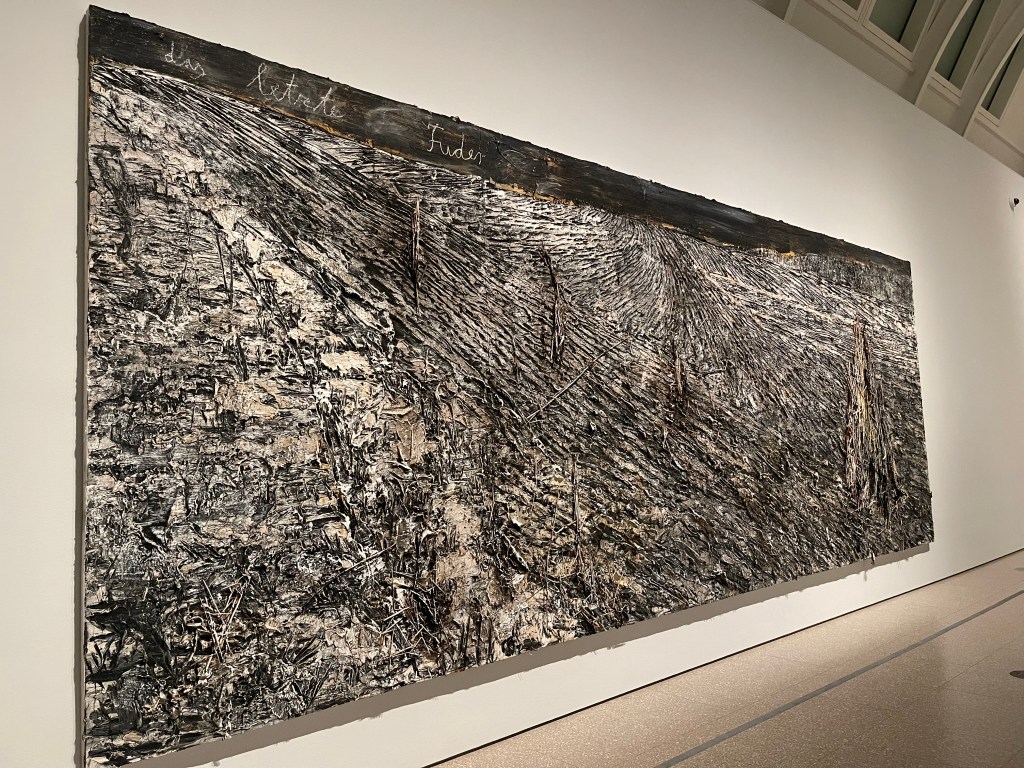
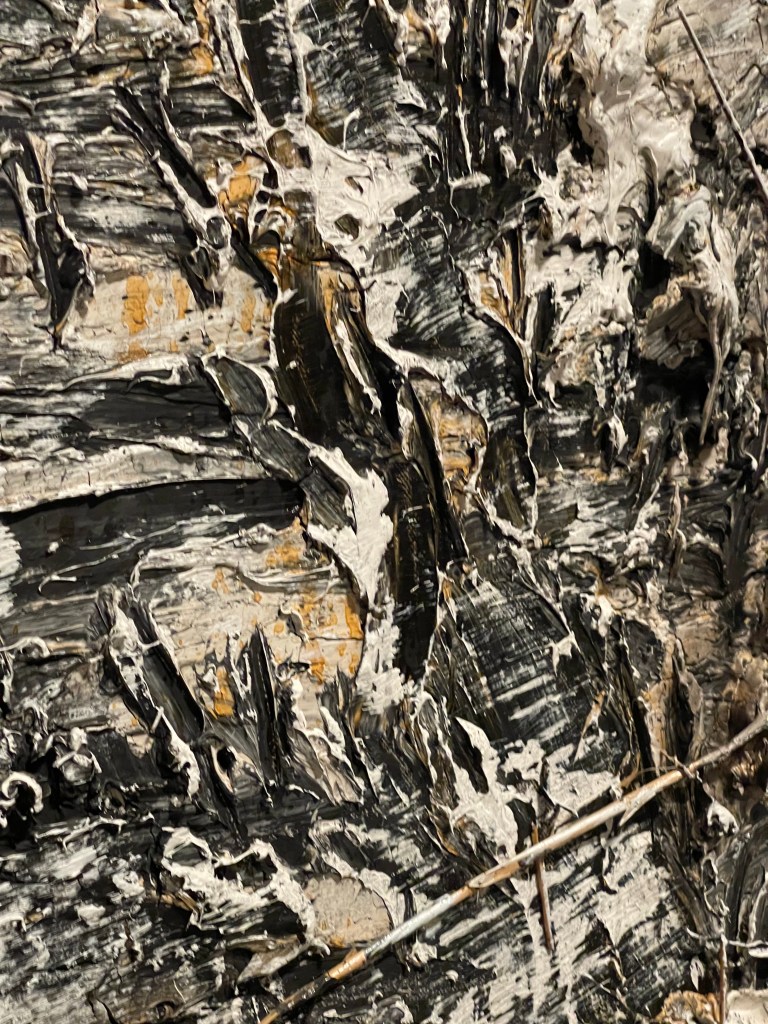

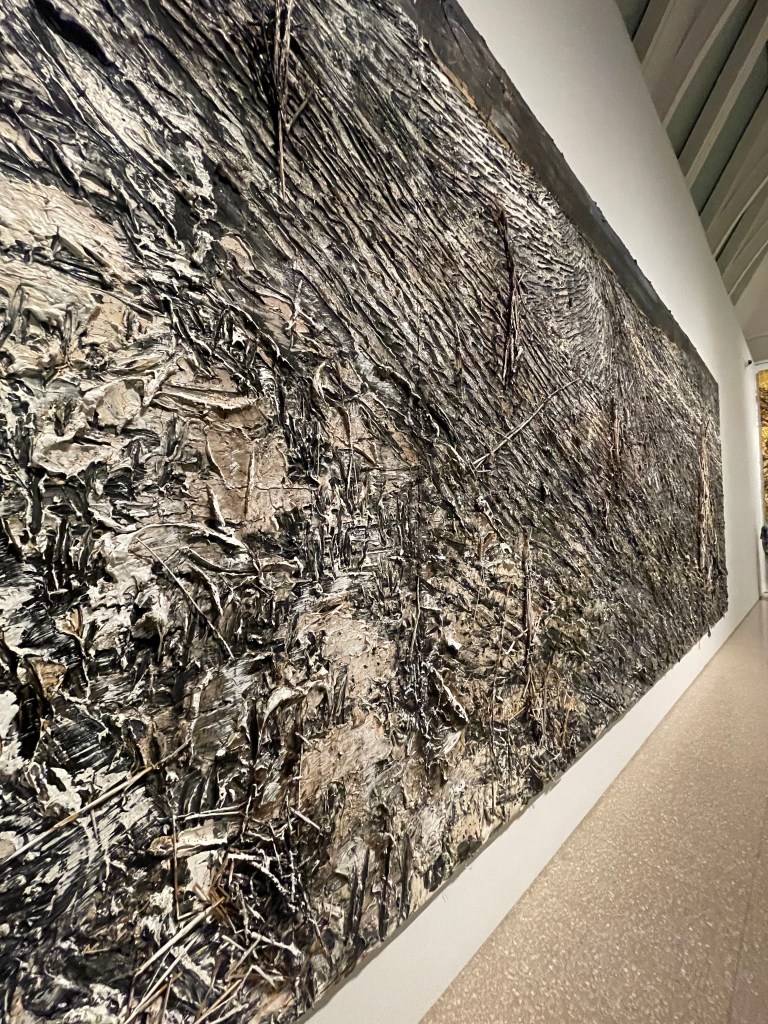
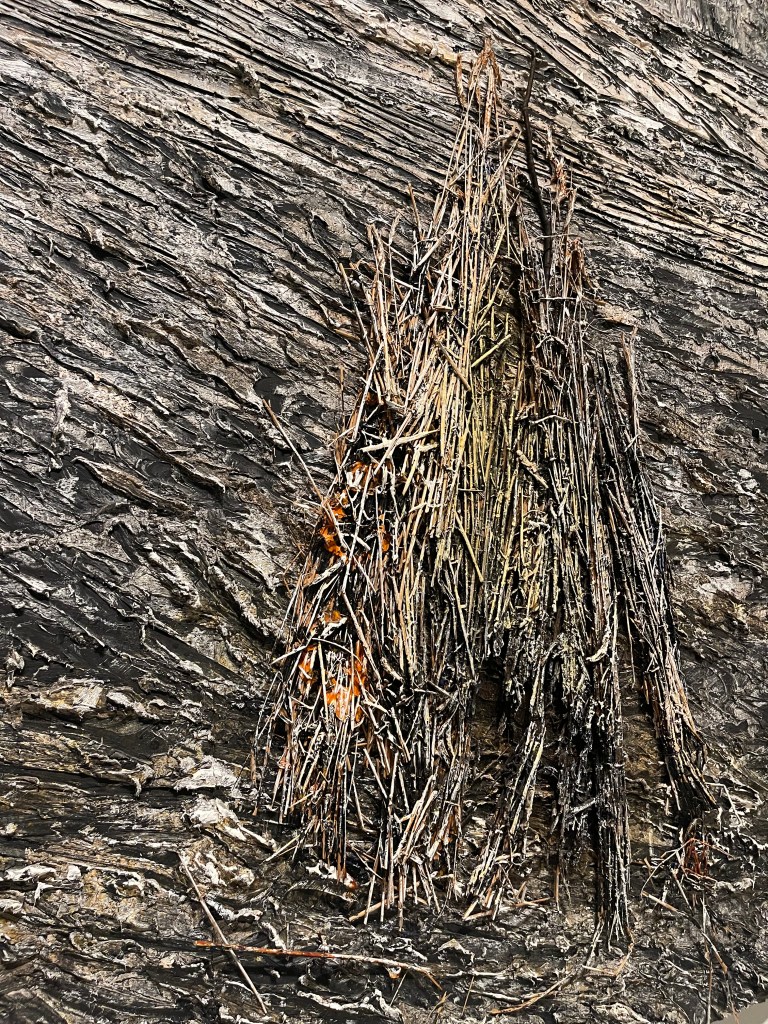
Anselm Kiefer – The Last Load 2019 – Emulsion, oil, acrylic and straw on canvas.
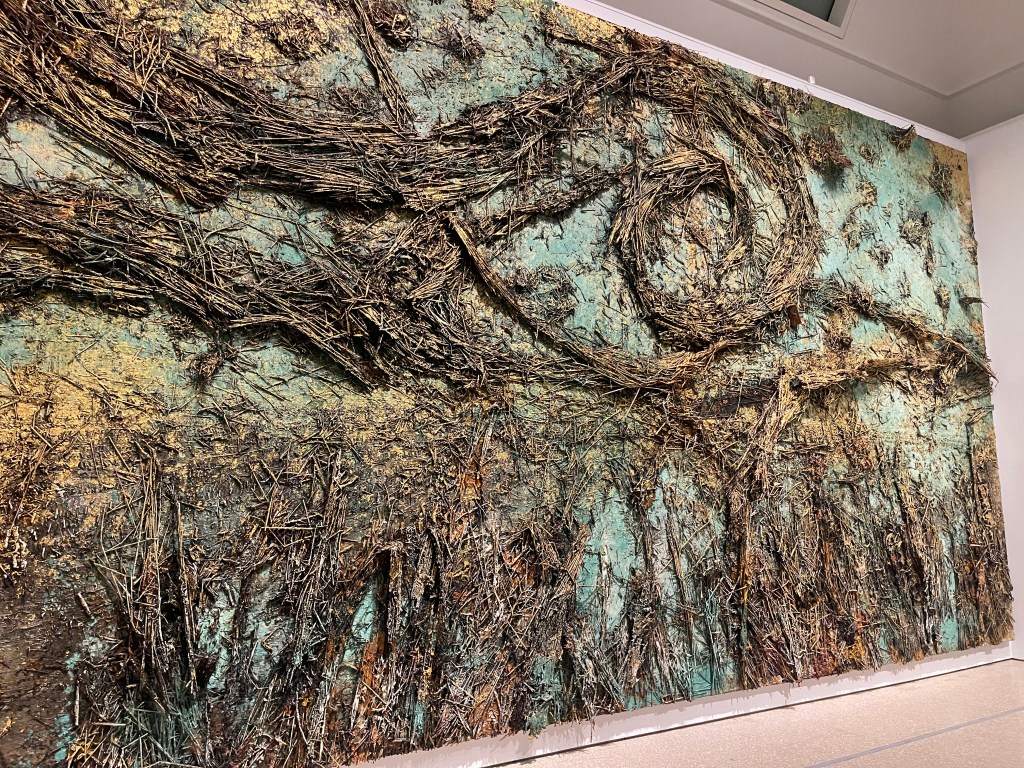
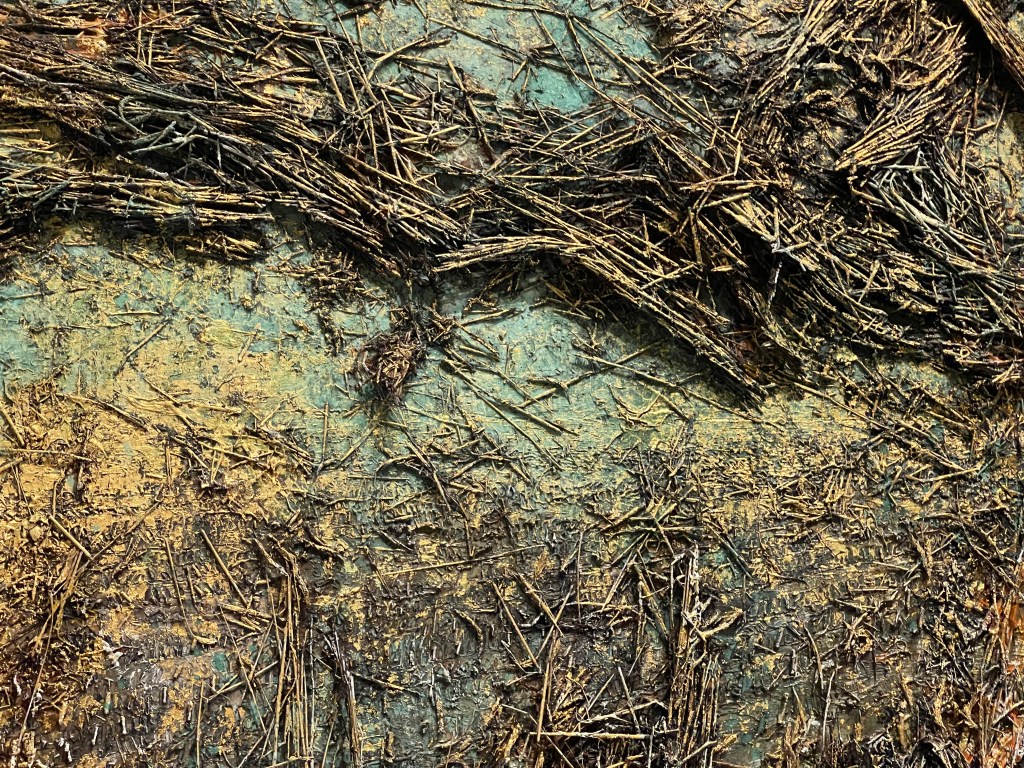
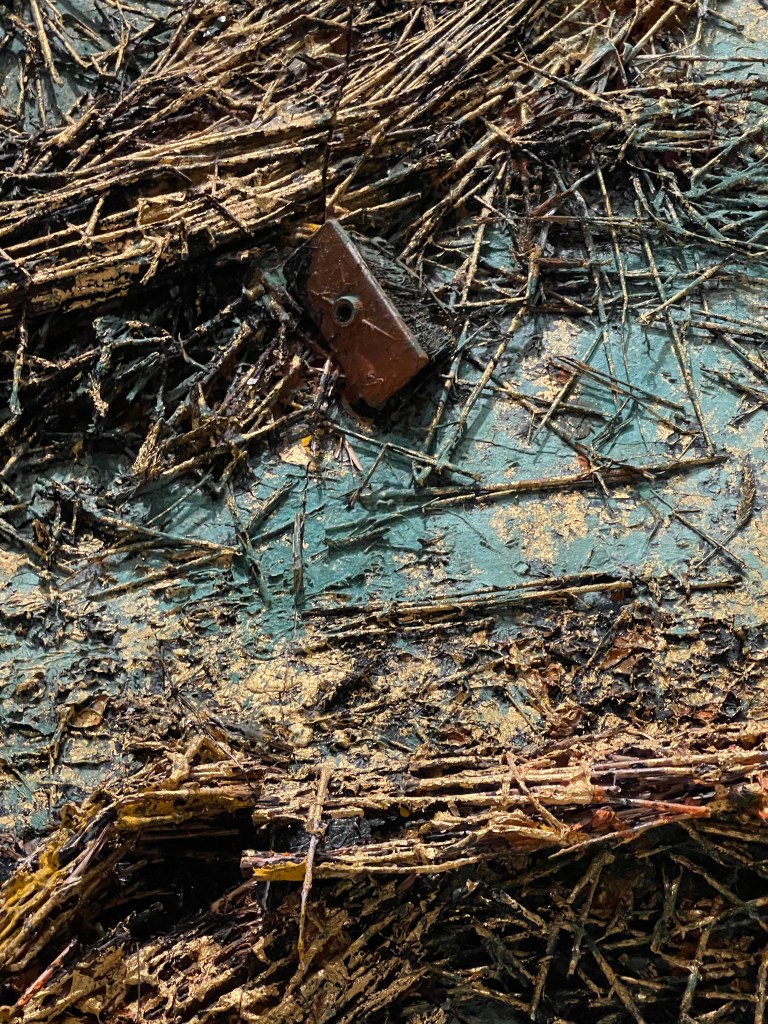
Anselm Kiefer – The Starry Night 2019 – Emulsion, oil, acrylic, shellac, straw, gold leaf, wood, wire and sediment of electrolysis on canvas.
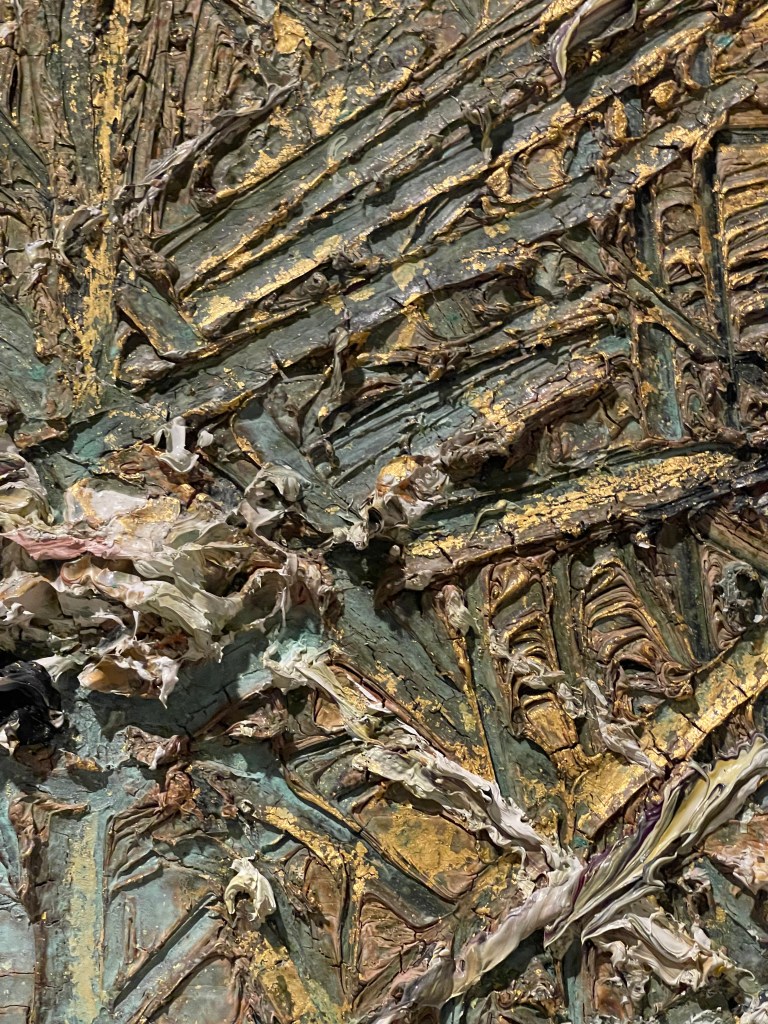
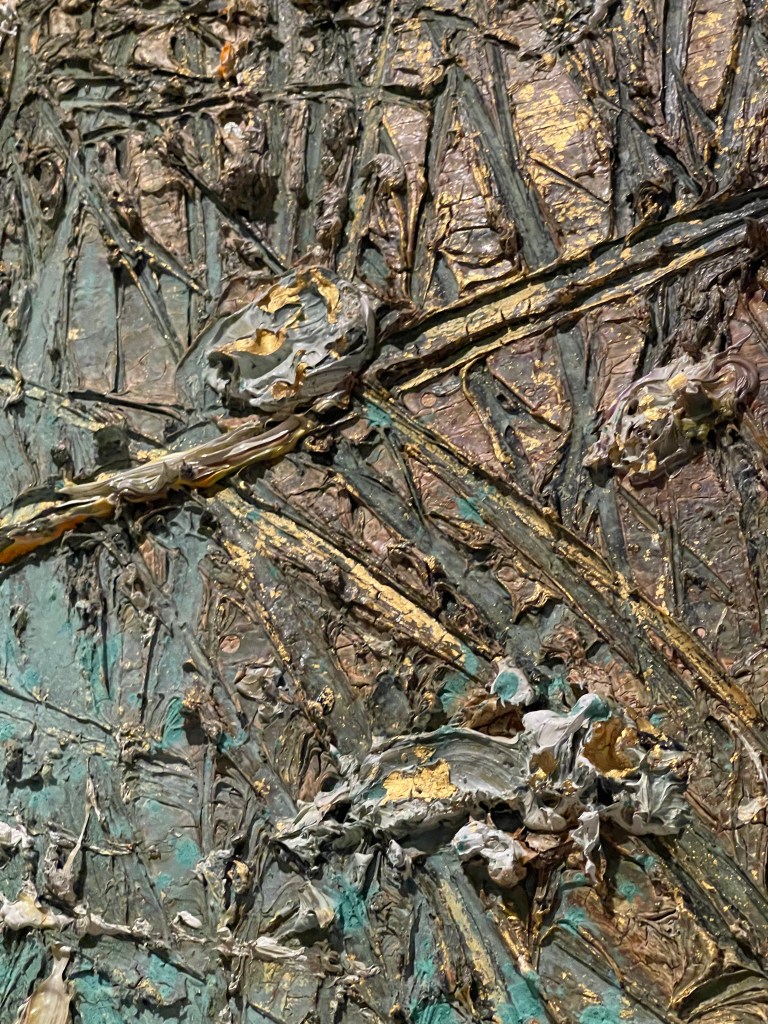
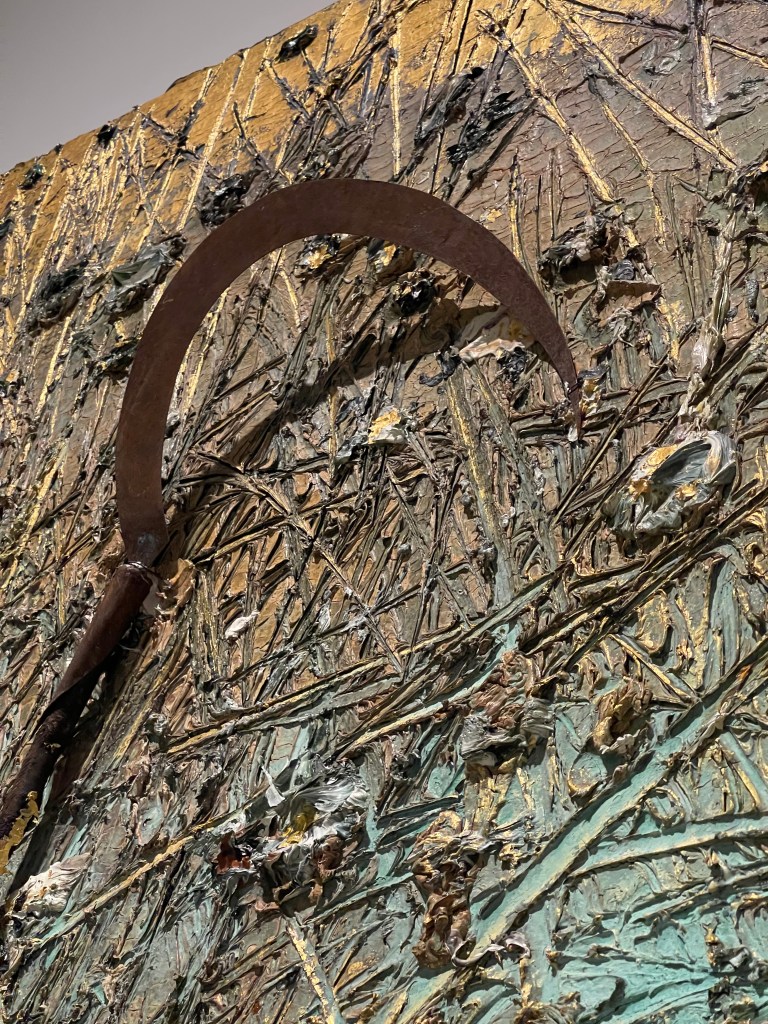
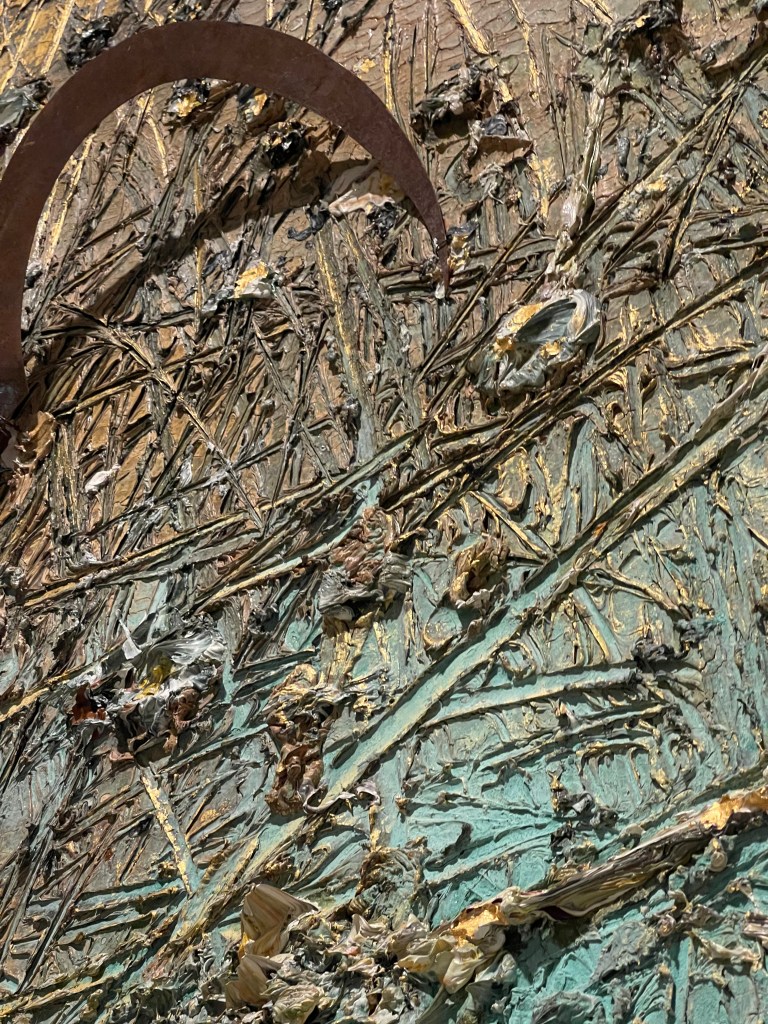
Anselm Kiefer – Eros and Thantos 2013-19 – Emulsion, oil, acrylic, shellac, gold leaf, sediment of electrolysis, metal wire and burnt wood on canvas.
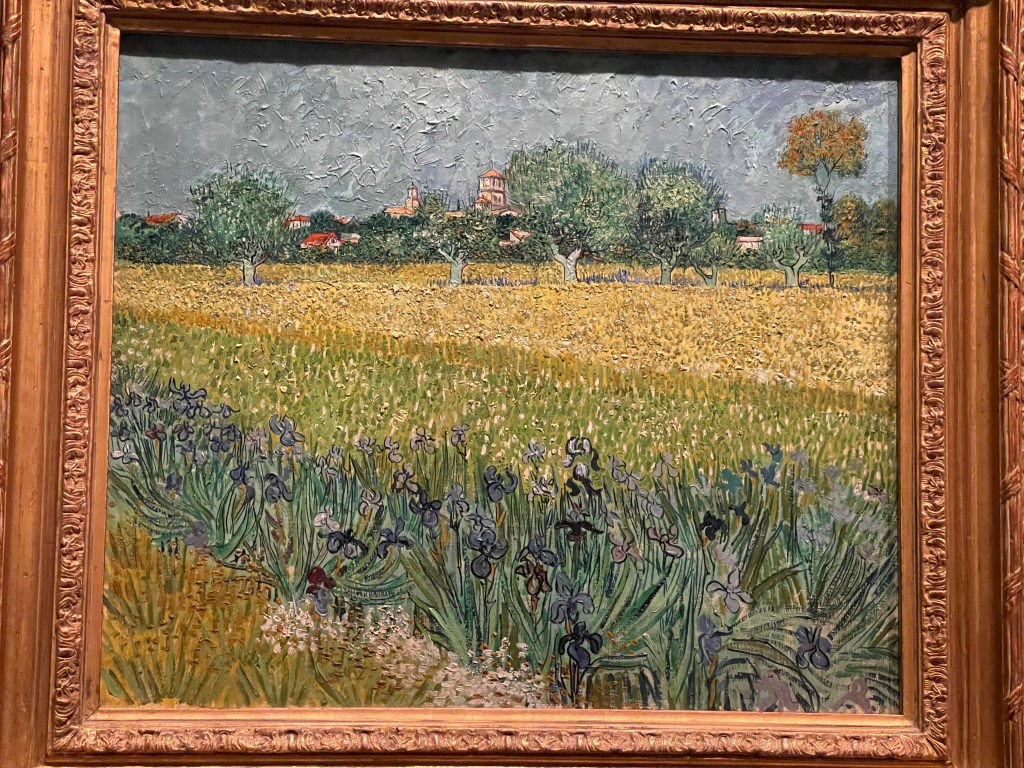
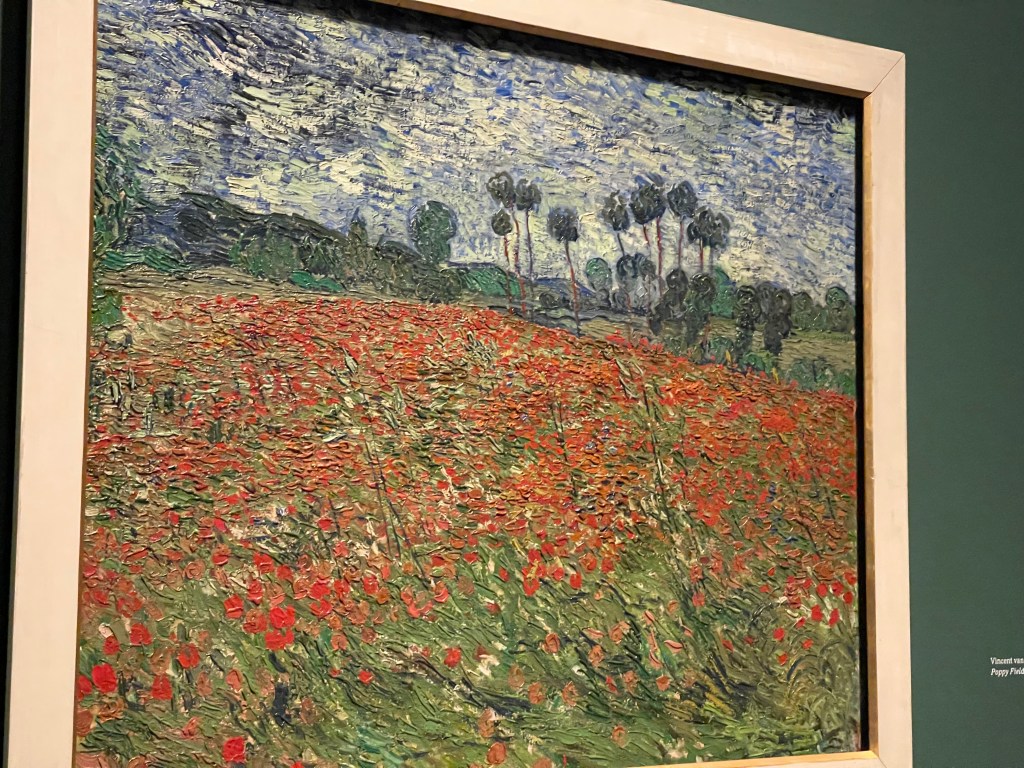
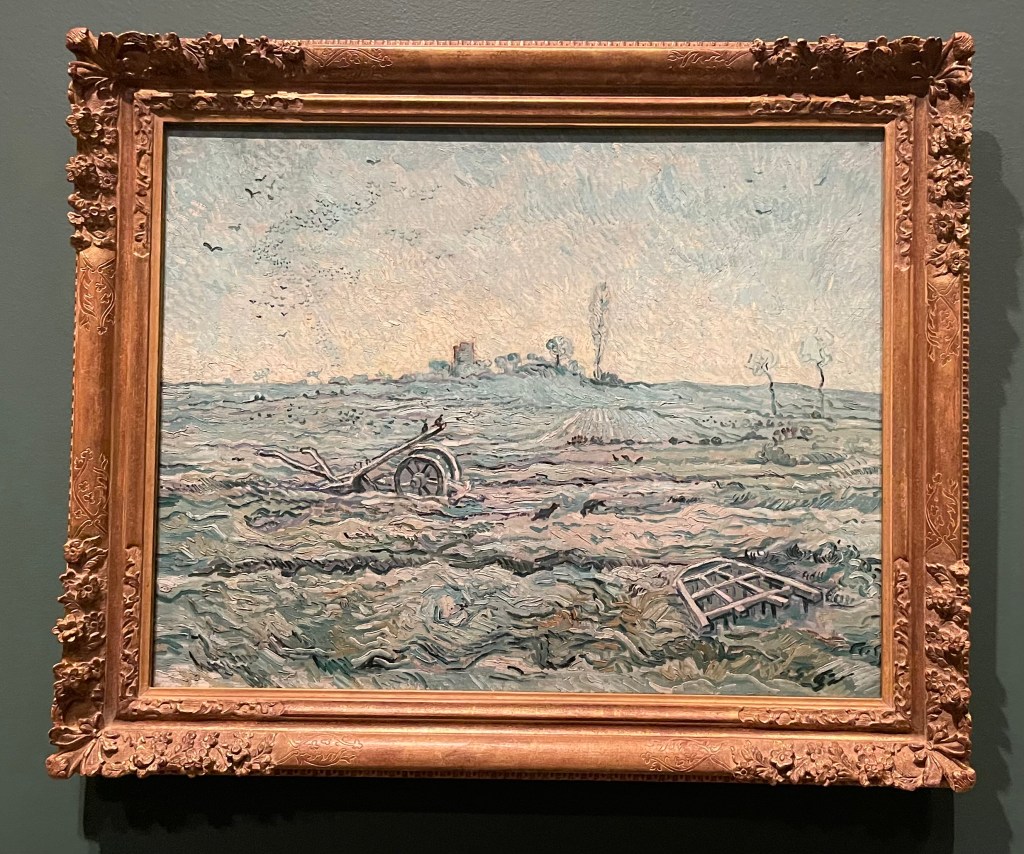
Image one, two and three.
Kiefer’s landscapes have a deep, if indirect, connection to Van Gogh, in subject matter, and in the way both artists treat the land as a vessel for emotion, memory and history, their approaches diverge sharply in tone and intent.
The connection between these two artists is about a shared emotion with the landscape, nature, the passage of time and history, through very different materials and contexts. Intense different expressions of the terrain, Van Gogh’s fields are full of expressive, thick brushstrokes, swirling movement and intense yellows and blues. There is spiritual yearning, hope and deep emotional expression. Kiefer treats his landscapes by making them more sculptural, adding straw, seeds, ash, clay, lead and gold leaf. He scorches the surface with fire, evoking a sense of desolation and destruction, a weathered presence. The fields and ploughed furrow are representative of collective trauma, especially Germany’s war time past.
Both artists see the surface of the painting as something physical not just a flat surface.
Until this exhibition I knew very little of Kiefer. His works resonated with me because they reminded me of the opposite seasons, the bleak stillness of winter against the warmth and vitality of summer. The stark, monochromatic tones of The Last Load contrast sharply with the luminous, swirling atmosphere of The Starry Night. Kiefer shares a deep connection with the landscape, using it as a means of expressing something far beyond the physical scene.
These pieces have inspired me greatly, encountering them at full size was truly momentous. Their physical presence is quite breathtaking, and the complexity of surface and mark-making revealed so much more seeing them in real life. Kiefer’s monumental, almost overwhelming textures, illustrate the power of scale and material in conveying an atmosphere full of emotion.
Although I initially intended to develop ideas drawn from my peers for this project, my thoughts have taken me in an entirely different direction. I don’t see this as a negative shift, at this stage the process is about experimentation, the journey rather than the destination. Working with the cyanotypes and collagraphs, it is my intention to create a more sculptural response, one that reflects the river and its banks in both form and material.
I am well aware, before I approach this project, it could be a complete fail.
***
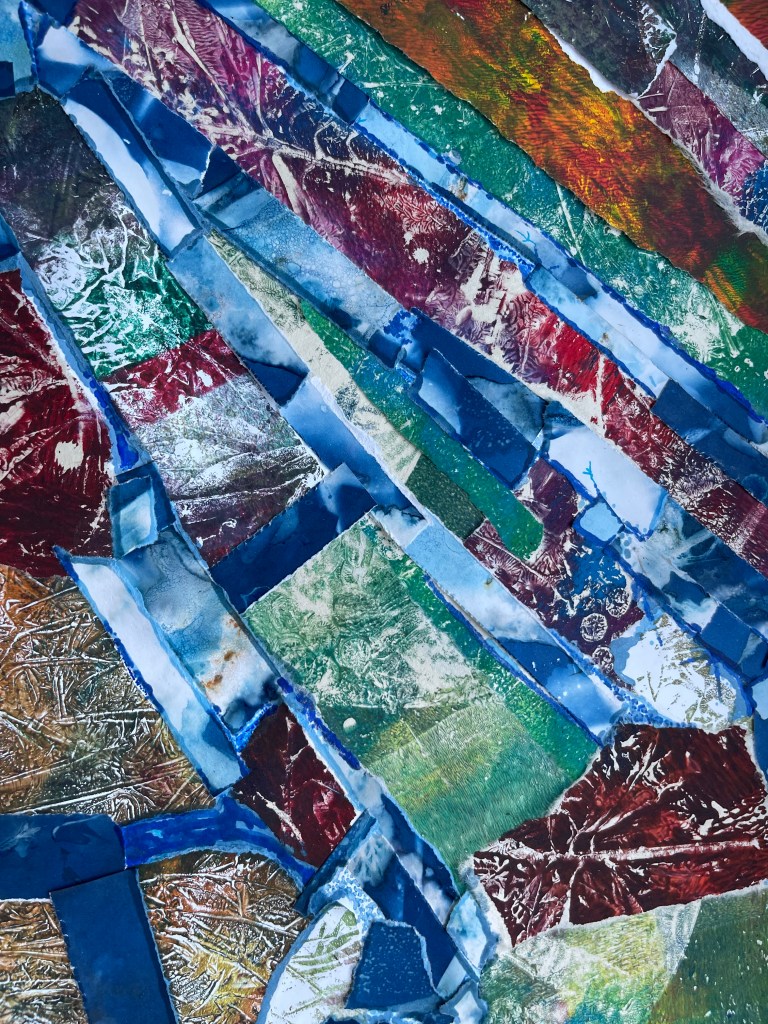
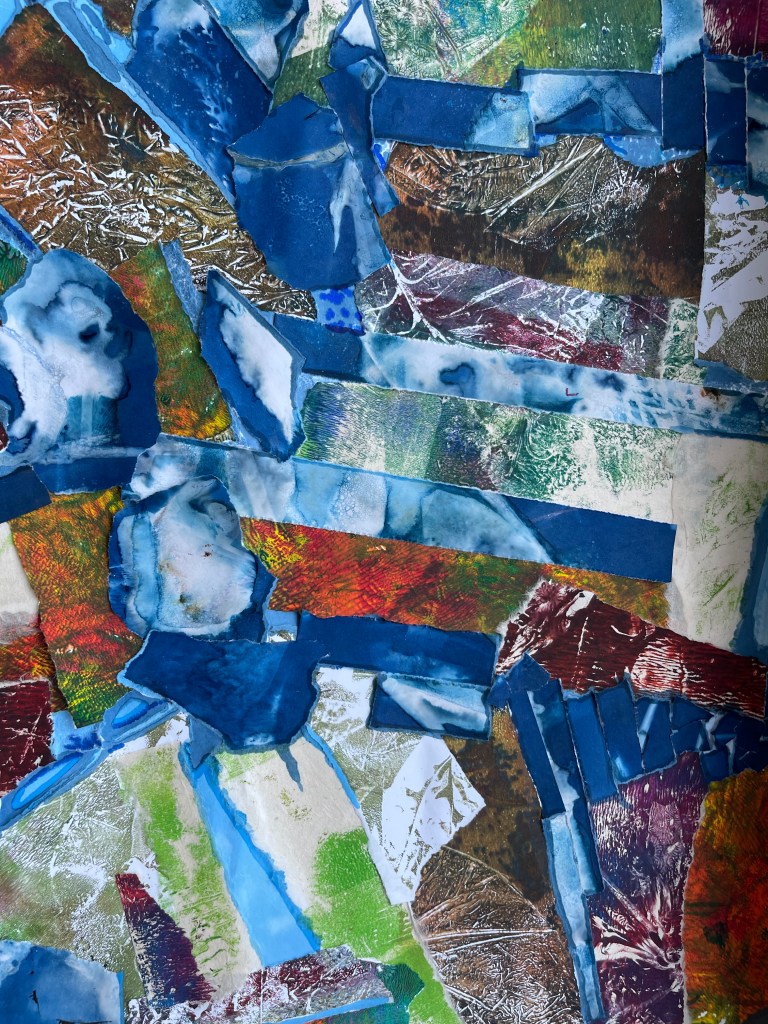
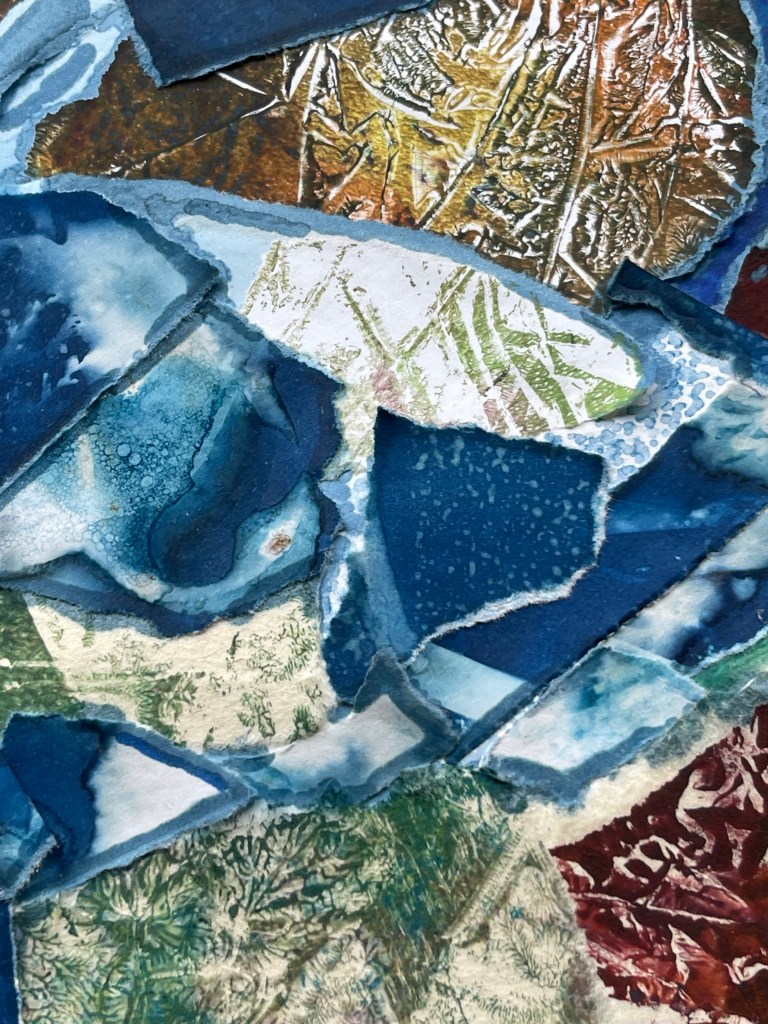
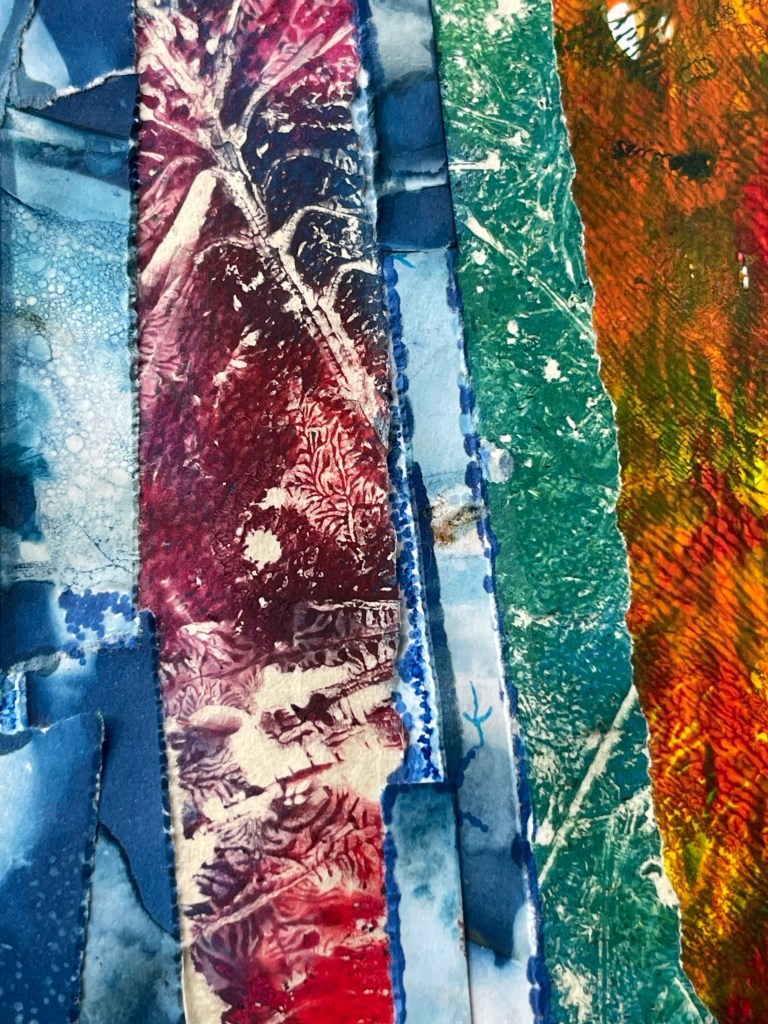
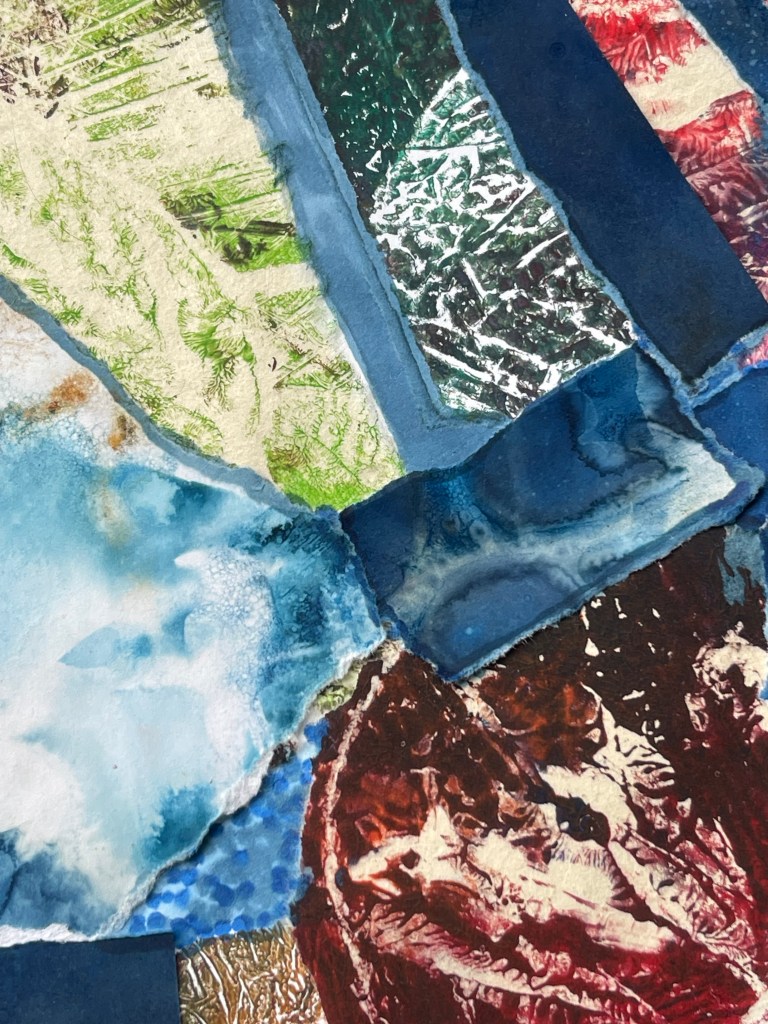
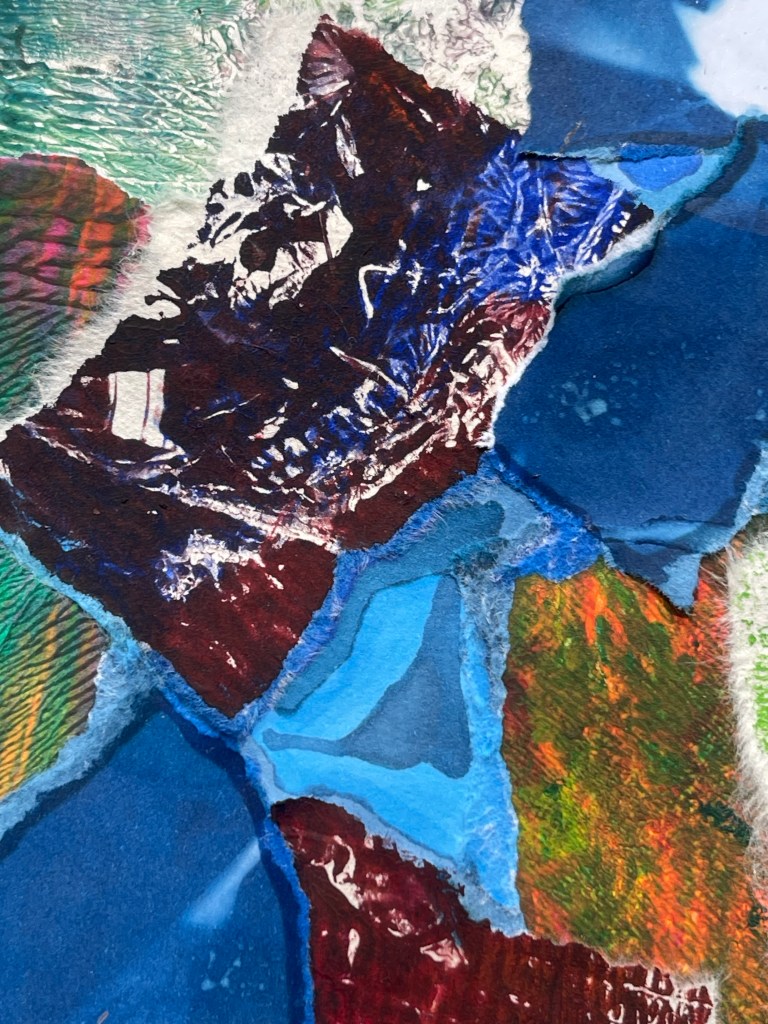
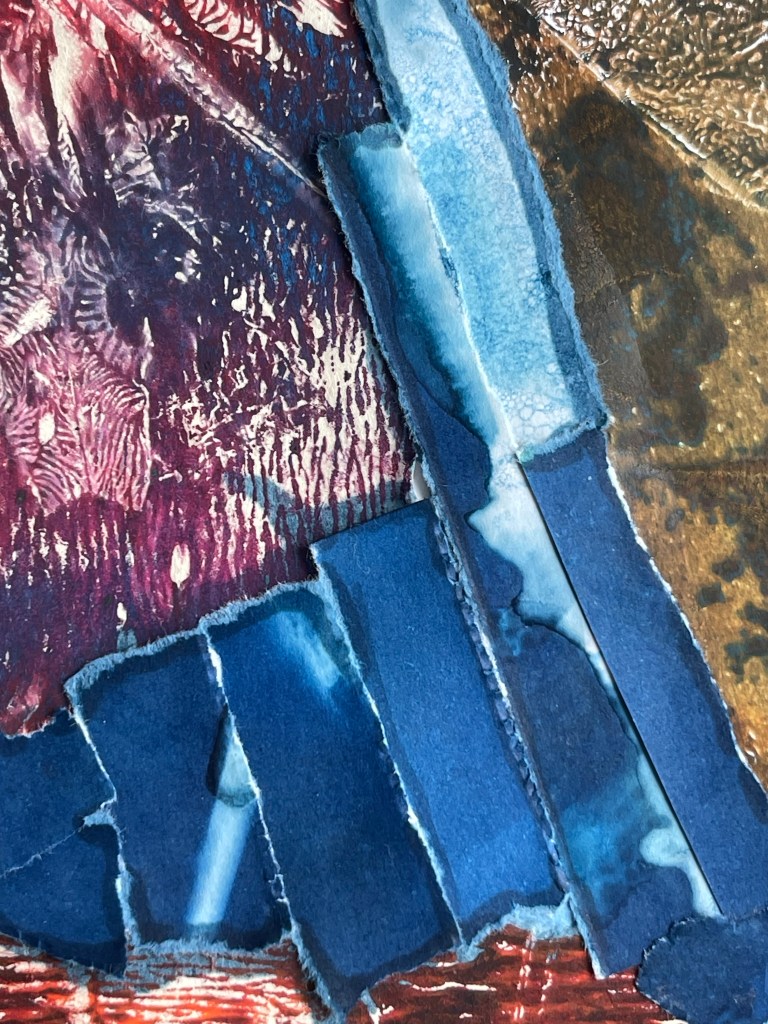
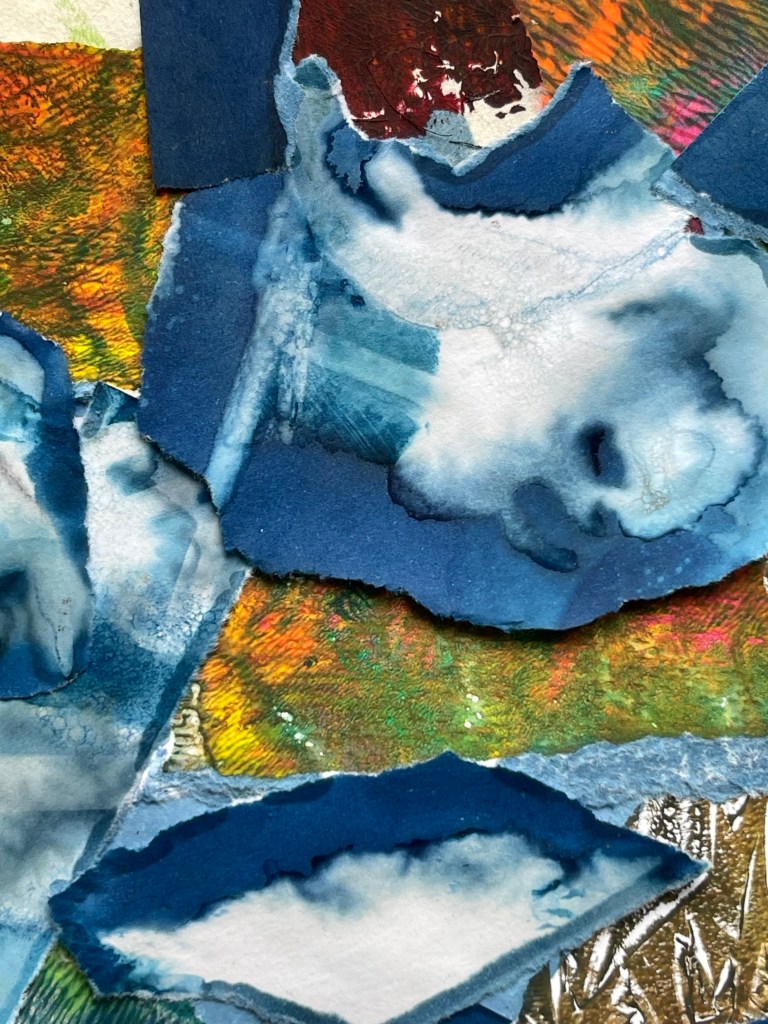
The paper is A0, 841 mm x 1189 mm paper. I immediately scrunched into a ball so I didn’t become precious about anything being immaculate. Using my fingers I tore strips from the collagraph pieces in random sizes and thickness’s. My thoughts being to represent the the diagonal lines of Kiefer’s compositional approach.
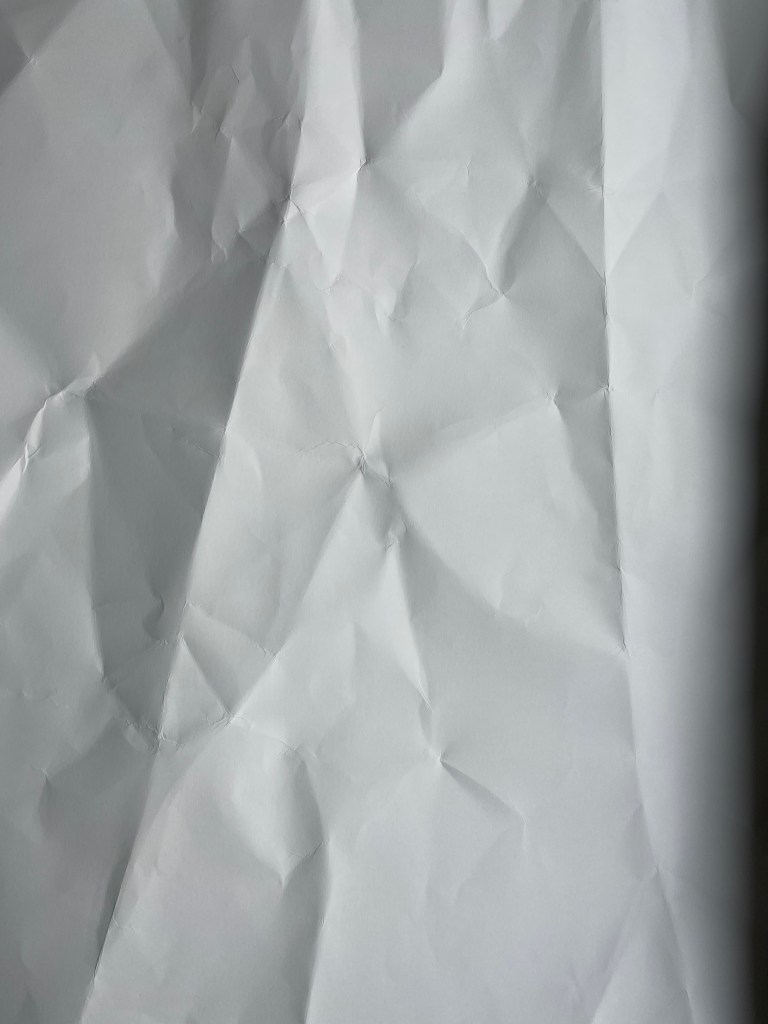
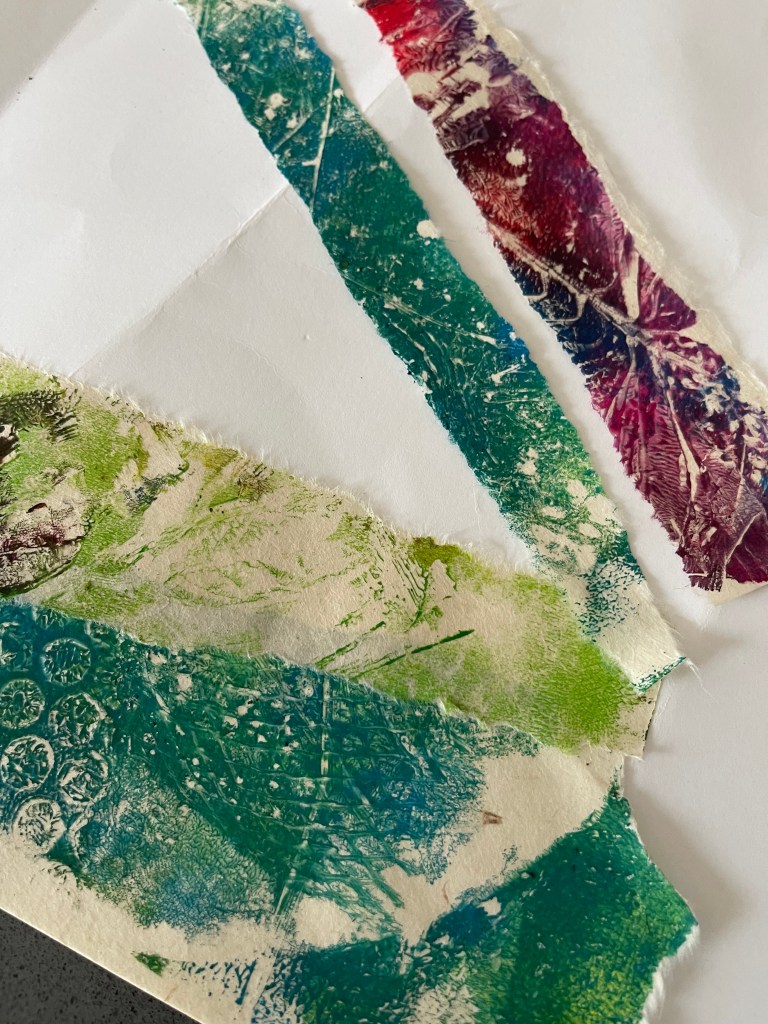
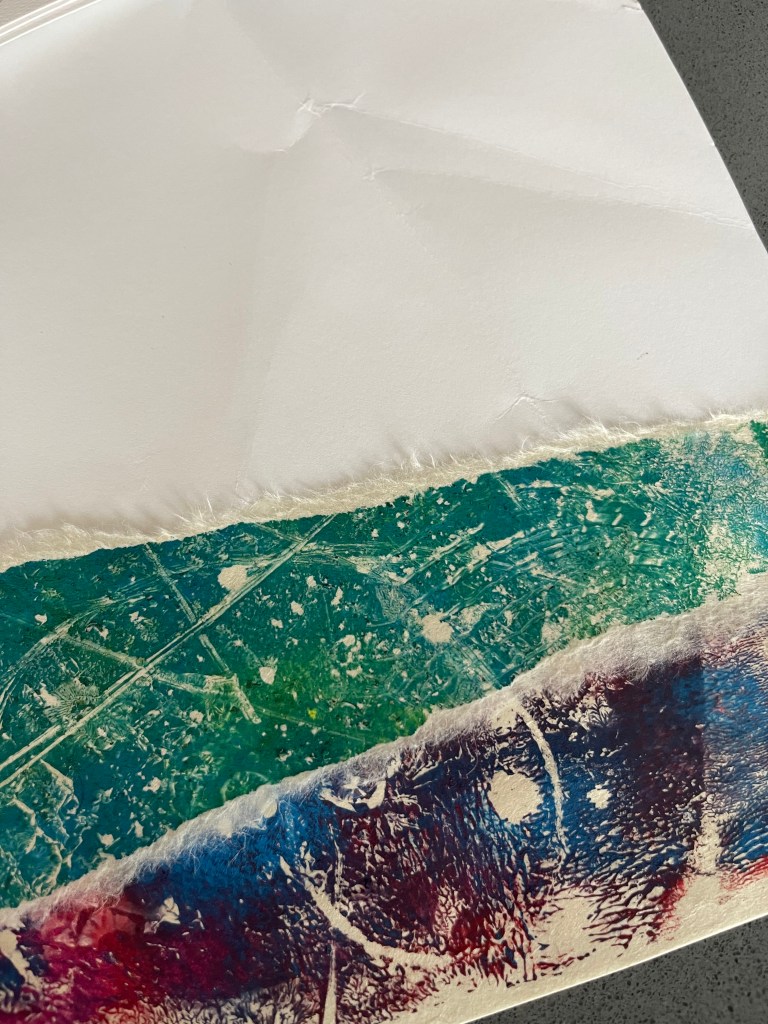

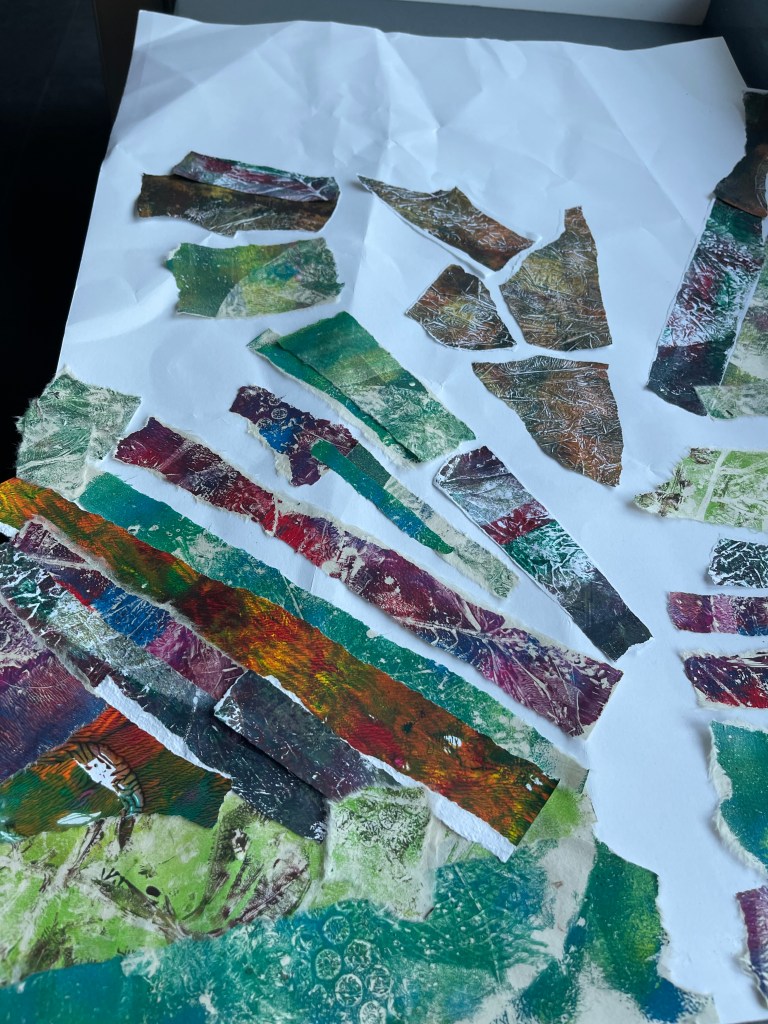
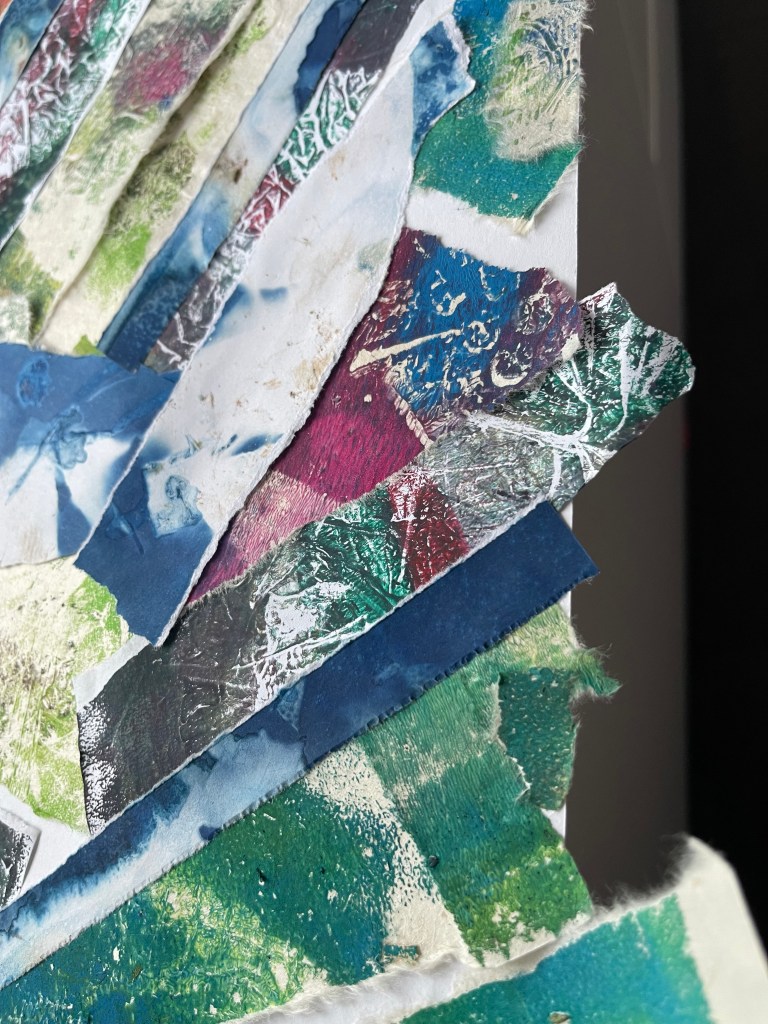
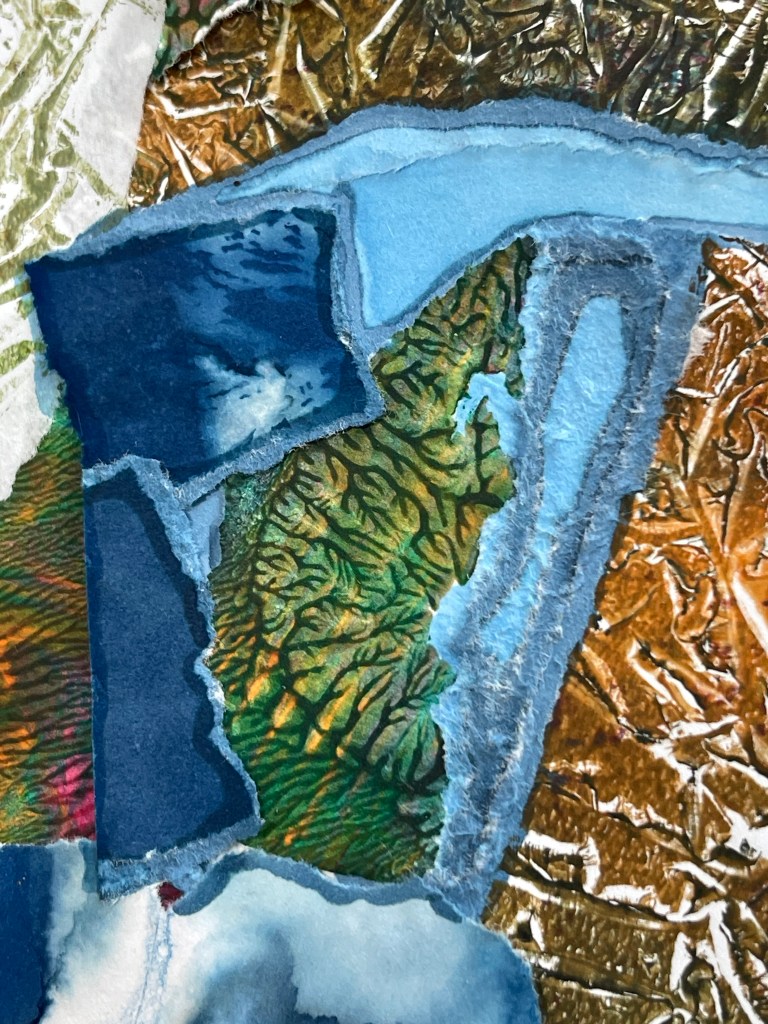
The torn paper is full of texture and colour, being layered in small amounts, echoing the shapely qualities present in Kiefer’s practice, adding depth and material richness. Keifer’s compositional approach is full of sculptural depth, pieces that are highly stimulating, encouraging the viewer to explore the surface and form.


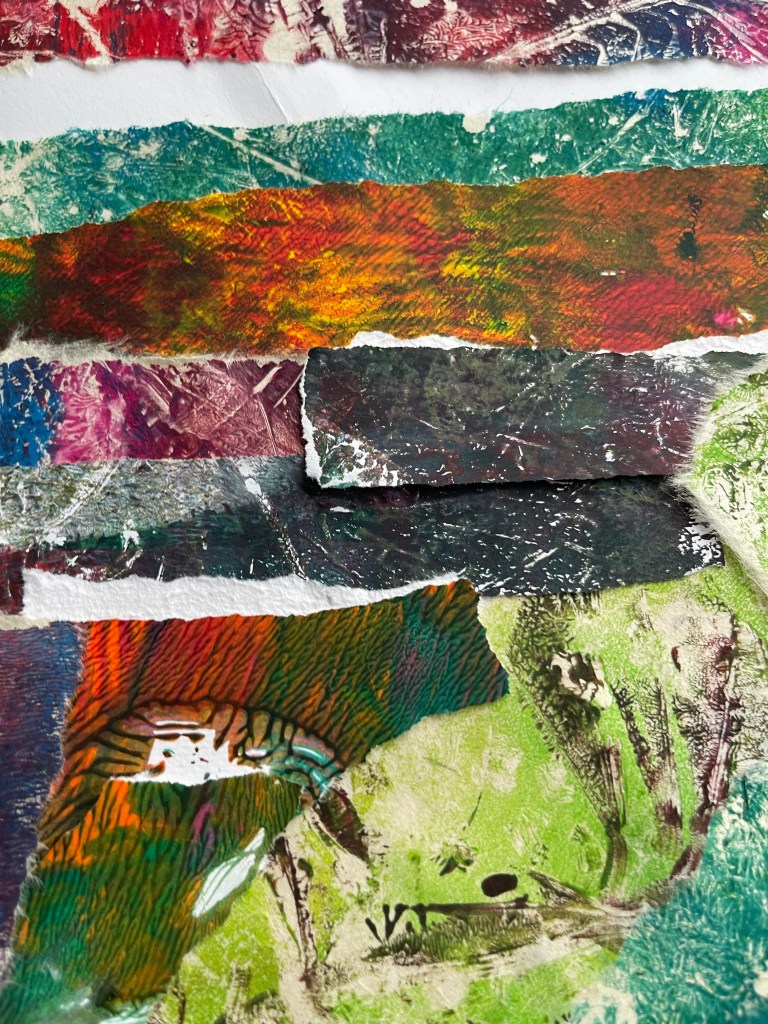
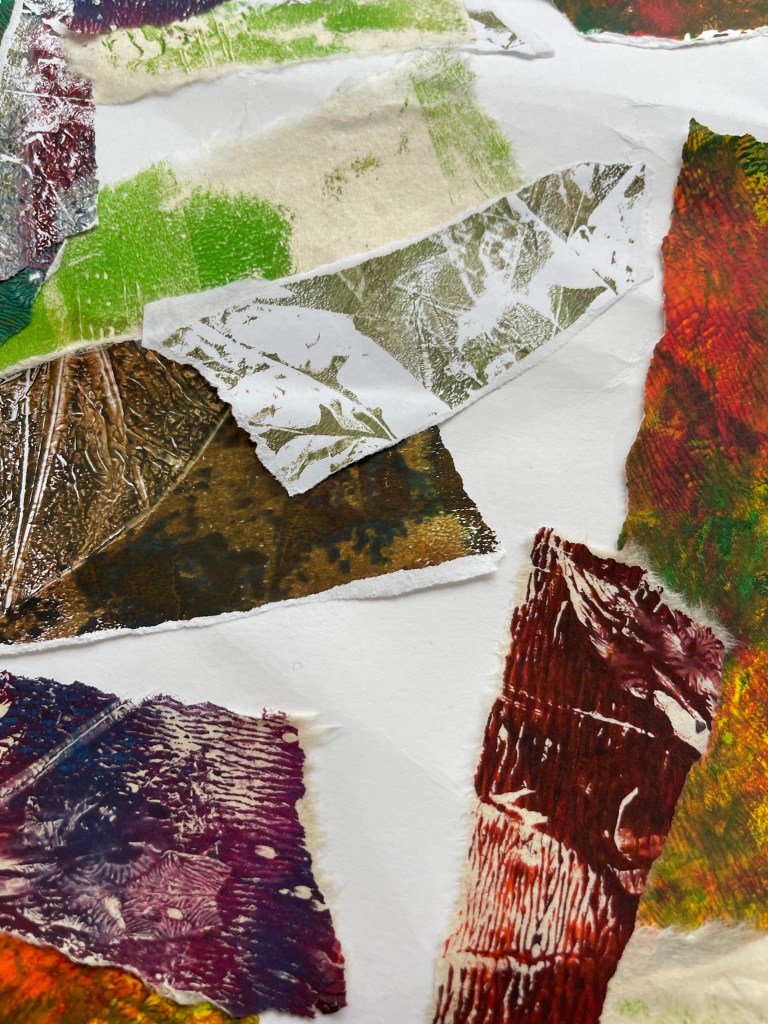
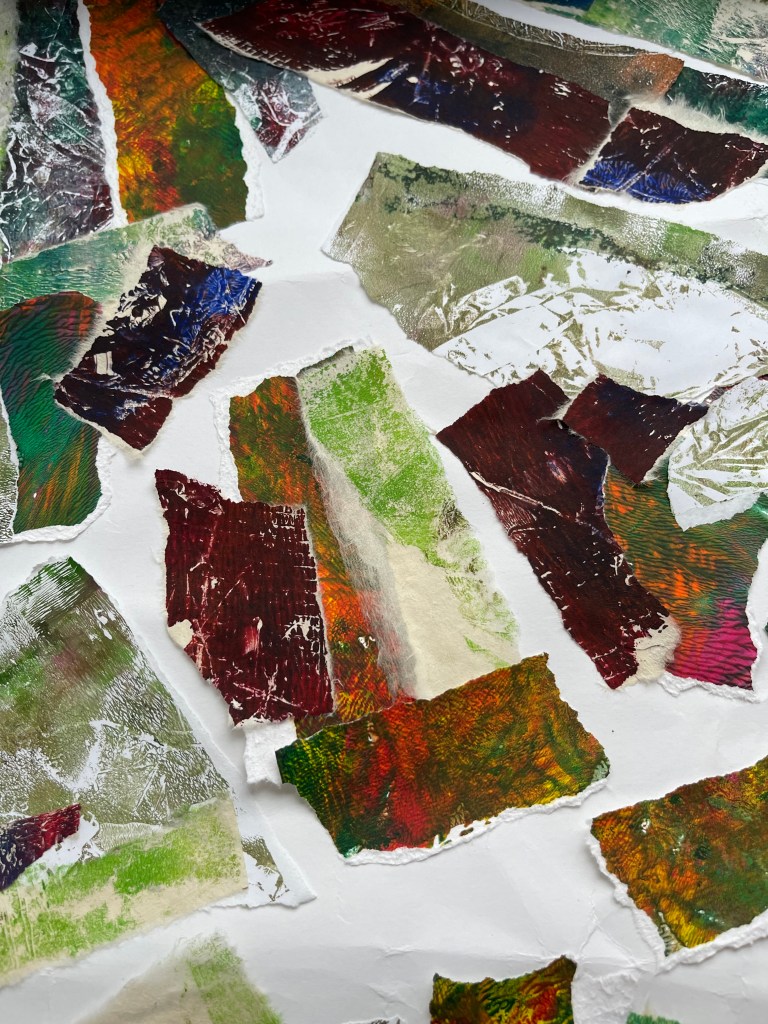

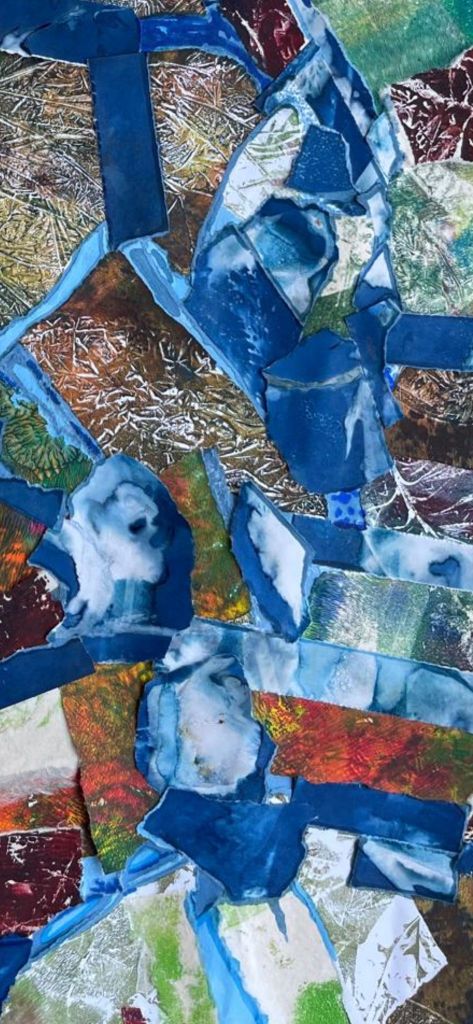
The addition of the cyanotypes is to suggest the meandering flow of a river, evoking both natural landscape and cartographic representation. The blue hues of the cyanotypes are very different to the textures and colours of the collagraphs.
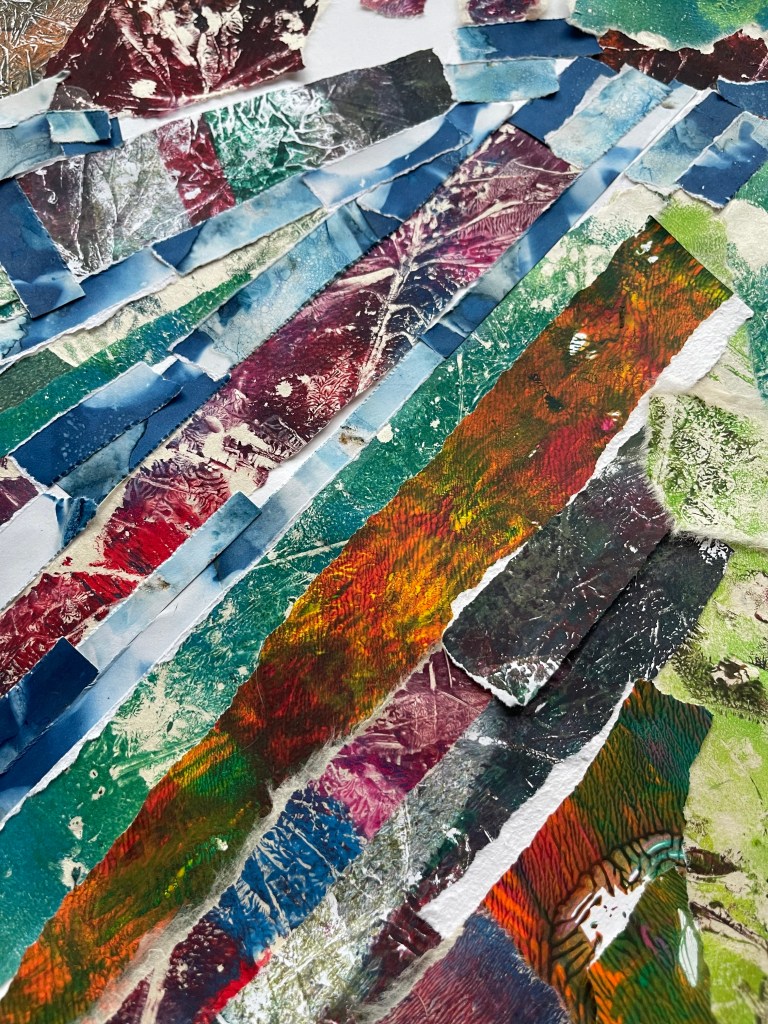
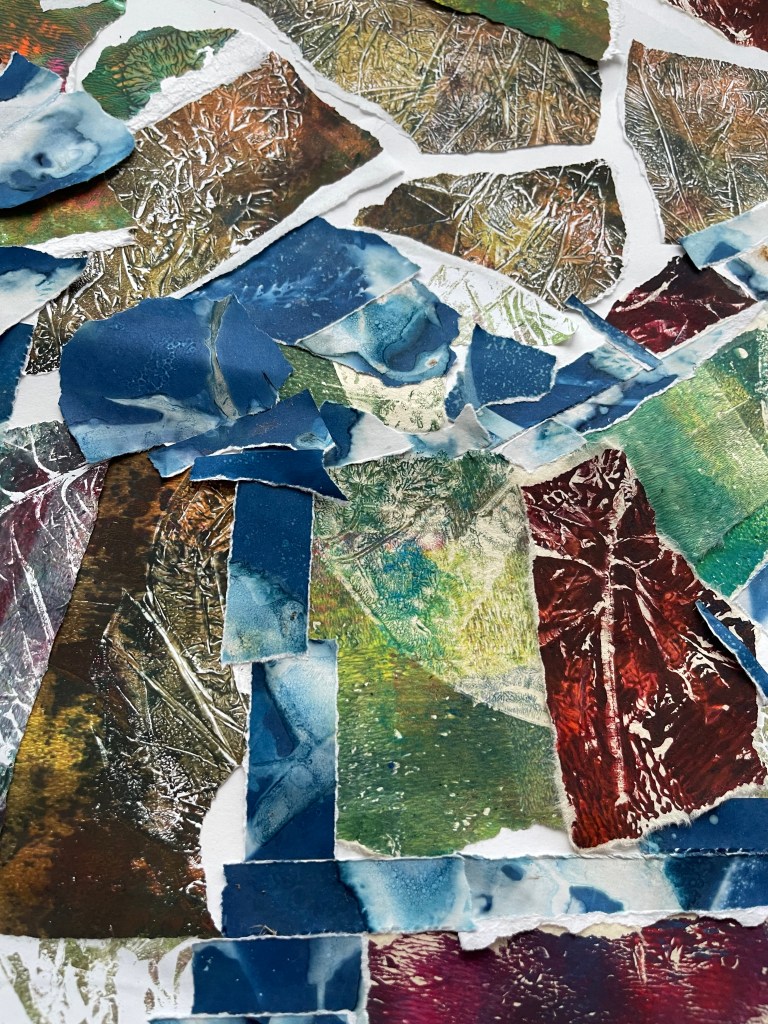
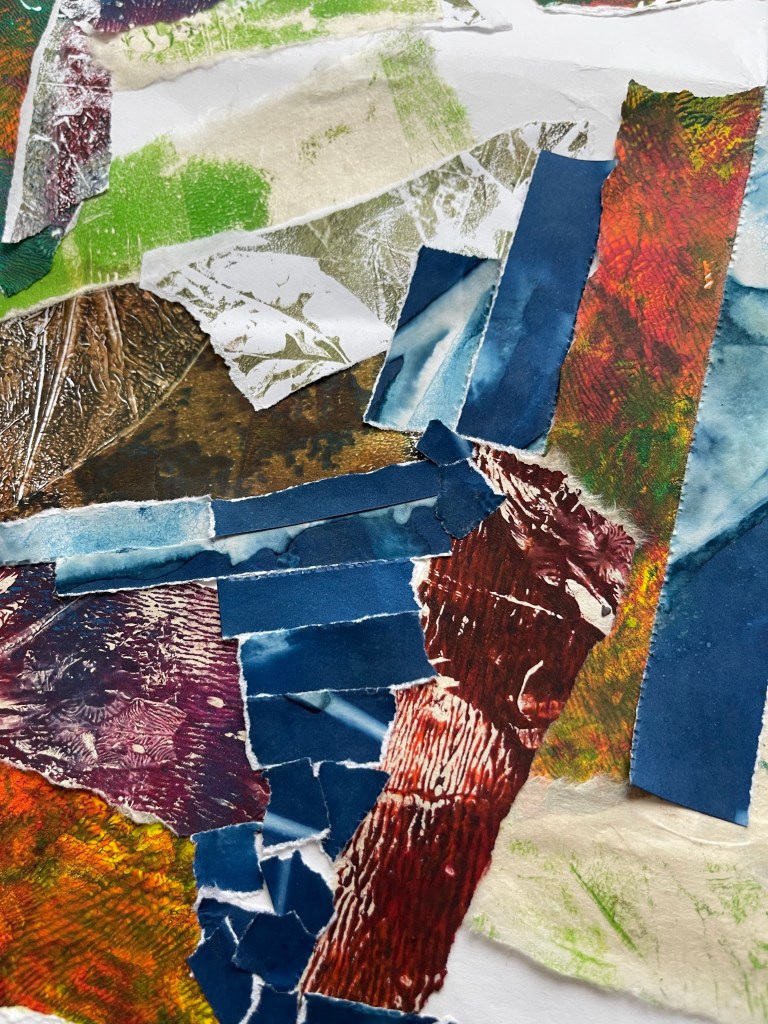
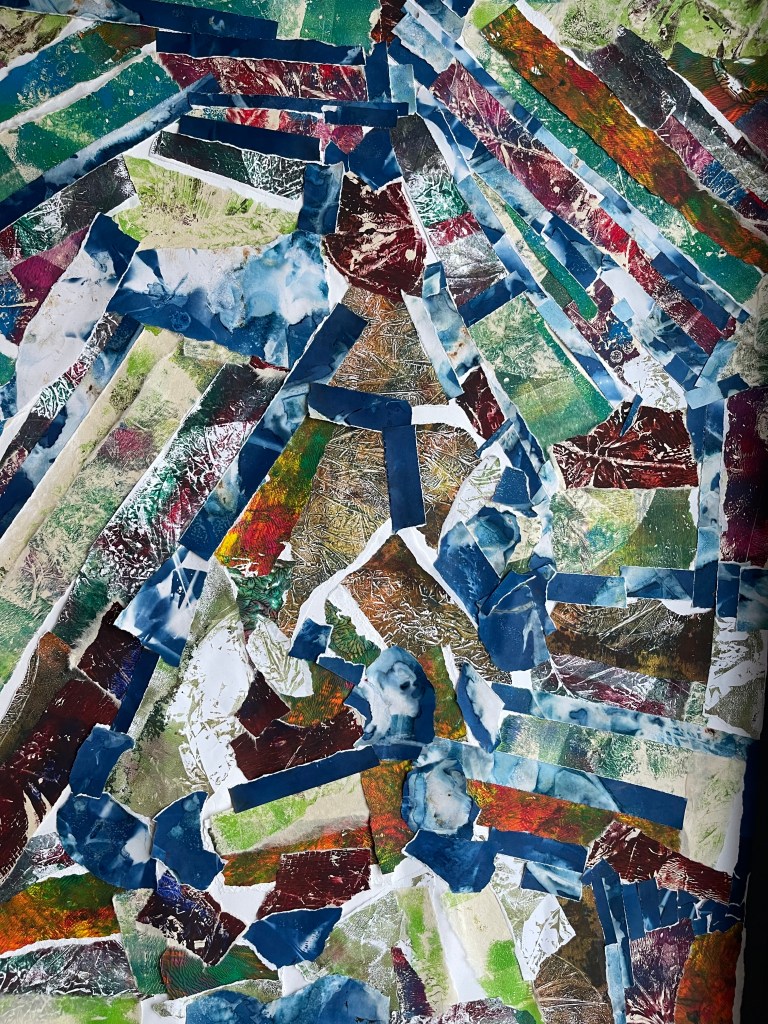
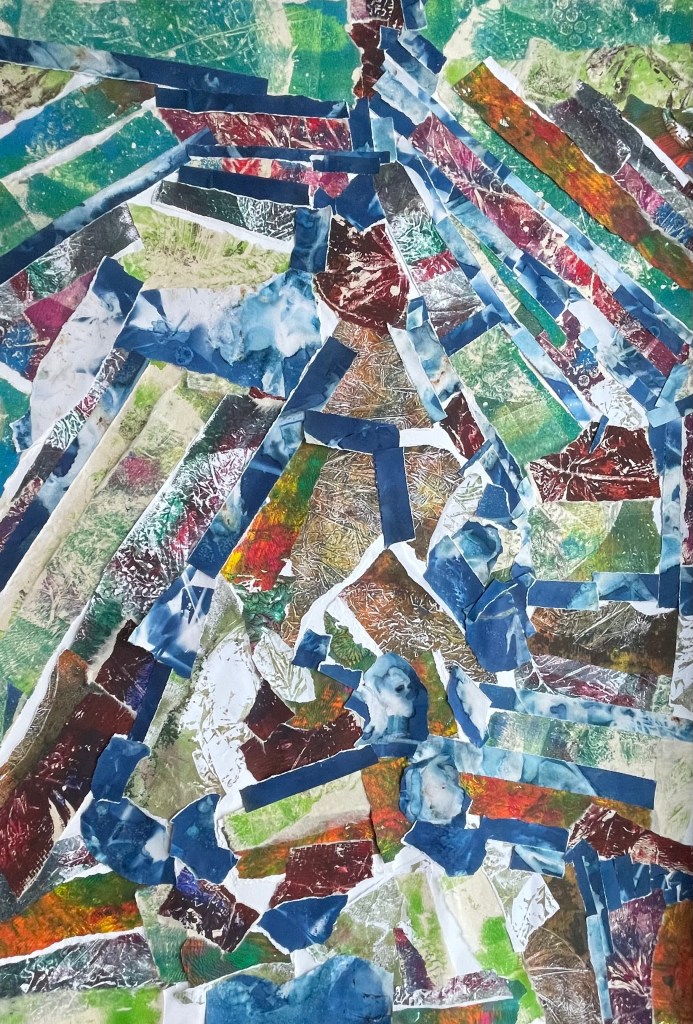
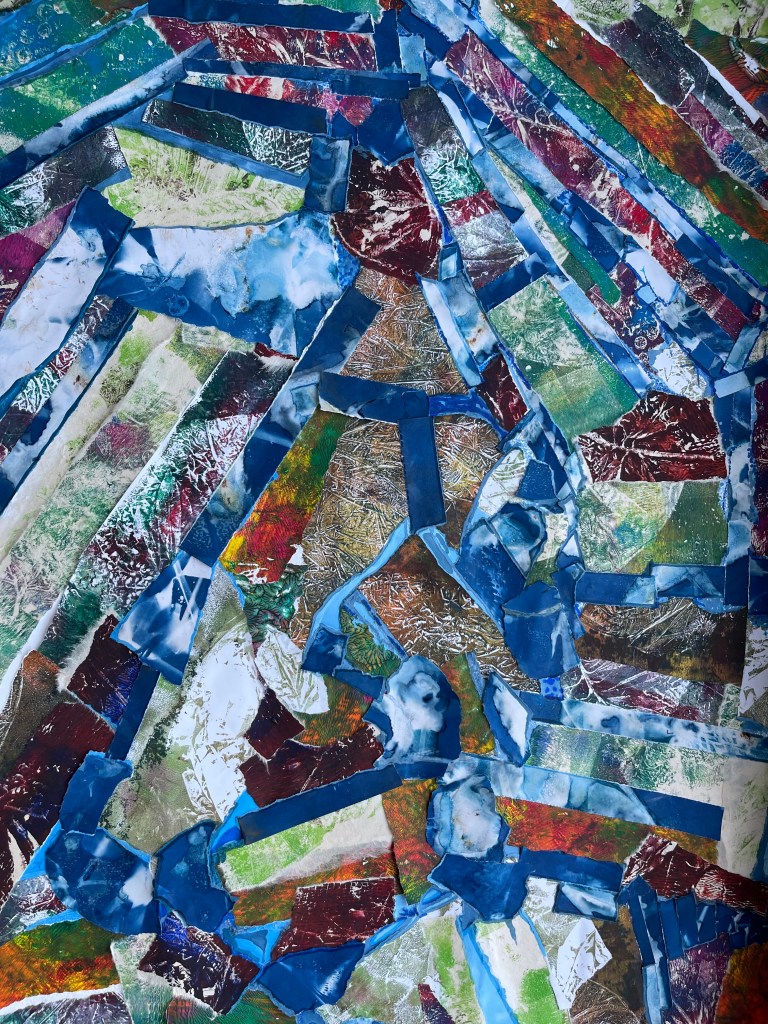
To enhance the tributaries and encourage the resemblance of the river, I have worked over the piece in marker and fine liner. The marks of the blue are representative as pools of water, recalling maps of flooded areas, linking the work to themes of the environment and memory.

Reflection
Letting go of precision and embracing unpredictability. The act of ripping and tearing instead of cutting gives the work an organic, raw energy, and the handmade paper amplifies that vulnerability. The way the marker bled into the fibers, softening the edges, almost feels like the paper and ink collaborated with the ‘water’ rather than being controlled. The collagraphs often carry such strong texture and structure, pairing that with a delicate, absorbent surface makes the image feel more ephemeral, maybe even more alive.
An imperfect piece starts to emerge, representative of the landscape, giving an honesty from these torn pages as though the materials themselves dictate the boundaries. The hand made paper amplifies the vulnerability carrying it’s own textures and irregularities that echo the fragility of our natural world.
Using the markers was a successful way to merge the mediums, the pigments seep and the edges blur. The collagraphs bring strong textures and structure, solidity and weight, mirroring my own relationship with the water. Shapes, erodes, builds and destroys.
When viewing the piece as a whole it’s too chaotic, as though the river has already broken it’s banks. Close up however, the work is transformed into something that comes into focus, the overwhelming chaos recedes and the viewer can now see the quieter more delicate interactions between the materials. The piece feels more calm and intimate.
This process has taught me that unpredictability can hold its own kind of harmony with the balance there is control with surrender, structure and fluidity, encouraging the materials to become active participants.
***
For Project 10 trying a different approach to the cyanotype river may be better illustrated if I just use the ‘water’ on brown paper.
List of images:
One – Vincent Van Gogh – Field with Irises near Arles – 1888 – Oil on Canvas.
Two – Vincent Van Gogh – Poppy Field – 1890 – Oil on Canvas.
Three – Vincent Van Gogh – Snow-covered Field with a Harrow (after Millet) – 1890 – Oil on Canvas.

 Viv King. Level 3. BA Fine Art