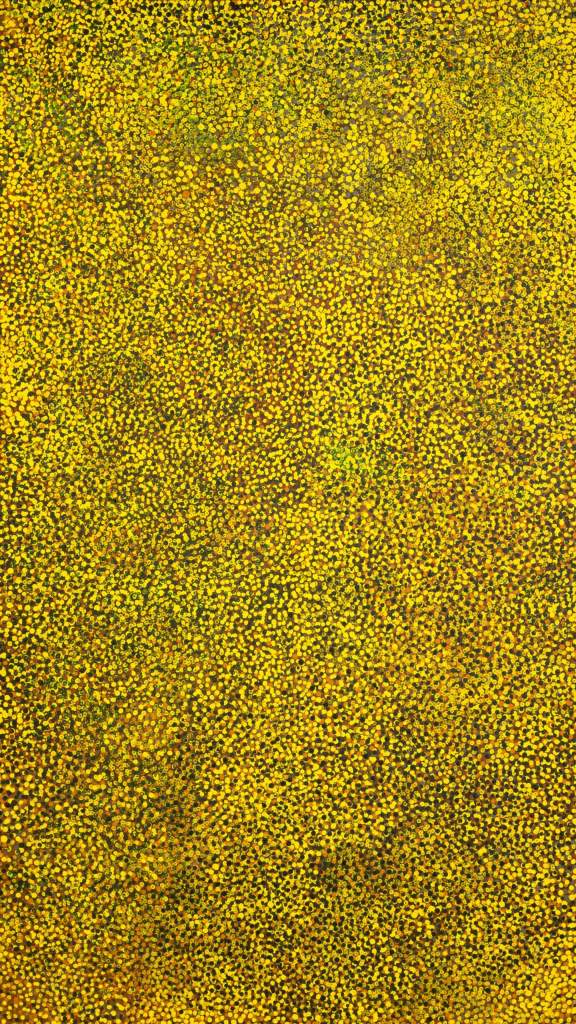
Emily Kame Kngwarreye – Seeds of Abundance – 1990 – National Gallery of Australia – ©Estate of Emily Kame Kngwarreye.
When our children were young we used to play ‘top ten’. Top ten books, top ten colours, top ten films, cars, food etc.
If I had to list my top ten artist’s, Emily Kame Kngwarreye would be in there. Not only for her work, but also her inspiring story. Her journey from Aboriginal Artist from the remote desert, to be celebrated with a solo exhibition at the Tate Modern is an extraordinary journey, a bitter sweet triumph, one that Emily Kame Kngwarreye never lived to witness, yet one that affirms her true enduring power and vision.
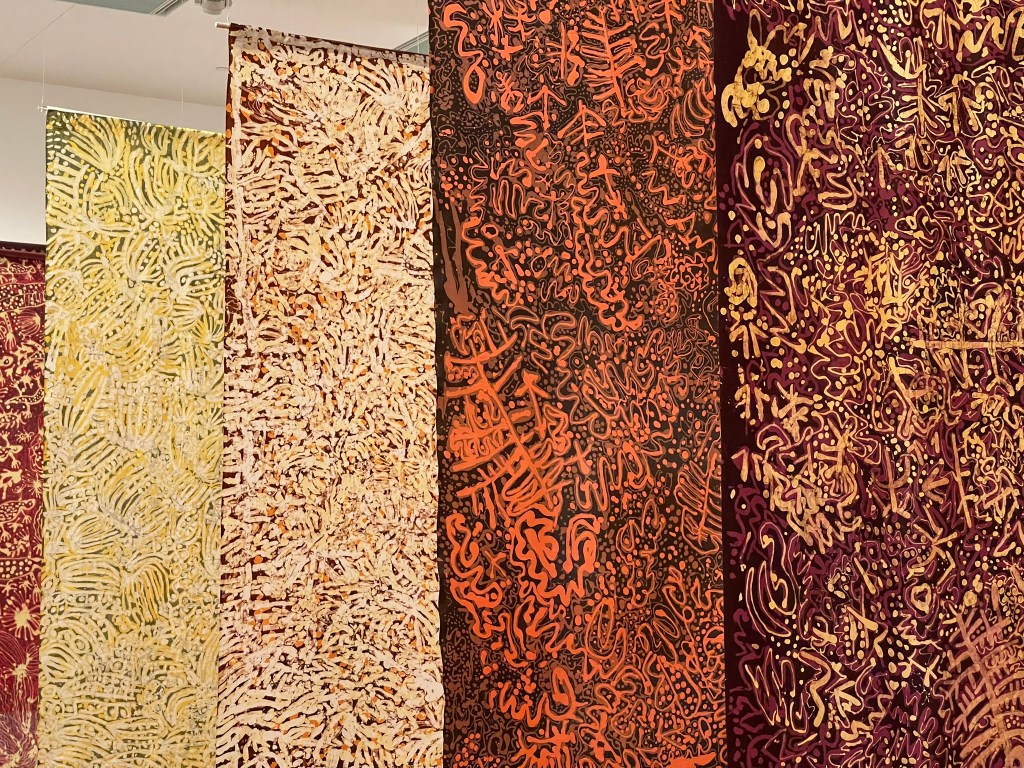
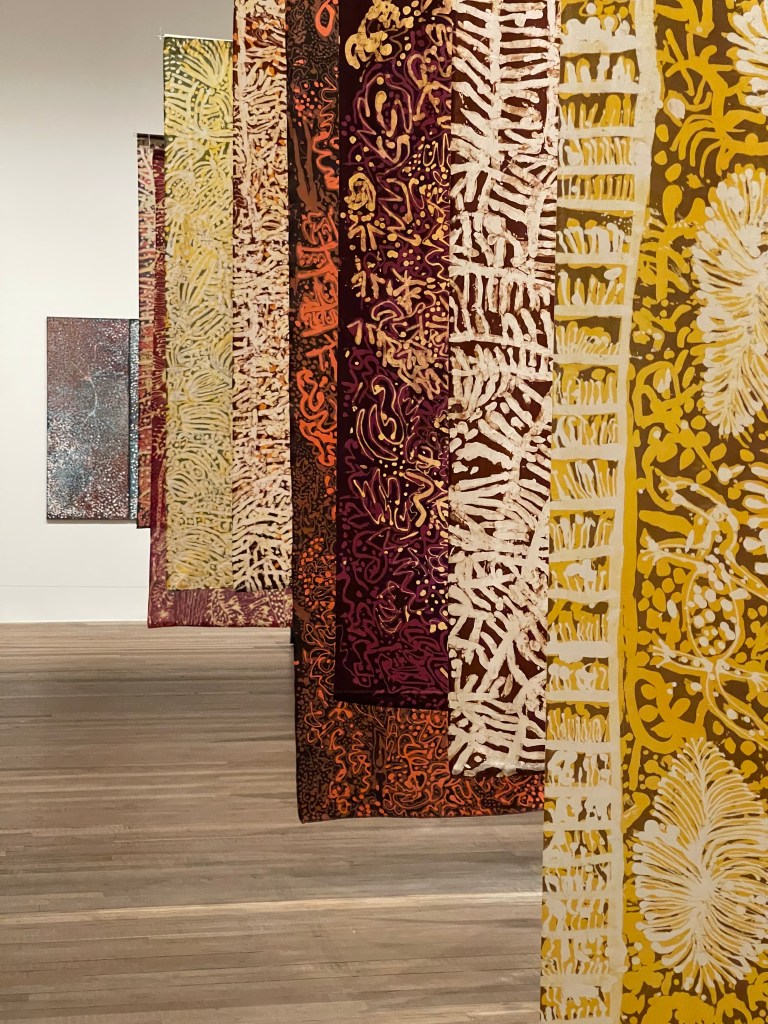
One of the most significant painters to emerge in the late 20th century, Emily Kame Kngwarreye translated her lived experience and deep cultural connections to Country into vibrant batiks, and later monumental canvases. For Aboriginal and Torres Strait Islander Peoples, Country encompasses the lands, skies, and waters to which they are connected over countless generations—a shared place of spiritual, social, and geographical origins. Kngwarreye’s work embodies her intimate knowledge of the desert landscapes where she lived, layering motifs that reflect the plants, animals, and geological forms shaping these ecosystems.
Her densely dotted swirling canvases, the horizontal and vertical stripes referencing ceremonial body lines and her brush dab techniques in vivid layers, are representative of not only the surface but underneath the land too. Her work is quite something to see in real life and on such a large scale.
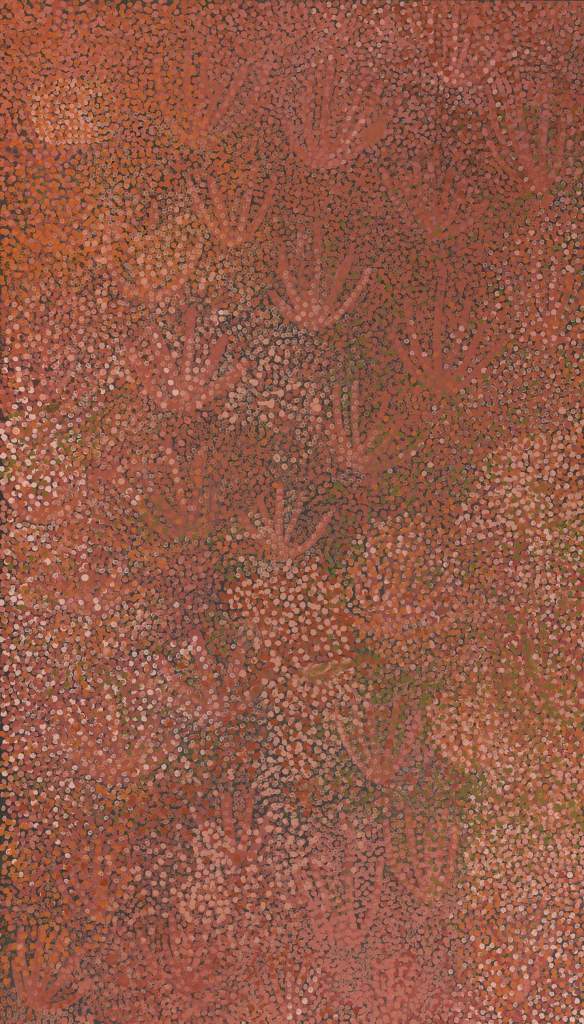
Emily Kame Kngwarreye – Anwerlarr (pencil yam) – 1990 – National Gallery of Australia – ©Estate of Emily Kame Kngwarreye.
In part of the film shown in the gallery, the images merge the existing landscape with a painting of Kngwarreye’s, it looks like a drone shot which is then overlaid with her work. The merging seems to create a layered meaning, the physical geography we can see, versus the deeply embodied, ancestral ‘map’ in her mind. The juxtaposition could be emphasizing how her work isn’t about copying what’s in front of her eyes, but expressing a lived, remembered, and spiritually embedded relationship to the land.
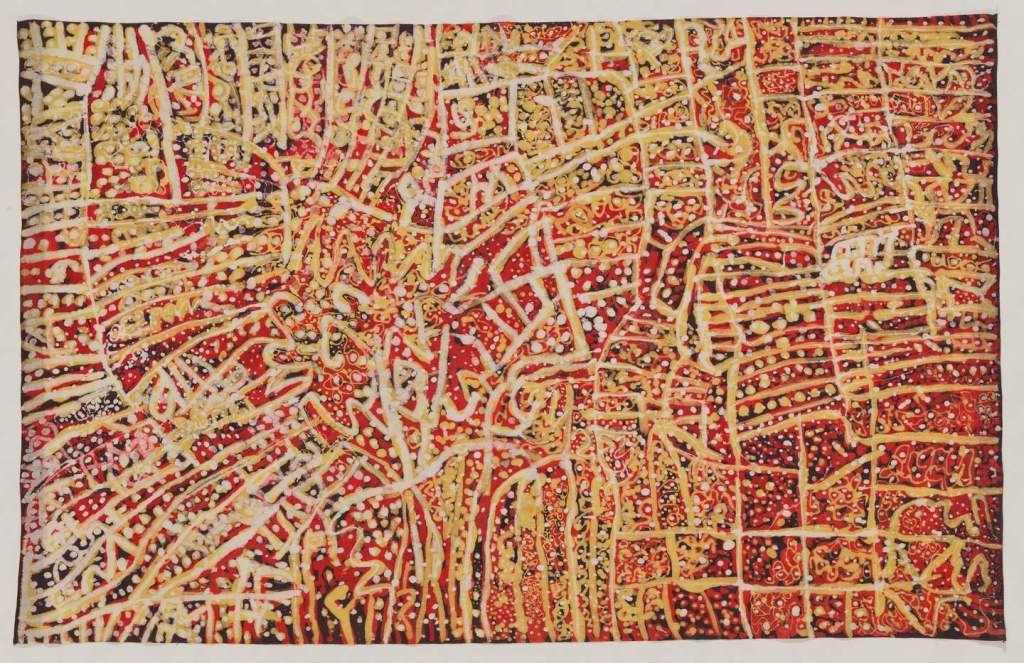
Emily Kame Kngwarreye – Not titled – 1981 – National Gallery of Australia – ©Estate of Emily Kame Kngwarreye.

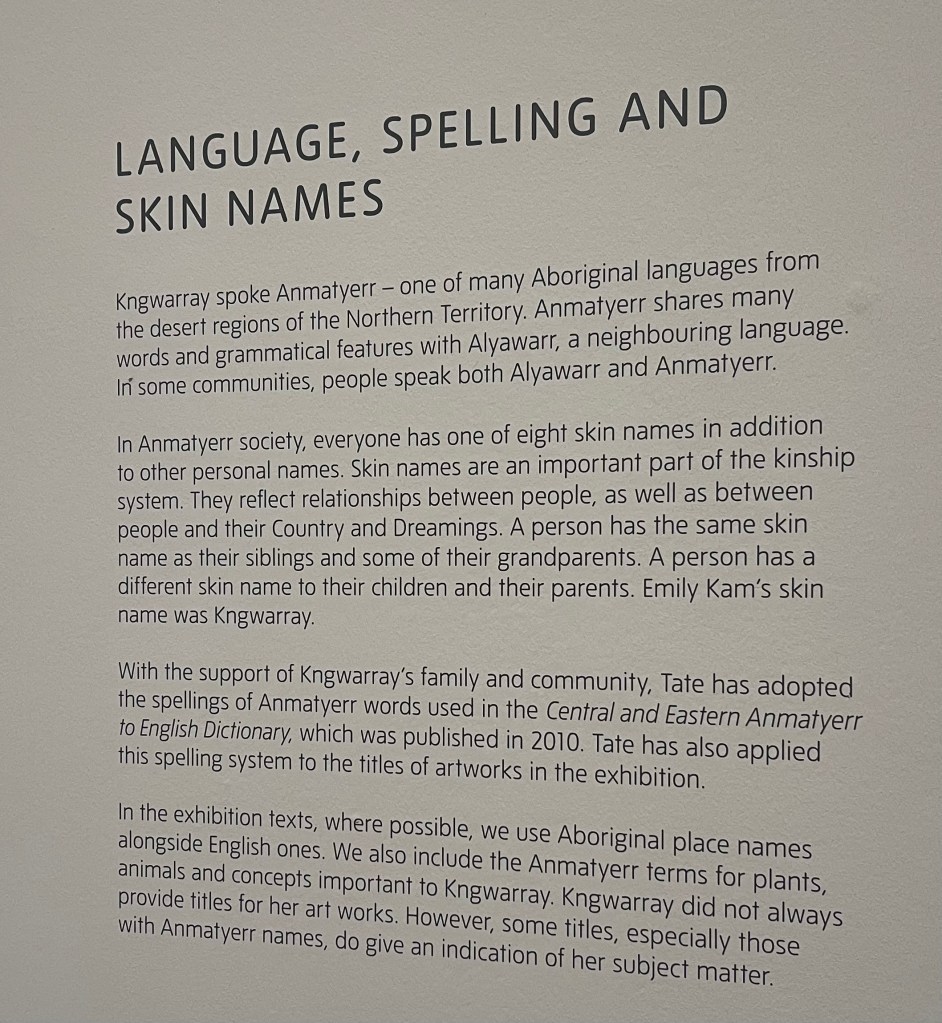
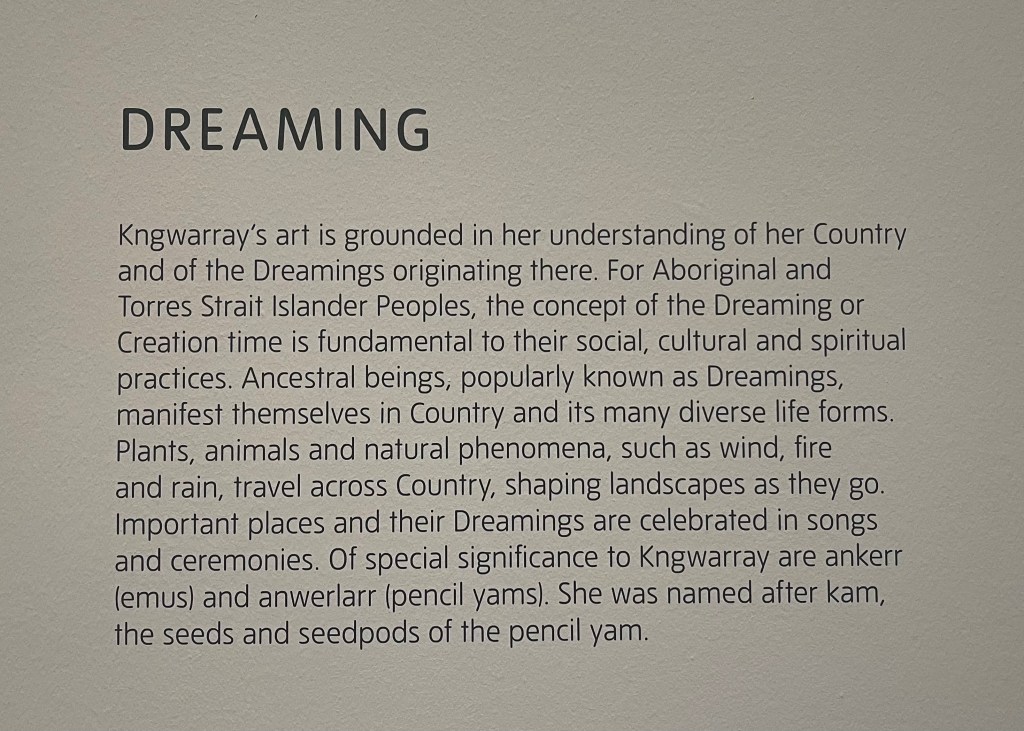
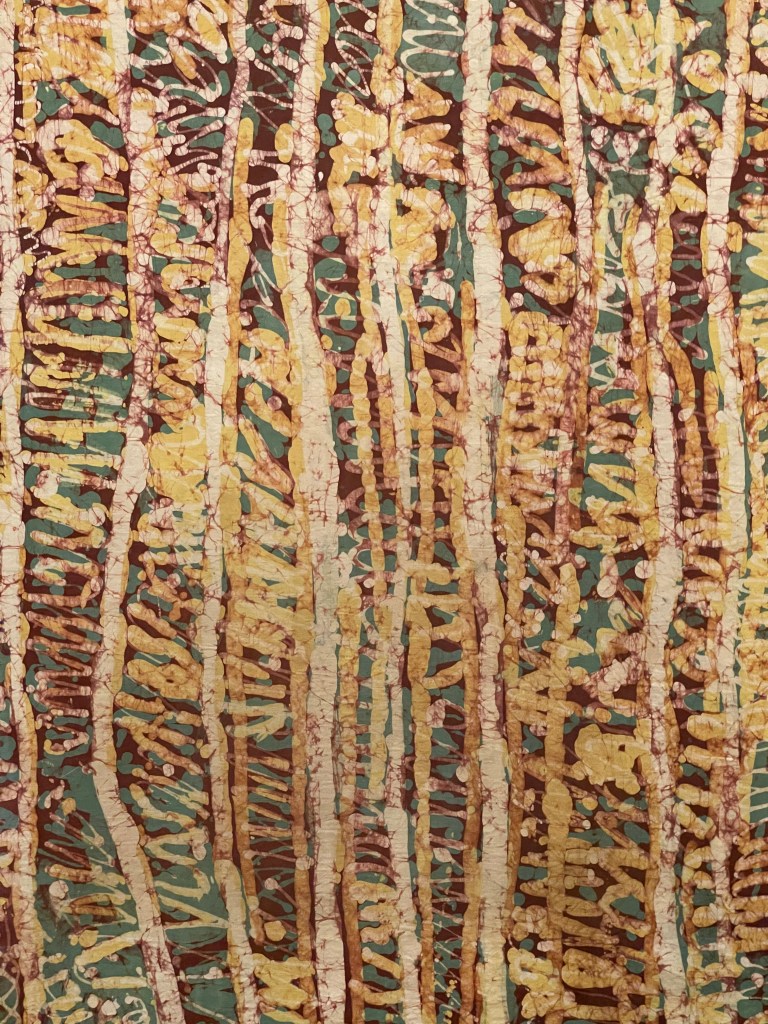
Emily Kame Kngwarreye – Untitled 1977 Batik on Cotton -©Estate of Emily Kame Kngwarreye.

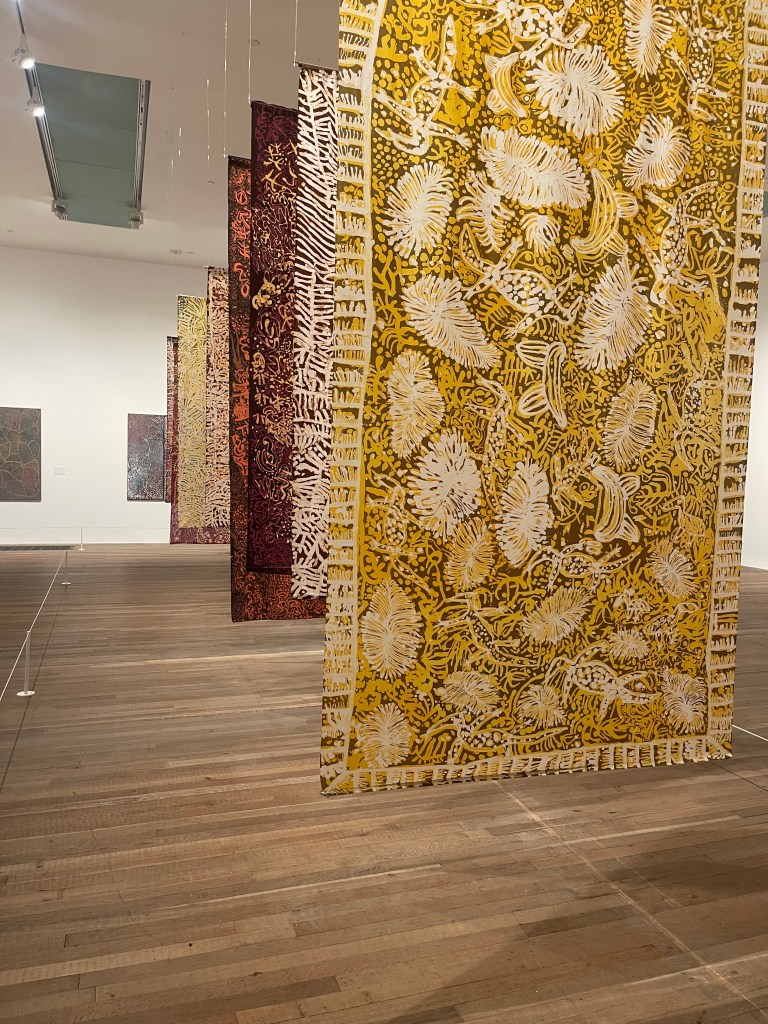
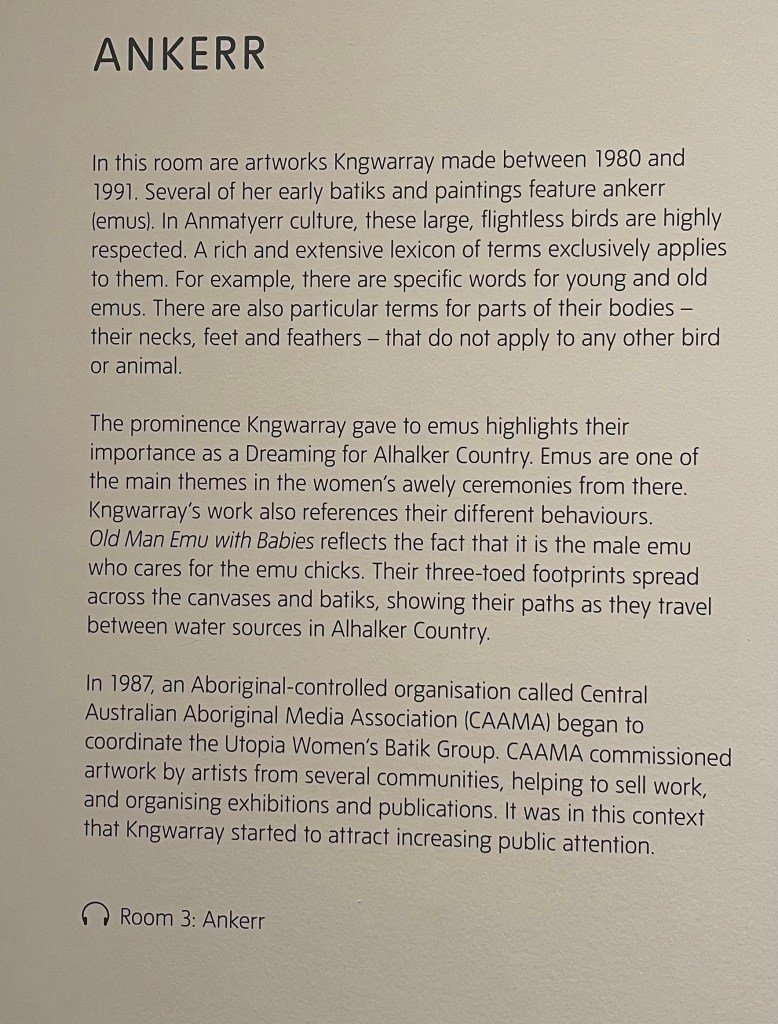
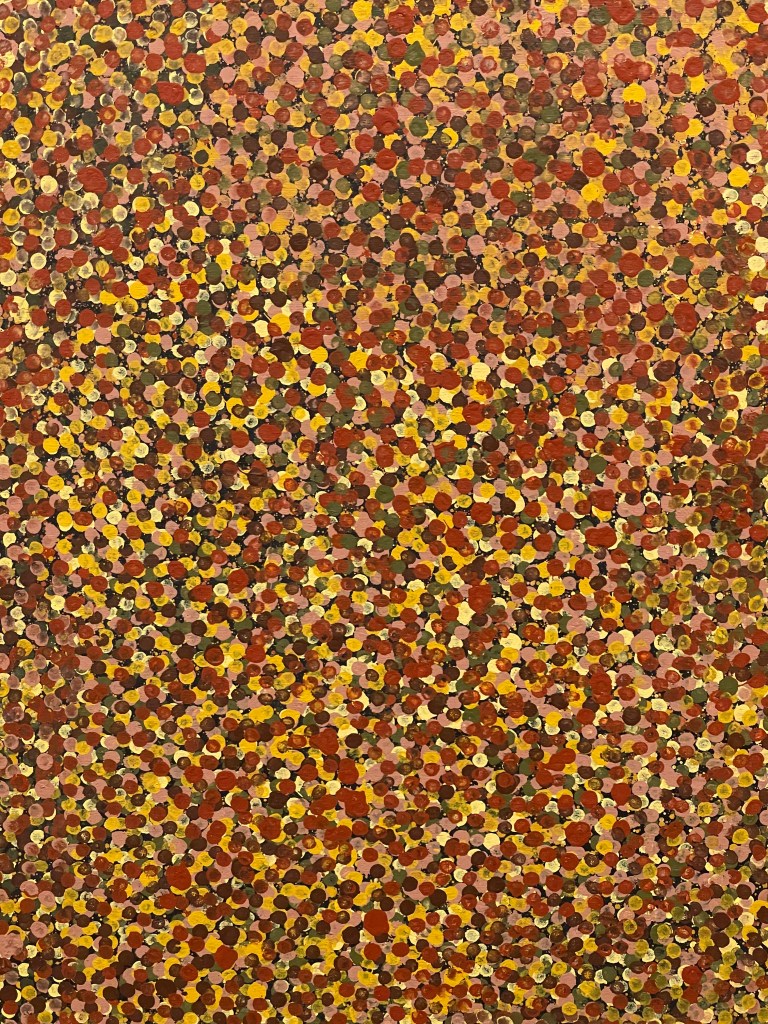
Emily Kame Kngwarreye. Untitled (Alhalker) – 1991 – Acrylics paint on canvas – ©Estate of Emily Kame Kngwarreye.
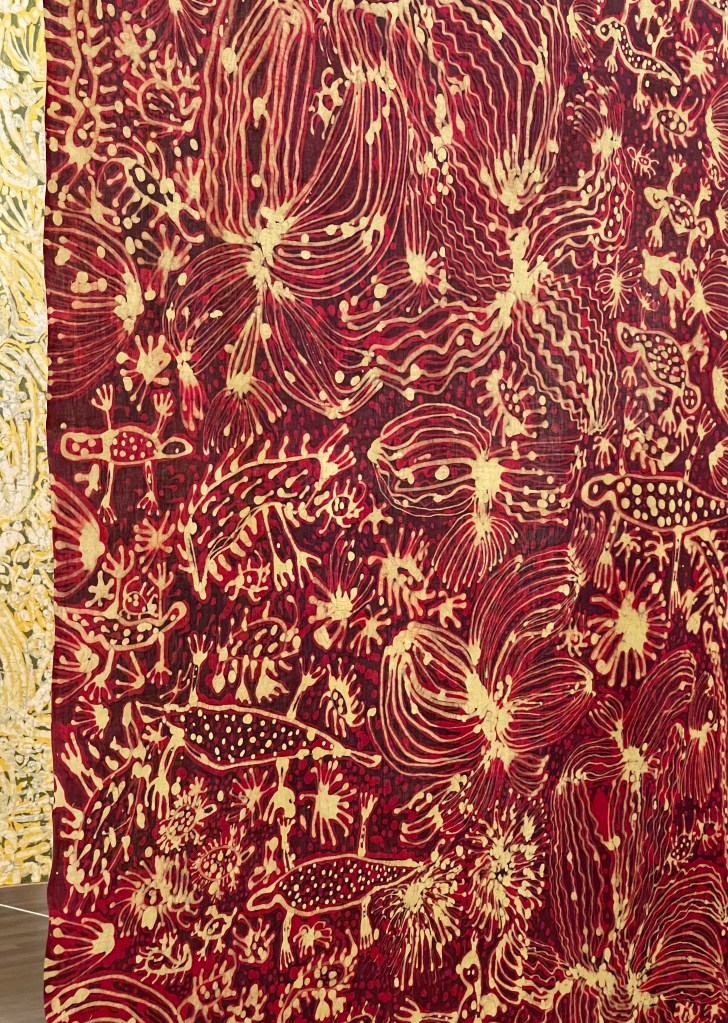
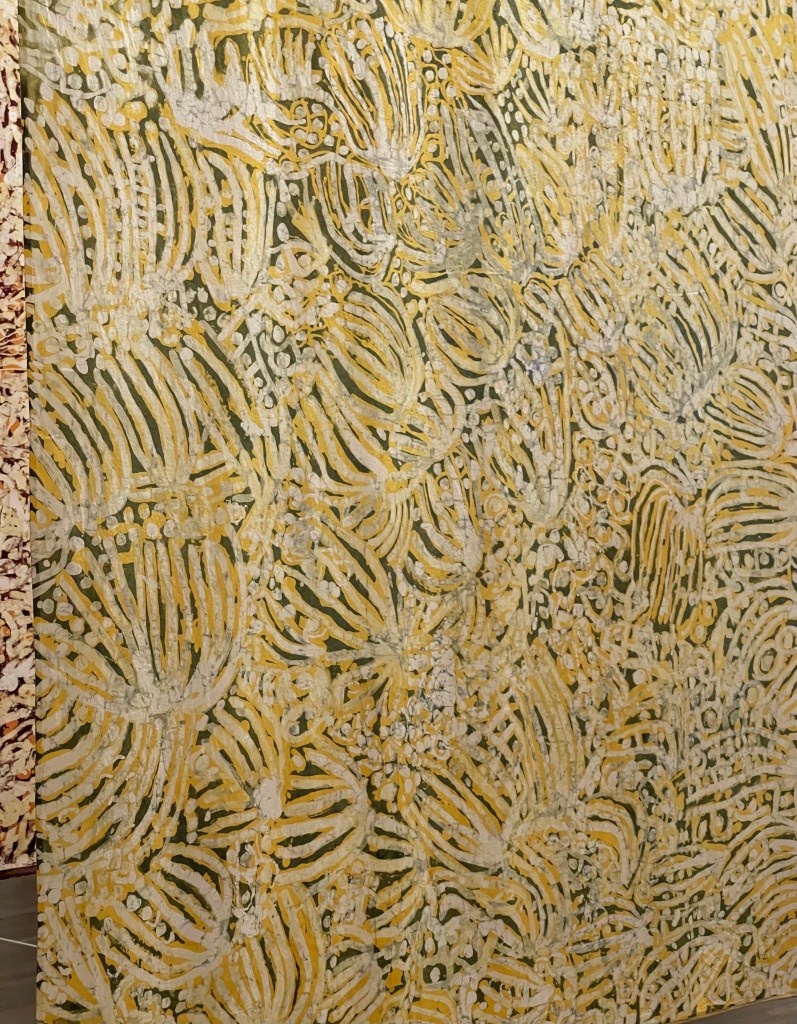

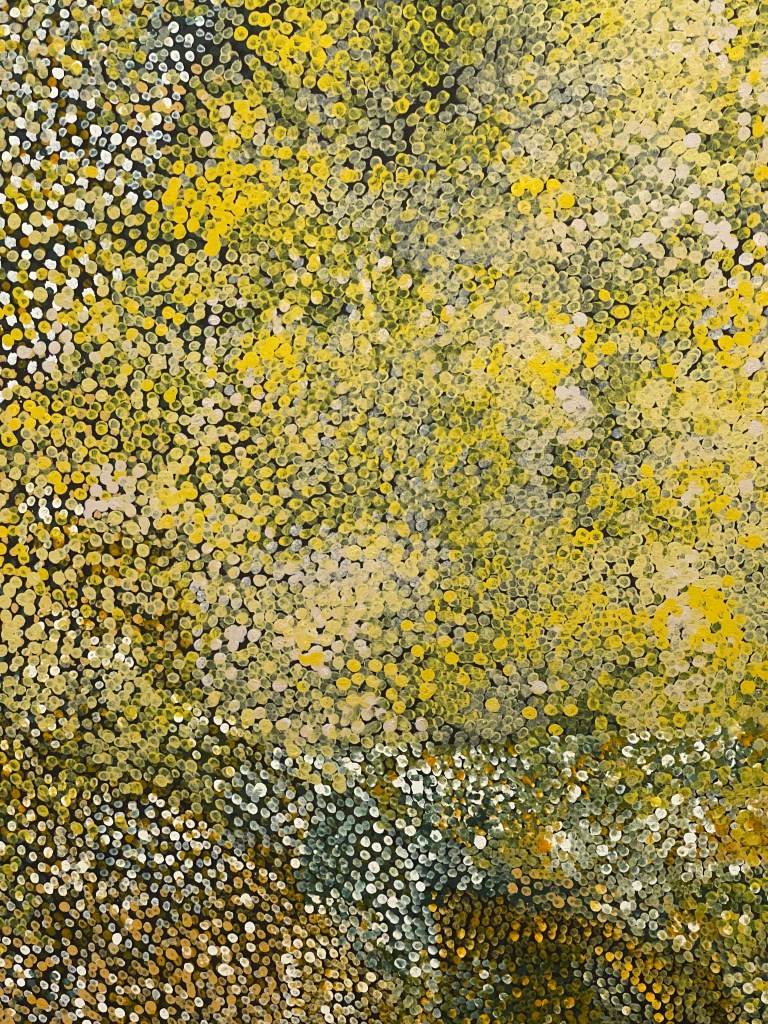
Emily Kame Kngwarreye. Jam – 1991 – Acrylics paint on canvas – National gallery of Victoria – Naarm/Narrm/Melbourne purchased from Admission Funds 1992.
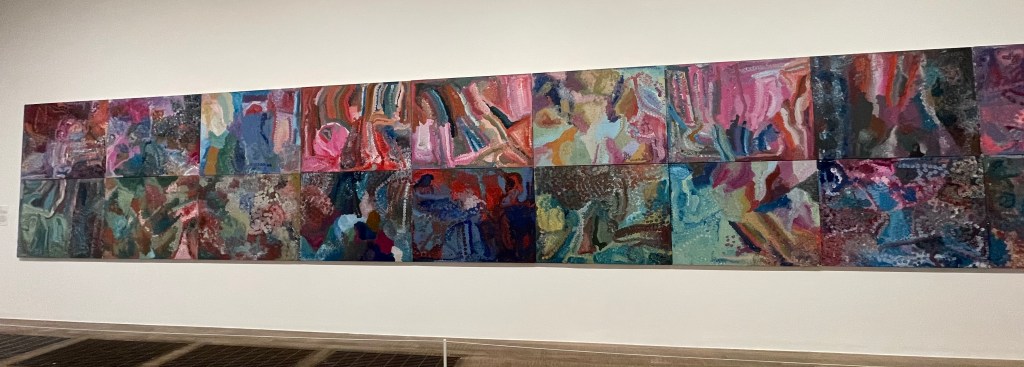

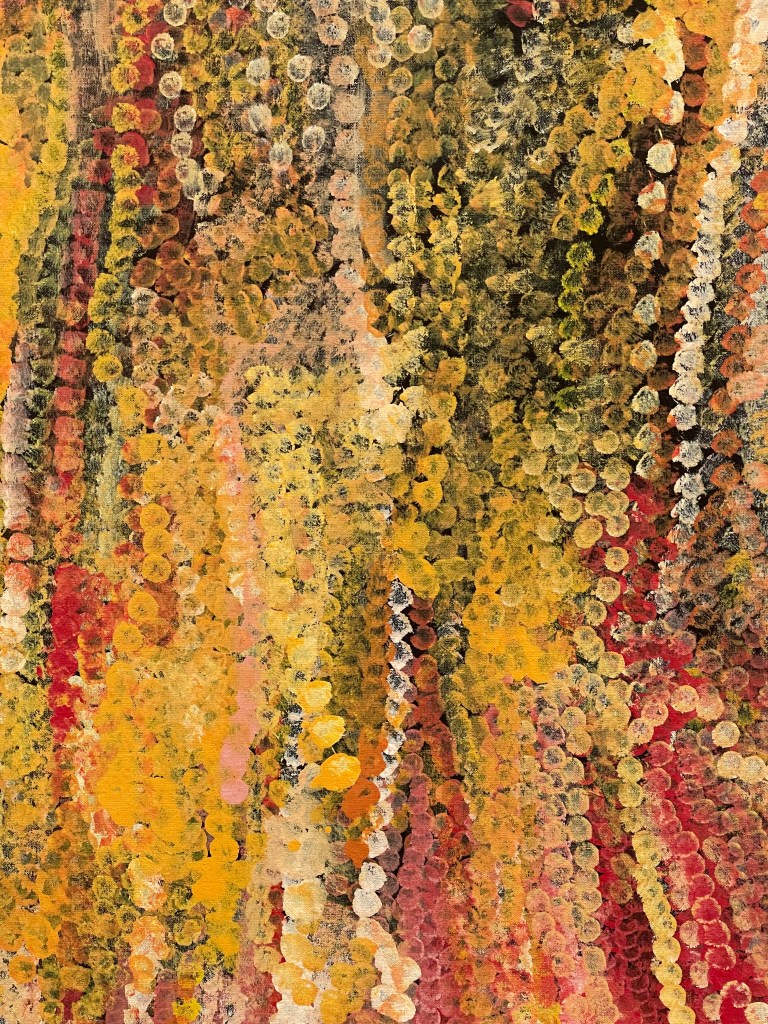
Emily Kame Kngwarreye.Winter Awely I – 1995 – Acrylics paint on on canvas – Kyveli and George Economou Collection.
References.
https://www.tate.org.uk/whats-on/tate-modern/emily-kam-kngwarray Exhibition visited 14th July 2025.
https://news.artnet.com/market/emily-kam-kngwarray-appraisal-art-market-2623857 Article written by Eileen Kinsella on March 29, 2025. Accessed 2nd August 2025.
https://artreview.com/emily-kam-kngwarray-defined-what-aboriginal-art-could-be-tate-modern-pace-gallery-feature-daniel-browning/ Article written by Daniel BrowningFeatures on 08 July 2025. Accessed 2nd August 2025.
https://www.theartnewspaper.com/2025/07/08/as-a-emily-kam-kngwarray-survey-opens-at-tate-modern-this-week-contemporary-indigenous-artists-are-finally-taking-centre-stage-in-the-uk Article written by Ben Luke 8th July 2025. Accessed 2nd August 2025.

 Viv King. Level 3. BA Fine Art