Tutor feedback on Learning Outcomes
LO1 & LO2 is currently being fulfilled. LO3 will get there the more you research which feeds you practise. LO4 will develop as you develop your critical review. Therefore, you are in a good place at this stage of the unit.
LO1. Examine your emerging practice through a considered body of self-directed work.
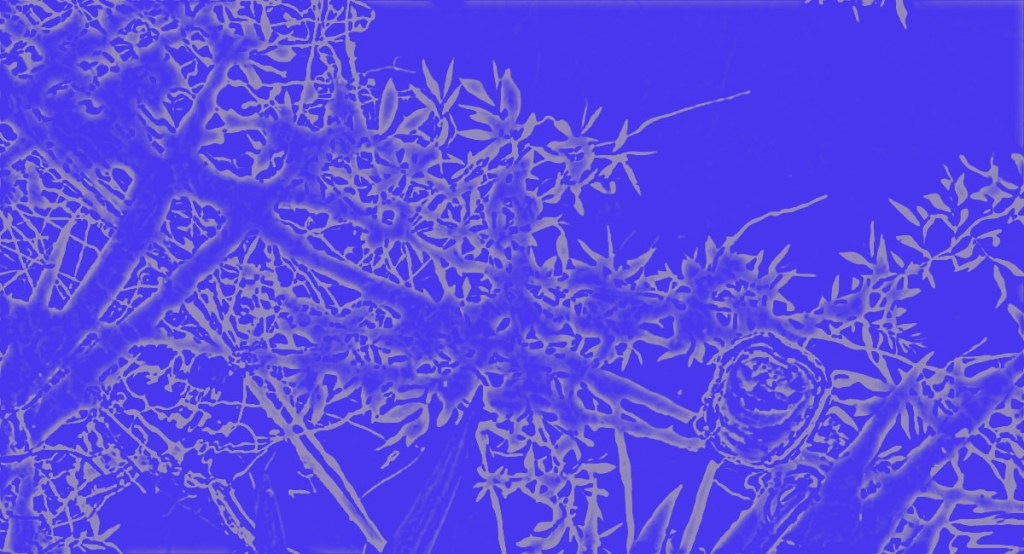
The cyanotypes have been successful and it’s great you have so many. They have been developed well and well considered in terms of how they can reflect debris, traces of nature and fragility. Ones where there is layering have depth, especially with the tinged ones which look burnt or muddy. There is a very good handling of the processes but also a natural wilderness to let go of control. These will certainly add to your theme. This LO is currently being fulfilled.
LO2. Apply relevant research methods and subject knowledge to test, inform, and develop your work.
Your subject knowledge has come through the Pecha Kucha, especially in relation to your lived experiences of the floods. Research methods do not always have to be academic formats and sources, but first hand sources, such as, your local community and its factual resources which have directed your practice into wider contexts. The notion of your love and hate relationship with water is a strong personal output. The ‘love’ can be seen in the cyanotypes where they are complementary to the water. In contrast there is ‘hate’ in the dichotomies.
The Pecha Kucha is articulate and quite sentimental and empathetic in tone. But then as we come into winter, it becomes more bleak and more sinister. Breaking it up into chapters of seasons, allows the information to be more digestible and accessible.
There is a call-out/ reaching out voice and towards the end there is almost a desperation of what will happen to us. This is captivating. The slides at the end capture our attention because it is not about the beauty within the art but the hard cold facts with the warning signs and the facts of flooding.
“what are we doing?” and “I hope we never have to go through that again..” Leaves the listener in a foreboding trance.
LO3. Present informed connections between your research and practice interests.
You are marrying up the research and practice well. This is always a part of your methodology now where one feeds the other. This will become more apparent in your critical review.
There is also scientific knowledge of how the water is affected. “The water loses its imprint on the landscape.”
LO4. Articulate your creative ideas and critical thinking using suitable communication methods.
The draft of the critical review is a good plan. Of course, there needs to be evidence in academic support towards your opinions and points made. Think about whether you need to have political, scientific and art field evidence or a mixture of all. The title “ Can environmental art push ecological driven policies?’ is a starting/ working title. Because you mention policies, think about your perspective. Government policies, local community policies? Also, make sure you have definitions and background contexts at the beginning to set the scene and your stance. E.g. What is Environmental Art, why are you writing about this (personal experiences?)
Student notes and reflections
Draft of CR – https://vivkinglevel3bafine.art/2025/03/16/1st-draft-critical-review/
Action points
- You have made a start on the critical. Start to unpack the research and summaries it to synthesise it with your points.
- Start to think about the directions of the practical work. Will you go towards showing the love/hate relationship of water and /or dichotomies?
- Continue with the cyanotypes, using chemicals, river water. Think about what the floods do- pollute, contaminate. You could do this to the surfaces.
- Experiment with the formats of surfaces, long, panoramic so they have a flow and can be continuous.
- Some articles I mentioned:
Climate Crisis resources- https://www.whitechapelgallery.org/learn/climate-crisis-art-action-resource-hub/
Back to Earth Serpentine– https://www.serpentinegalleries.org/art-and-ideas/
SOIL Exhibition Sommerset House https://www.somersethouse.org.uk/whats-on/soil
My thoughts.
We had a very positive tutorial and I feel I am slowly pulling things together. The cyanotypes were successful and I shall continue these for Project 6, using water from the river in addition to the found objects.
Try and narrow down my definition of what I am trying to achieve, keeping the work true to myself and my experiences. The CR for the time being can be expanded on still in note format.
Artists in addition, Richard Long and Mark Dion’s Thames dig.
Using the river as the central element for my practice and research, exploring the themes of ecological balance, pollution and our human relationships with nature. Using the water as well as the sediment, silt and found objects to collaborate with and make the art.
The river represents life, flow, change as well as connections, by creating art using these elements, is an unharmful way to draw attention to the fragility of our water ecosystems.

 Viv King. Level 3. BA Fine Art